Roof Insurance Claims: Exactly When You Can Claim Roof Damage (And When You Can’t)
Can I claim roof damage on insurance? Yes—if a covered peril such as wind, hail, fire, lightning, or a fallen tree caused sudden, accidental damage. Claims are denied for wear and tear, neglect, or poor maintenance. Wind and hail are the most frequent homeowners insurance losses in the U.S., representing roughly 45% of claims in recent years (Insurance Information Institute). When a storm hits Northwest Arkansas, partnering with a trusted local roofing company in Northwest Arkansas can be the difference between denial and a full, fair payout. For over 50 years, Heritage Roofing & Repair has helped Berryville-area homeowners steer this process, ensuring they get the protection they deserve.
This guide, informed by my family’s five decades of experience, will walk you through everything you need to know to protect your home and wallet when roof damage occurs.
Can i claim roof damage on insurance terms to learn:
- homeowners insurance roof damage
- filing a homeowners insurance claim for roof damage
- how to file roof replacement insurance claim with adjuster
Homeowners Insurance for Roofs: What’s Covered vs. What’s Denied
When you’re looking at a damaged roof, the question “can I claim roof damage on insurance?” is critical. The answer depends on a core principle: homeowners insurance covers sudden and accidental damage, not problems from neglect or natural aging. Your standard policy covers damage from specific events called “perils,” which are unforeseen incidents that strike without warning.
Types of Roof Damage Typically Covered
Insurance companies approve claims when the damage is sudden, accidental, and caused by a covered peril. Here are the most common examples:
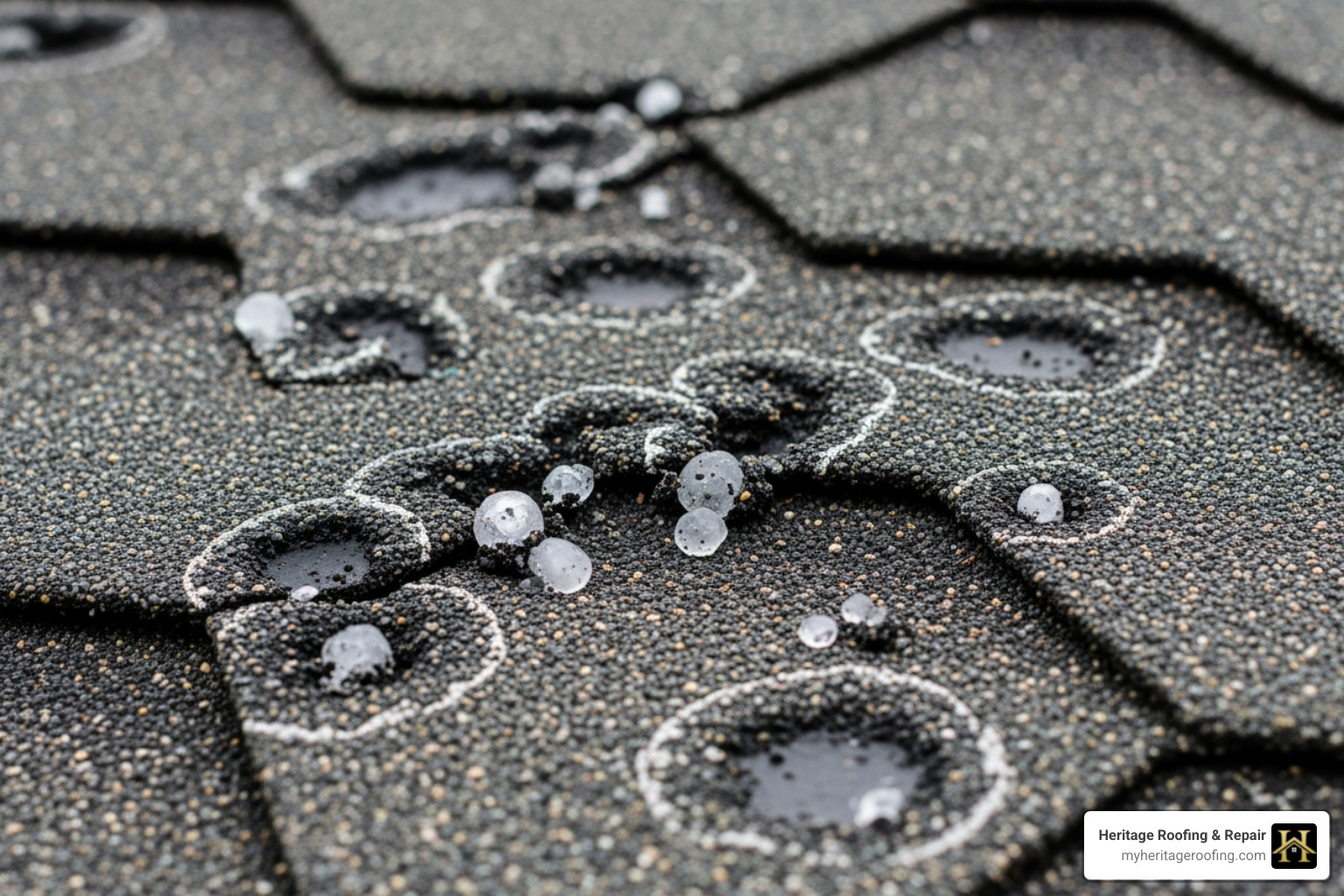
- Wind Damage: Powerful winds can lift, tear, or remove shingles and flashing, creating entry points for water. This is a leading cause of covered claims in Northwest Arkansas.
- Hail Damage: Hail can bruise or crack shingles, dent metal components, and strip away protective granules, which accelerates roof deterioration and leads to future leaks.
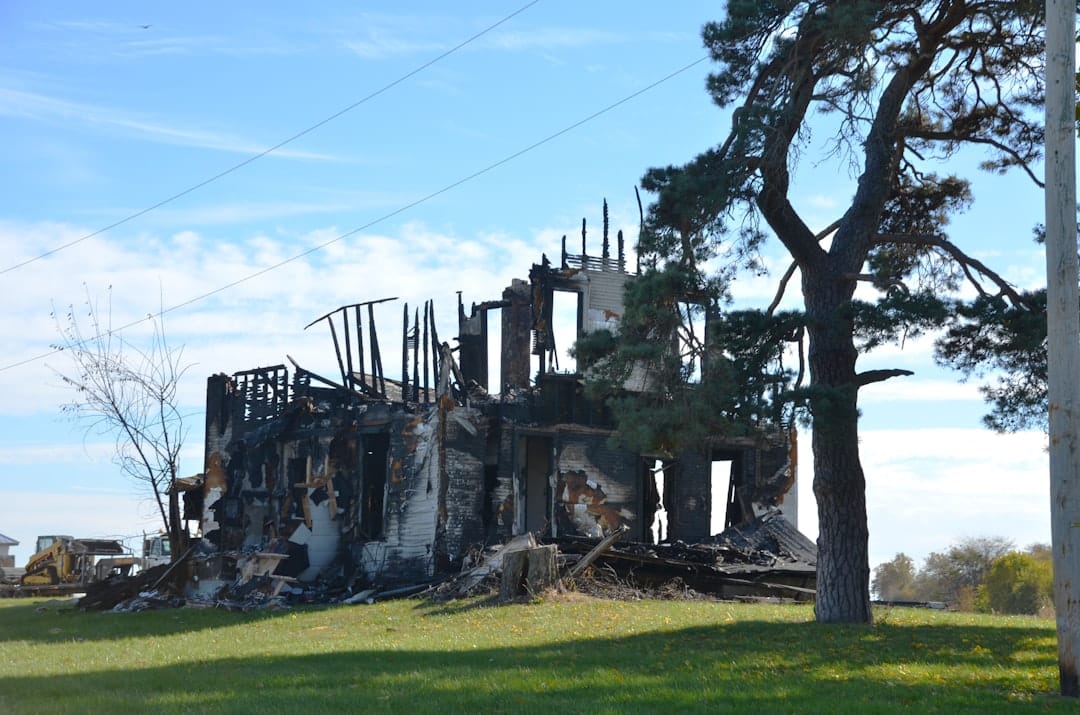
- Fire Damage: Coverage is nearly universal for fire, whether from a lightning strike, a house fire, or nearby wildfires. Your policy typically covers both structural damage and roof replacement.
- Falling Objects: Damage from tree limbs or entire trees crashing onto your roof is generally covered, often including the cost of debris removal.
- Weight of Ice and Snow: In regions with winter weather, the accumulated weight of ice and snow can cause sagging, leaks, or even partial collapse, which is recognized as a covered peril.
For any of these perils, the damage must be new and directly linked to the event. An insurance adjuster will verify the cause and extent of the damage.
Common Exclusions: What Your Policy Won’t Cover
Understanding exclusions is just as important as knowing what’s covered. Insurers expect homeowners to maintain their property.
- Wear and Tear: Roofs have a limited lifespan. Deterioration from age, sun exposure, and temperature changes is considered normal wear and tear and is the homeowner’s responsibility.
- Neglect and Poor Maintenance: Failure to perform routine tasks like cleaning gutters or trimming trees can lead to a claim denial. Regular roof maintenance is essential for protecting your coverage.
- Gradual Leaks: Slow leaks that develop over months or years due to aging materials are not covered. Insurance is for sudden events, not long-term deterioration.
- Mold: Mold is often excluded, especially if it results from an unaddressed leak or maintenance issue.
- Pest Damage: Damage from termites, rodents, or birds is considered a preventable maintenance issue and is almost never covered. If your roof suffers damage from rodents or birds, you will likely pay for repairs yourself.
- Floods and Earthquakes: These events require separate, specialized insurance policies. A standard homeowners policy does not cover them.
How the Age and Material of Your Roof Affect Coverage
Your roof’s age and material significantly influence claim evaluations. Insurers view older roofs as higher risks with lower values.
- Age and Depreciation: As a roof ages, its value depreciates. A 15-year-old roof near the end of its 20-year lifespan may only qualify for Actual Cash Value (ACV) coverage, which pays out based on its depreciated worth, not the cost of a new one.
- Material Type: Durable materials like metal or architectural shingles withstand damage better than basic three-tab shingles. Insurers may offer premium discounts for impact-resistant roofing products with a UL 2218 Class 4 rating, as they pose a lower risk.
ACV vs. RCV: Decoding Your Roof Coverage Payout
The type of coverage you have—Actual Cash Value (ACV) or Replacement Cost Value (RCV)—is the single biggest factor determining your payout for a roof repair or replacement. Understanding this distinction is key to managing your financial expectations.
Actual Cash Value (ACV) Explained
Actual Cash Value (ACV) coverage pays you the depreciated value of your damaged roof at the time of loss. Think of it like a used car—its value decreases over time. The insurer calculates what your roof is worth today, not what it would cost to replace it.
For example, if a 20-year roof is 10 years old, it may be considered 50% depreciated. If a new roof costs $20,000, your ACV payout would be around $10,000 (minus your deductible), leaving you to cover the rest. ACV policies have lower premiums, but this comes with the trade-off of higher out-of-pocket costs when a claim is filed.
Replacement Cost Value (RCV) Explained
Replacement Cost Value (RCV) coverage is the preferred option for most homeowners. It pays the full cost to replace your damaged roof with new materials of “like kind and quality” at current market prices, without deducting for depreciation.
RCV policies typically pay in two stages. First, you receive an initial payment for the ACV. After you complete the repairs and provide proof of payment, the insurer releases the remaining amount, known as recoverable depreciation. This ensures you are fully reimbursed (minus your deductible). While RCV policies have higher premiums, they provide greater financial security and peace of mind, especially in storm-prone areas like Northwest Arkansas.
[TABLE] comparing ACV vs. RCV Coverage
| Feature | Actual Cash Value (ACV) | Replacement Cost Value (RCV) |
|---|---|---|
| Payout Calculation | Pays for the depreciated value of your roof. | Pays the full cost to replace your roof at current prices. |
| Initial Payment | One-time payment for the roof’s current value, minus deductible. | Initial payment for the ACV, with a second payment (recoverable depreciation) after repairs are complete. |
| Out-of-Pocket Cost | Can be significant, as you must cover the depreciation amount. | Typically limited to your deductible. |
| Best For | Homeowners seeking the lowest possible premium. | Homeowners who want full coverage and minimal out-of-pocket costs after a disaster. |
If you’re unsure which coverage you have, review your policy documents or call your agent. Knowing this before damage occurs can prevent a major financial surprise.
The Step-by-Step Guide to Filing Your Roof Damage Claim
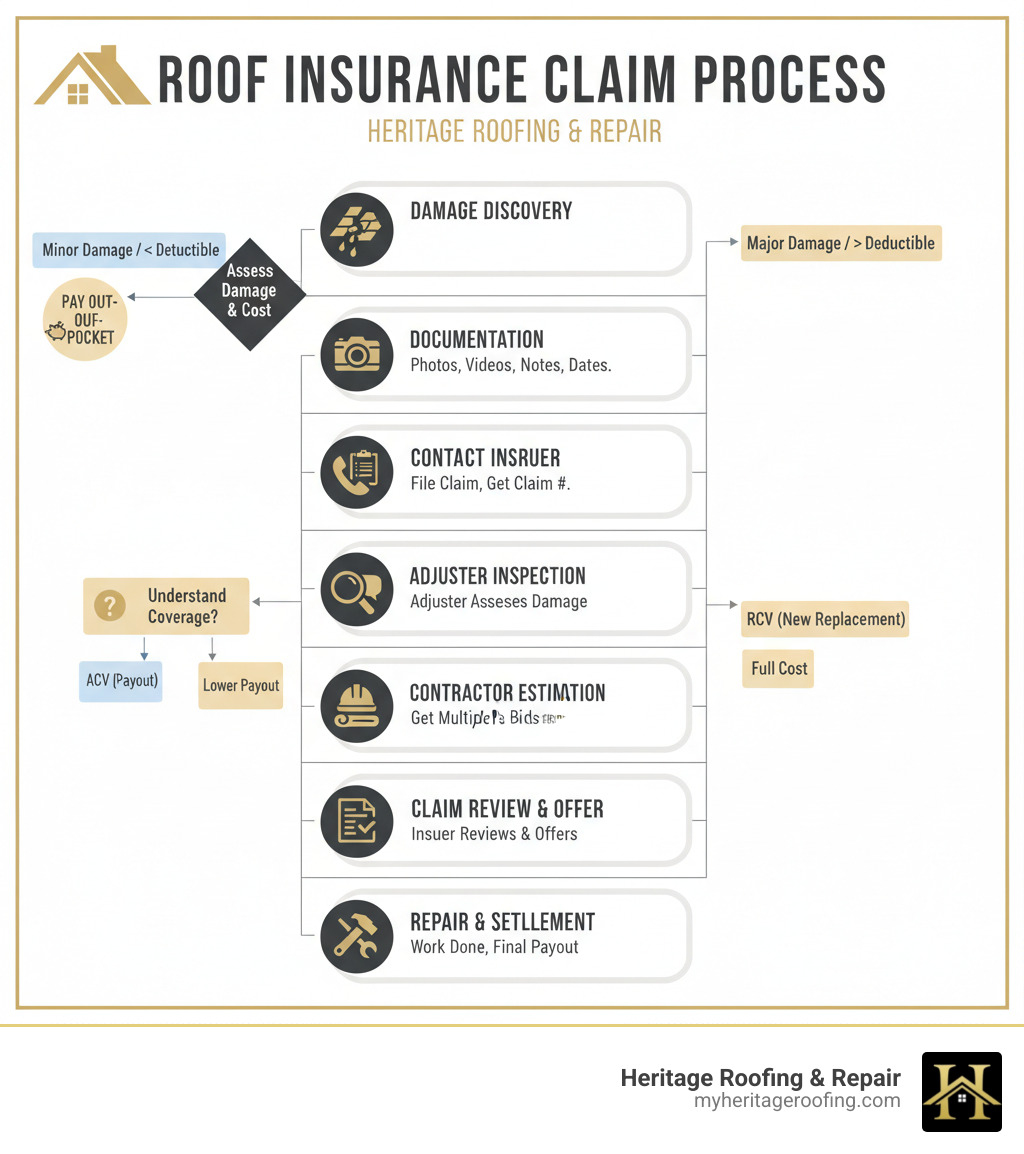
Filing a roof damage claim is a manageable process when you act quickly, document thoroughly, and communicate clearly. Following a structured approach increases your chances of a fair and successful outcome.
Step 1: Immediate Actions & Damage Documentation
Your first actions after finding damage are critical for your claim’s success.
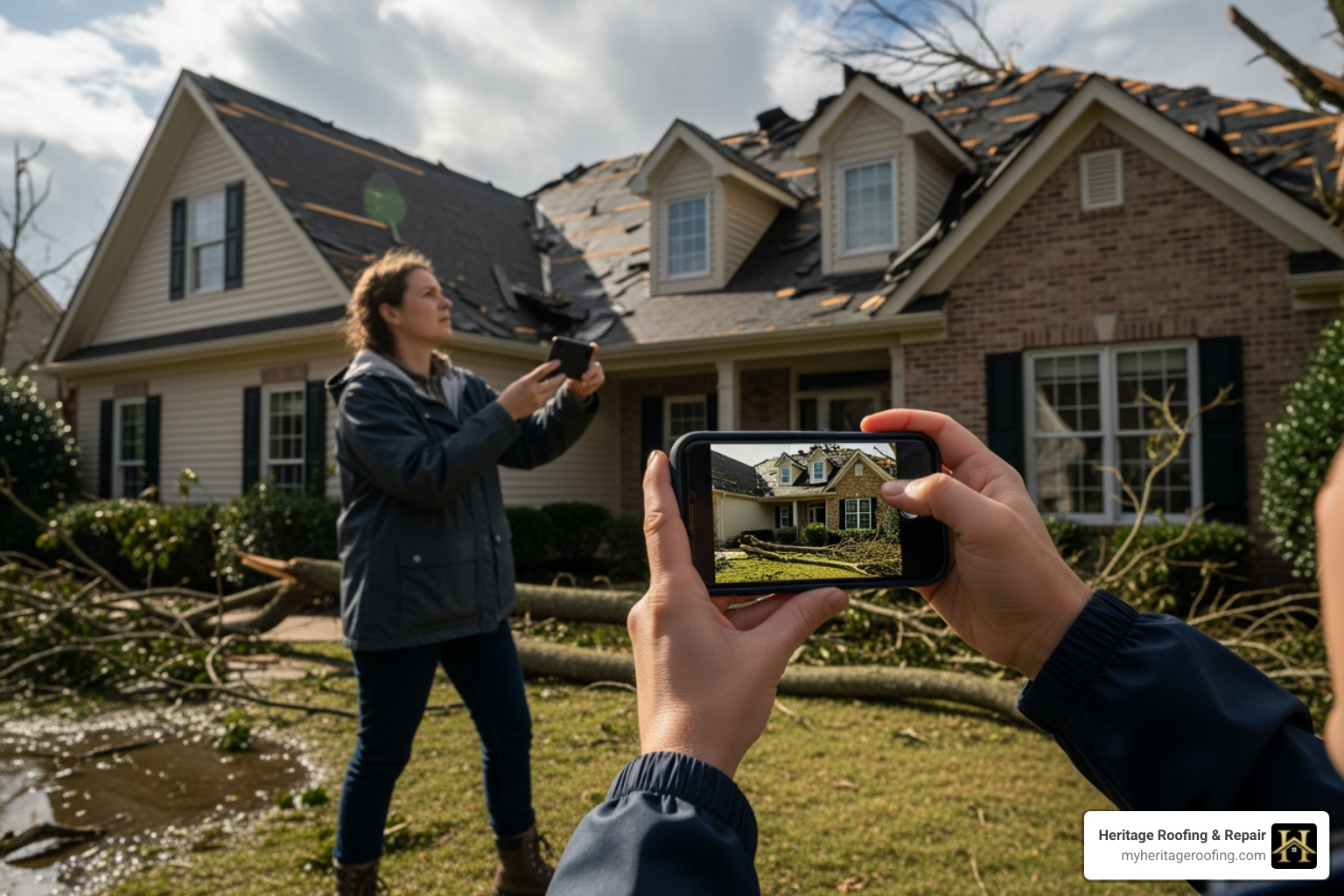
- Prioritize Safety: Ensure your family is safe. If structural damage is severe, relocate temporarily and avoid going on a compromised roof.
- Prevent Further Damage: Your policy requires you to mitigate further harm. Place buckets under leaks and consider temporary tarping for exposed areas. Keep all receipts for these emergency measures, as they are typically reimbursable.
- Document Everything: This is the most important step. Use your smartphone to take clear, high-resolution photos and videos of all damage from multiple angles. Capture wide shots for context and close-ups for detail. Narrate your videos, pointing out specific issues.
- Keep Written Notes: Record the date and time of the storm, weather conditions, and a detailed description of all damage. A complete Roof Inspection Checklist can help ensure you don’t miss anything.
Step 2: Contacting Your Insurer & Getting a Professional Inspection
With your property secured and documented, it’s time to start the official claims process.
- Report the Claim Promptly: Most policies have strict reporting deadlines (from 30 days to one year). Call your insurer as soon as possible with your policy number and date of loss.
- Get a Professional Inspection: Before the insurance adjuster arrives, have a reputable local roofer inspect your roof. A professional can identify subtle damage, like hail bruises, that an untrained eye might miss. Their detailed report and estimate are powerful tools for negotiation. Our Free Roof Inspection Complete Guide explains what to look for.
- Avoid Storm Chasers: After a storm, out-of-town contractors often appear, offering deals that are too good to be true. They may perform shoddy work, use inferior materials, or disappear after being paid. Always choose a local, established contractor with a strong community reputation. You can learn more about how to hire a qualified roof inspector from trusted sources.
Step 3: Navigating the Adjuster Meeting & Reviewing the Settlement
This is where your preparation pays off. The adjuster’s inspection determines your settlement.
- Meet the Adjuster: Be present for the adjuster’s inspection, and have your contractor there to represent you. Your roofer can point out all documented damage and advocate for a fair assessment.
- Review the Settlement Offer Carefully: Do not automatically accept the first offer. Scrutinize the adjuster’s report and compare it to your contractor’s estimate. Initial offers often undervalue repair costs.
- Negotiate if Necessary: If the offer is too low, you have the right to negotiate. Provide your contractor’s estimate and your detailed documentation to support your case. Persistence backed by evidence often leads to a revised, fairer settlement. For more on this, see our guide on How to File Roof Replacement Insurance Claim with Adjuster.
Key Factors and Common Mistakes When Filing a Claim
Deciding whether to file a claim requires weighing the repair costs against your deductible and considering the long-term impact on your policy. Avoiding common mistakes is key to a positive outcome.
When to File a Claim vs. Paying Out-of-Pocket
Just because you can file a claim doesn’t always mean you should. Consider these factors:
- Your Deductible: If the Roof Repair Cost is only slightly more than your deductible, it may be better to pay out-of-pocket. Filing a claim for a small amount might not be worth the potential premium increase.
- Your Claim History: Insurers track your claims. Filing multiple claims in a short period can lead to higher premiums or even non-renewal. It’s often wise to save claims for major, costly damage.
- Potential Premium Increases: A single claim can raise your premium by 9% to 20%. For minor repairs, paying yourself helps keep your rates stable.
Understanding Special Deductibles, Timelines, and Ordinances
Your policy contains details that can significantly affect your claim.
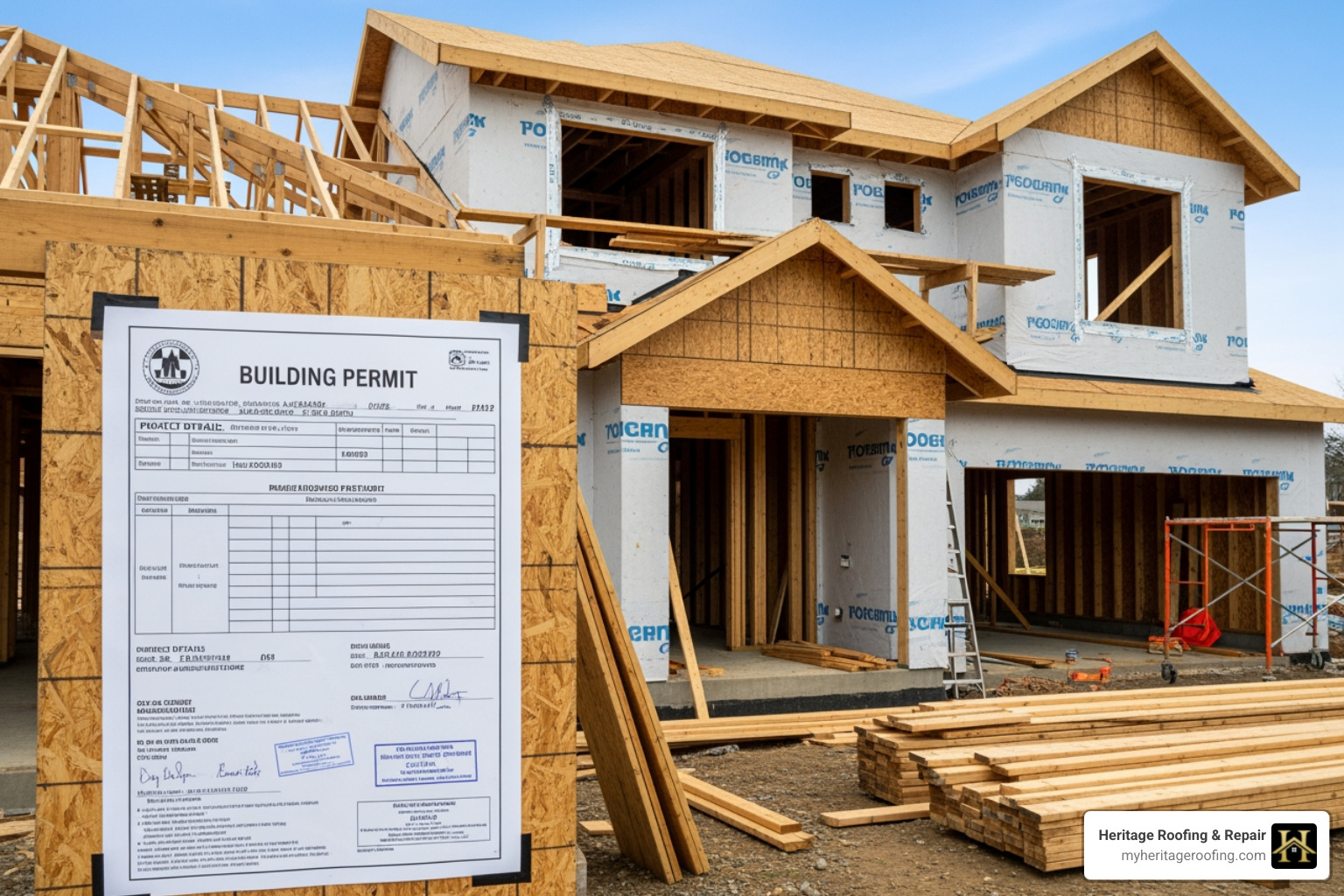
- Wind and Hail Deductibles: Many policies in storm-prone areas have a separate, higher deductible for wind and hail. This is often a percentage (1-2%) of your home’s insured value, which can be thousands of dollars.
- Statute of Limitations: You have a limited time to file a claim. This varies by state and policy but is often between one and three years. Report damage to your insurer immediately to avoid missing the deadline.
- Ordinance and Law Coverage: If your roof needs replacement, current building codes in Berryville, Fayetteville, or Harrison may require expensive upgrades not covered by a standard policy. This optional coverage pays for code-required updates, saving you from major out-of-pocket costs.
Top 5 Mistakes to Avoid When You Claim Roof Damage on Insurance
After five decades in roofing, I’ve seen homeowners make the same costly mistakes. Avoid these common errors, and find more tips in our Filing Roof Insurance Claim Guide.
- Waiting Too Long to File: Delaying allows damage to worsen and gives the insurer reason to argue the cause was neglect, not the storm.
- Not Documenting Thoroughly: Without clear photos, videos, and notes, your claim is just your word against the insurer’s. Evidence is everything.
- Accepting the First Settlement Offer: Initial offers are often low. Always get an estimate from a trusted contractor and be prepared to negotiate.
- Hiring an Out-of-Town “Storm Chaser”: These contractors may do poor work and disappear, leaving you with no warranty. Choose a local, reputable roofer.
- Authorizing Repairs Before Claim Approval: Make temporary fixes to prevent more damage, but do not sign contracts for a full replacement until your claim is approved and you understand the settlement.
Your Local Partner for Storm Damage and Insurance Claims in Berryville, AR
After a storm hits Northwest Arkansas, you shouldn’t have to steer the complex insurance process alone. You need a local partner who understands the weather, the policies, and the process. That’s where Heritage Roofing & Repair comes in.
For over 50 years, we’ve been helping our neighbors in Berryville, Fayetteville, Harrison, and the surrounding region recover from storm damage. We’re more than a roofing company—we’re your advocate. We know what adjusters look for, and we ensure your claim is documented correctly to secure a fair settlement.
What sets us apart is our commitment to the community. We’re not storm chasers; we’re your neighbors. We stand behind our work because our reputation is built on decades of trust. Whether you need help documenting damage, reviewing an adjuster’s report, or understanding your policy, our team is here to provide honest guidance.
For expert assistance with your roof and insurance claim, contact us:
Heritage Roofing & Repair
3458 Arkansas State Hwy 221, Berryville, AR 72616
(870) 654-1164
Conclusion
A successful roof damage insurance claim hinges on one key principle: the damage must be sudden and accidental—caused by a storm, hail, or fire—not the result of neglect or old age. A positive outcome depends on knowing when to file, how to document the damage, and who to trust for repairs.
By understanding the difference between ACV and RCV coverage, documenting everything from day one, and partnering with a reputable local roofer, you can steer the process effectively. An experienced contractor acts as your advocate, speaking the adjuster’s language and ensuring nothing is overlooked.
Being an informed homeowner is your best defense. You now know to document damage immediately, consider your deductible before filing, avoid storm chasers, and wait for claim approval before starting major repairs. These steps are crucial for a smooth, successful claim.
At Heritage Roofing & Repair, we have spent over 50 years guiding homeowners in Berryville, Fayetteville, Harrison, and throughout Northwest Arkansas through this exact process. We are here to help, from the initial inspection to the final repair.
If you’re facing roof damage or want to understand your coverage better, don’t hesitate to reach out for a free inspection and honest advice. For a complete overview, explore our Roof Insurance Claims Ultimate Guide.