Why Understanding the Insurance Hail Damage Roof Claim Process Matters
Insurance hail damage roof claims are among the most common and complicated issues homeowners face. In 2022 alone, State Farm paid over $3.5 billion for hailstorm damage, highlighting the significant financial stakes. For homeowners in Northwest Arkansas, knowing how to steer the claims process is critical. A well-managed claim can result in a full roof replacement, while a misstep could lead to a denial that costs you thousands. At Heritage Roofing & Repair, our family has been helping homeowners with these exact claims for over 50 years.
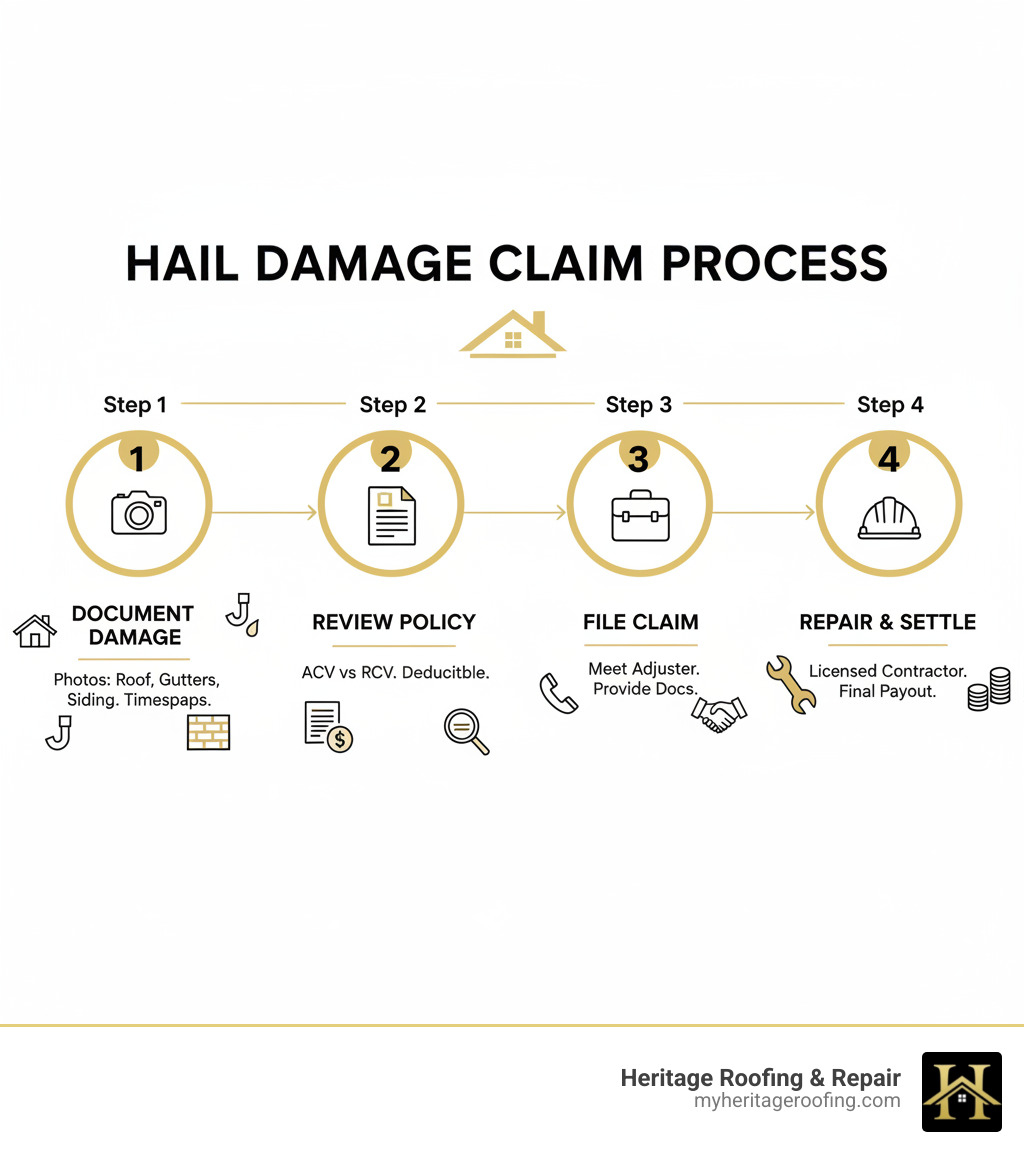
Successfully managing an insurance hail damage roof claim means following a clear process:
- Document Everything: Immediately take photos and videos of all exterior damage before any repairs.
- Understand Your Policy: Know if you have an Actual Cash Value (ACV) or Replacement Cost Value (RCV) policy and what your deductible is.
- File Promptly: Most insurers require claims within one year, but filing sooner prevents disputes and speeds up the process.
- Work with a Pro: A local, licensed contractor can provide a detailed assessment and help you work with the adjuster.
Missing any of these steps can result in a denied claim or an insufficient payout. I’m Rex Wisdom, owner of Heritage Roofing & Repair, and we’ve guided countless families through the documentation, filing, and repair process to ensure they receive the coverage they deserve.
Step 1: How to Identify and Document Hail Damage
Correctly identifying and documenting hail damage is the most critical step in building a successful insurance hail damage roof claim. Insurance companies require clear proof that the damage was caused by a specific storm, not by age or poor maintenance. Without it, your claim could be denied.
Identifying Hail Damage vs. Normal Wear and Tear
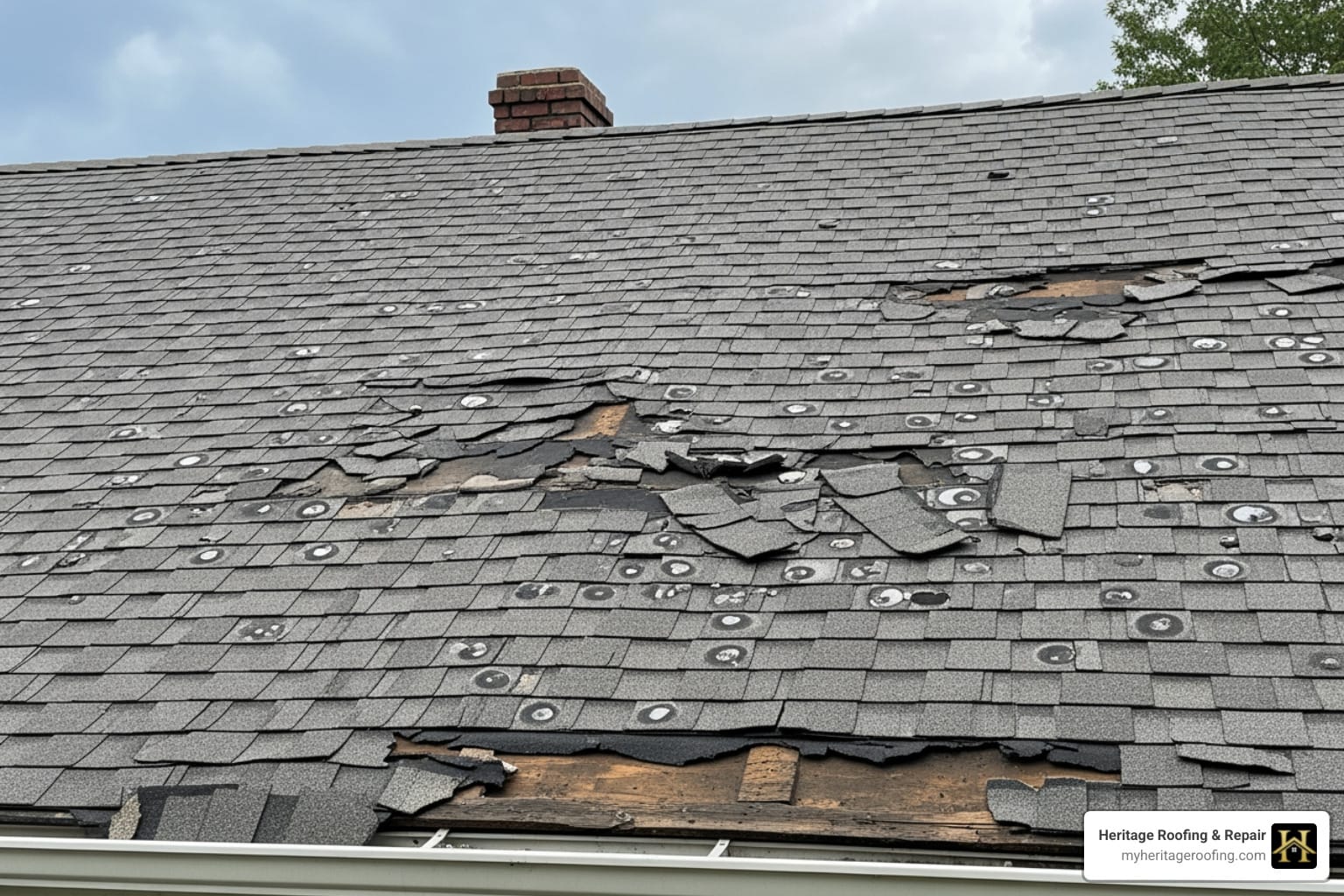
Hail damage is often subtle. Hail of 1 inch in diameter or larger typically causes noticeable damage to asphalt shingles, but even smaller hail can compromise your roof.
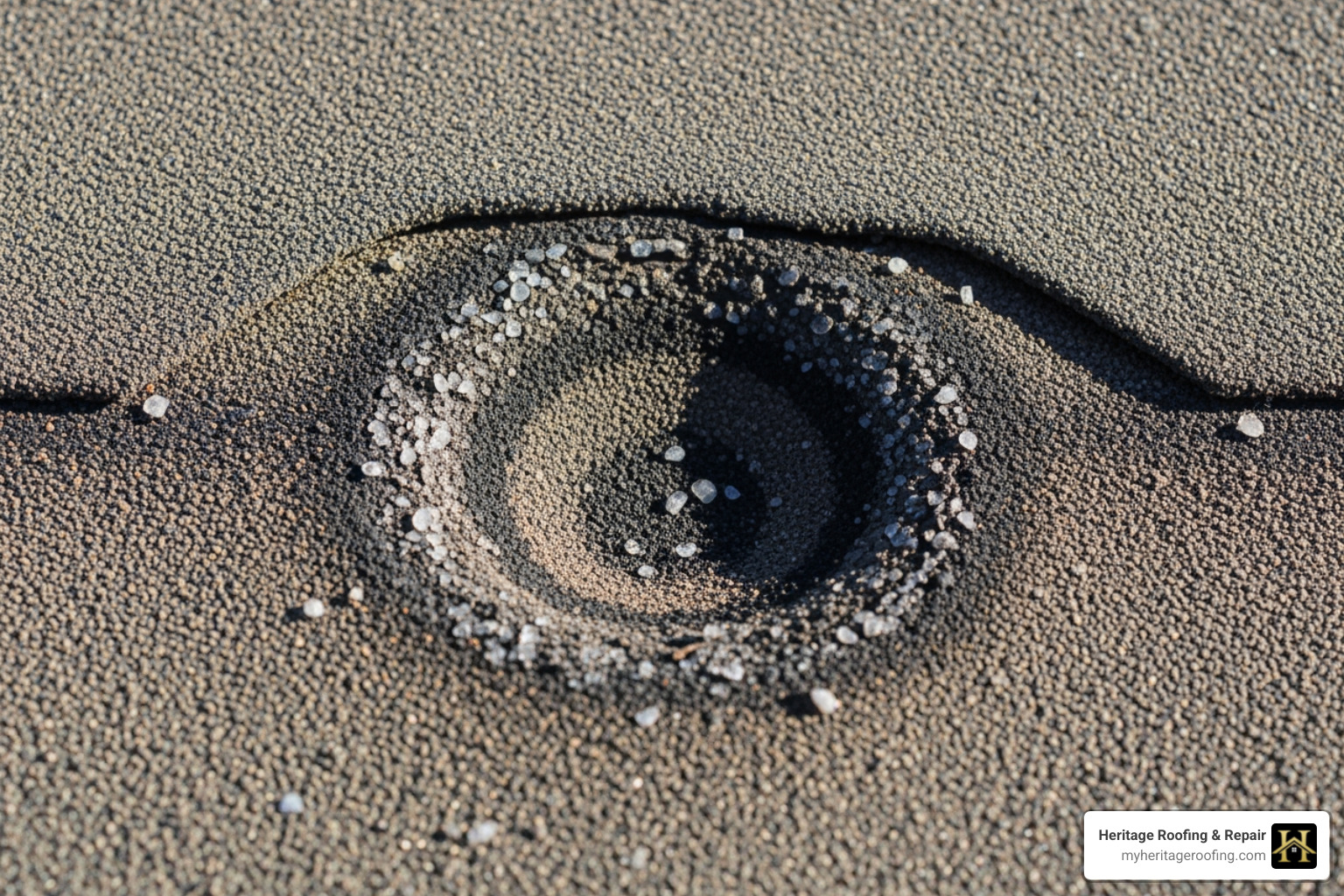
- Shingle Bruising: This is the most common and overlooked type of damage. A hail strike displaces protective granules and can fracture the shingle’s fiberglass mat, creating a soft spot. It may look like a dark, circular impact mark.
- Granule Loss: Hail dislodges the protective granules on shingles, leaving bald spots that expose the asphalt layer to UV rays. Check your gutters and downspouts for an accumulation of these granules after a storm.
- Dents on Metal Components: Soft metal surfaces like vents, flashing, and gutters show dents or “dings” easily, providing clear proof of hail.
- Cracks and Splits: Larger hail can crack or split older, brittle shingles. Wood shingles may split along the grain.
It’s crucial to differentiate hail damage from normal aging. Blistering (small craters or bubbles) is usually a manufacturing defect, while sun damage causes uniform fading and curling. An adjuster will look for a random pattern of impact marks to confirm hail damage. If you’re unsure, it’s best to consult a professional. For more information, see our storm damage services.
Creating a Hail Damage Report for Your Insurance Claim
Meticulous documentation is the backbone of your claim. Your goal is to build an irrefutable case.
- Photograph the Roof: Take clear, close-up photos of bruised shingles, granule loss, and dents on vents and flashing. Also, take wider shots to show the overall roof.
- Document Collateral Damage: Hail rarely hits just the roof. Photograph dents on gutters, downspouts, and A/C unit fins. Check for chips or cracks on siding and windows. Damage to mailboxes, decks, or even cars parked outside serves as additional proof of the storm’s intensity.
- Record the Date and Time: Note the exact date and approximate time of the hailstorm. Your insurer can verify this with weather records.
- Use Photos and Videos: Capture high-resolution images and videos, using timestamps if possible. Videos are great for showing the extent of damage across a large area.
- Write a Damage Summary: Create a detailed list of all observed damage, referencing your photos. Be specific (e.g., “Three bruised shingles on the southwest corner of the roof”).
Thorough documentation removes subjectivity from the claims process and makes it difficult for an insurer to deny what you can clearly prove.
Step 2: Understanding Your Homeowners Insurance Policy
Before filing a claim, you must understand what your policy covers. The fine print determines whether you get a full roof replacement or are left paying thousands out of pocket. Knowing your contract is the only way to ensure you get what you’re entitled to.
Does Insurance Cover Hail Damage to a Roof?
Yes, most standard homeowners insurance policies (like the common HO-3 policy) cover hail damage to your roof as a “covered peril.” According to the Insurance Information Institute, hail is a major source of insured losses each year. This means your policy is designed to pay for repairs or replacement up to your coverage limits.
However, be aware of key limitations:
- Cosmetic Damage Clauses: Some policies exclude damage that is purely cosmetic and doesn’t affect the roof’s function, such as dents on a metal roof.
- Age and Maintenance Exclusions: If an insurer determines your roof was already in poor condition due to age or lack of maintenance, they may deny your claim or reduce the payout.
- Other Exclusions: Damage to detached structures (sheds, etc.) or landscaping may require separate coverage. Damage to vehicles is covered by the comprehensive portion of your auto insurance policy, which requires a separate claim and deductible.
For a deeper dive into how policies protect your home, see our guide to roof insurance.
ACV vs. RCV: A Critical Difference for Your Payout
The difference between an Actual Cash Value (ACV) and a Replacement Cost Value (RCV) policy is one of the most important factors in your insurance hail damage roof claim. It can mean a difference of thousands of dollars.
- ACV policies pay the depreciated value of your roof. If your 15-year-old roof (with a 20-year lifespan) is destroyed, ACV only pays for the 5 years of life it had left, leaving you to cover the rest.
- RCV policies pay the full cost to replace your roof with new materials. Typically, you first receive an ACV payment, and the remaining amount (the recoverable depreciation) is paid after you complete the repairs and provide proof of payment.
| Feature | Actual Cash Value (ACV) Policy | Replacement Cost Value (RCV) Policy |
|---|---|---|
| Payout Basis | Depreciated value of your roof (replacement cost minus depreciation for age and wear) | Full cost to replace with new materials, no depreciation deducted |
| Initial Payout | One payment for depreciated value, minus deductible (this is your final payment) | Initial payment based on ACV minus deductible, then recoverable depreciation paid after repairs are completed |
| Out-of-Pocket | You pay the difference between depreciated value and actual replacement cost, plus your deductible | Generally limited to your deductible (assuming repair costs don’t exceed policy limits) |
| Coverage Goal | Puts you in the same financial position you were in before the damage, considering your roof’s age | Restores your property to pre-loss condition with new materials |
Check your policy documents now to see if you have ACV or RCV coverage. This knowledge is crucial when negotiating with an adjuster.
How Deductibles Work for an Insurance Hail Damage Roof Claim
Your deductible is what you pay out of pocket before your insurance kicks in. For hail claims, this can work in two ways:
- Standard Deductible: A flat dollar amount (e.g., $1,000 or $2,500) that is subtracted from your claim payout.
- Percentage-Based Deductible: Common in hail-prone areas, this is a percentage (often 1-5%) of your home’s total insured value. A 2% deductible on a $300,000 home means you pay the first $6,000 of damage.
Some policies have hail-specific deductibles that are higher than the standard one. Always check your policy. If the estimated repair cost is less than your deductible, it may not be worth filing a claim. While hail claims are typically “no-fault,” multiple claims in a short period can sometimes impact your future rates or insurability.
Step 3: The Official Hail Damage Roof Insurance Claim Process
With your documentation ready and policy understood, it’s time to initiate the formal claim. Following the correct procedure is essential to avoid delays or denial. We’ve guided countless homeowners in Berryville, Fayetteville, and Harrison through this process, and preparedness is key.
Filing Your Claim and Working with the Adjuster
As soon as you suspect hail damage, contact your insurance provider. Most policies require you to file within one year, but filing immediately is always best. It prevents damage from worsening and gets you in the queue for adjusters and contractors.
When you call, provide the storm date and a factual summary of the damage you’ve documented. Your insurer will assign a claims adjuster to investigate your claim, inspect your property, and determine the payout.
Being present for the adjuster’s inspection is critical. This is your opportunity to point out all the damage you found. Better yet, have a trusted roofing professional from Heritage Roofing & Repair meet the adjuster with you. A roofer can provide a second opinion, discuss repair methods, and identify damage the adjuster might otherwise miss, strengthening your claim significantly.

What to Do If Your Claim is Denied or the Payout is Too Low
A denied claim or a low offer isn’t the end of the road. You have options. Claims are often denied for insufficient evidence, disputes over wear and tear, or because the damage falls under a policy exclusion.
If you disagree with the adjuster’s decision, here are your next steps:
- Request a Second Inspection: Ask your insurer for a different adjuster to inspect the property. This is the perfect time to have your roofing contractor present to advocate on your behalf and point out all documented damage.
- File a Formal Appeal: If the second inspection fails, submit a written appeal to the insurance company. Include all your documentation, contractor estimates, and a detailed letter explaining why you believe the initial decision was incorrect.
- Seek Outside Help: For large or complex claims, you can hire an independent public adjuster to represent you. If you believe your insurer is acting in bad faith, you can also file a complaint with your state’s Department of Insurance.
Navigating a denied claim is challenging, but persistence and professional guidance often lead to a favorable outcome. For more details, see our guide on what to do if your claim is denied.
Step 4: Choosing a Contractor and Completing Repairs
Once your insurance hail damage roof claim is approved, the final step is choosing a contractor to perform the repairs. This choice is crucial for the quality of the work and the final stages of the insurance process.
How to Choose a Reputable Roofing Contractor
After a storm, “storm chasers”—out-of-state companies—often appear, offering quick, cheap fixes before disappearing. Always choose a local, reputable contractor.
- Local and Established: A local company like Heritage Roofing & Repair has a long-term reputation to uphold in the Northwest Arkansas community.
- Licensed and Insured: Verify the contractor has both general liability and workers’ compensation insurance. This protects you from liability.
- Insurance Claim Experience: Choose a contractor who understands the insurance process and can work effectively with your adjuster.
- Reviews and References: Check online reviews and ask for local references. A trustworthy contractor will gladly provide them.
- Get Multiple Estimates: It’s wise to get at least three estimates from qualified contractors to compare services and pricing.
You have the right to choose any licensed contractor you trust. To find qualified professionals, you can start by checking our local roofers page.
Why You Shouldn’t Delay Hail Damage Repairs
Delaying repairs, even for what seems like minor damage, can lead to severe and costly problems.
- Worsening Damage: Small impacts compromise shingles, leading to bigger issues with the next storm.
- Water Leaks: Damaged shingles create entry points for water, which can damage your attic, ceilings, and walls.
- Mold Growth: Persistent moisture from leaks creates an ideal environment for mold, which can cause health issues and structural damage.
- Structural Issues: Prolonged water intrusion can rot your roof’s wooden structure, compromising your home’s safety.
- Voiding Warranties: Delaying repairs can void your roof’s manufacturer warranty.
- Future Claim Denials: If you fail to repair hail damage and more damage occurs later, your insurer may deny the future claim due to negligence.
Acting fast prevents a small issue from becoming a catastrophe.
Your Local Storm Damage Experts in Berryville, AR
For homeowners in Northwest Arkansas, having a reliable, local expert is key. A local company understands regional weather patterns, building codes, and is here for you long-term. We’re your neighbors, here to help with over 50 years of trusted experience.
Heritage Roofing & Repair
3458 Arkansas State Hwy 221, Berryville, AR 72616
(870) 654-1164
Frequently Asked Questions about Hail Damage Insurance
How long do I have to file a hail damage claim?
Most insurance policies require you to file a claim within one year of the storm. However, this can vary, so check your specific policy. We always recommend filing your insurance hail damage roof claim as soon as possible to prevent the damage from worsening and to avoid timeliness issues with your insurer.
Can I include damage to siding, windows, and gutters in my roof claim?
Yes. A hailstorm that damages your roof likely impacted other parts of your home’s exterior. You should include all storm-related damage—including to siding, windows, gutters, and A/C units—in a single, comprehensive claim. Your homeowners policy typically covers these items under your dwelling coverage.
How is hail damage coverage different for my home versus my car?
Hail damage to your home and car are covered by separate insurance policies and are handled independently.
- Home Insurance: Damage to your home’s structure (roof, siding) is covered by your homeowners insurance policy. The claim is filed with your home insurer, and your homeowners deductible applies.
- Car Insurance: Damage to your vehicle is covered by the comprehensive portion of your auto insurance policy, which is optional. The claim is filed with your auto insurer, and a separate auto deductible applies.
Conclusion
The insurance hail damage roof claim process can feel overwhelming, but you don’t have to go it alone. Having a knowledgeable advocate who understands both roofing and insurance makes all the difference in protecting your home and financial investment.
At Heritage Roofing & Repair, we’ve helped hundreds of Northwest Arkansas families through this exact process for over 50 years. We know what adjusters look for and are committed to standing by you from the initial inspection to the final repair. Your home is your biggest investment, and we’re here to ensure it’s protected.
If you’re facing storm damage, consult our Roofing Insurance Claims Ultimate Guide for more information, or call us at Heritage Roofing & Repair for a professional assessment. We’ll provide a detailed damage report and work with your adjuster to ensure you get the coverage you deserve.