Is It Time to Replace Your Flat Roof?
How to replace flat roof on a residential home is a critical question for homeowners with modern, energy-efficient properties. While today’s flat roofs are durable, they aren’t invincible. Persistent leaks, visible damage, or advanced age are all signs that a replacement is necessary to protect your home. For homeowners in Arkansas, finding dependable and affordable expert roofing solutions is the first step toward a secure, long-lasting roof. Understanding the replacement process can save you time, money, and future headaches.
The basic steps to replace a flat roof are:
- Tear off the old roofing material down to the deck.
- Inspect and repair the underlying roof deck.
- Install underlayment and/or insulation.
- Apply the new waterproof membrane.
- Seal all seams and install flashing.
- Perform a final inspection.
Modern materials like EPDM, TPO, and PVC can last 20 to 50 years and cost between $4 and $19 per square foot. Knowing when to act is key.
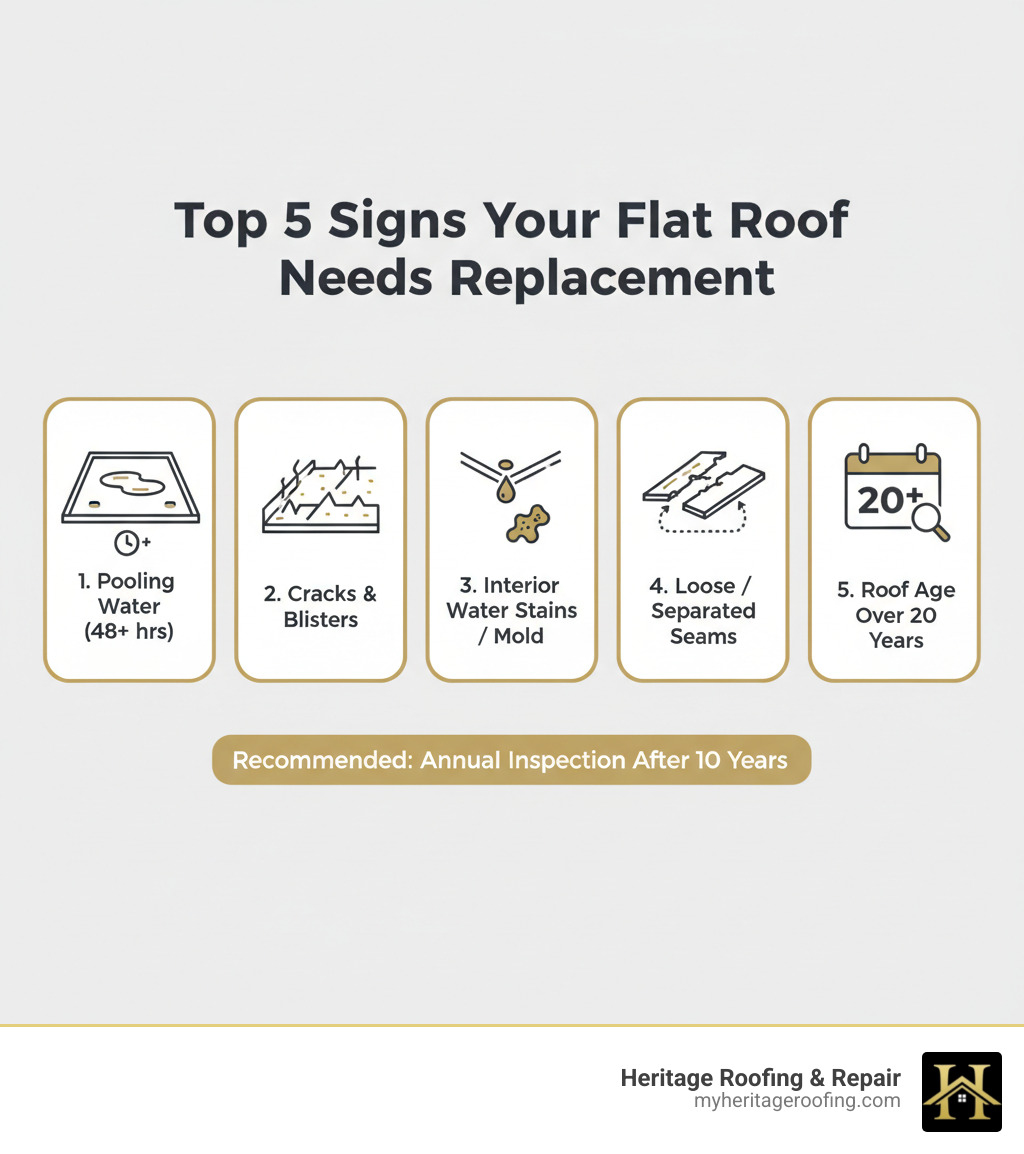
Key signs your flat roof needs replacement include:
- Persistent leaks or water stains on ceilings.
- Pooling water that remains for more than 48 hours.
- Visible cracks, blisters, or separated seams.
- Widespread bubbling or an “alligatoring” texture.
- The roof is approaching or has exceeded its 20-year lifespan.
Best Materials for Residential Flat Roofs: Costs, Lifespans, Pros and Cons
When you decide how to replace flat roof on a residential home, your first major decision is the material. This choice impacts everything from your budget to your home’s energy efficiency for the next 15 to 50 years. A flat roof replacement can cost anywhere from $4 to $19 per square foot, a range driven almost entirely by material differences.
At Heritage Roofing & Repair, we’ve installed these materials across Northwest Arkansas for over 50 years, seeing how they perform in our climate.
| Material Type | Average Cost/Sq. Ft. | Lifespan | Pros | Cons |
|---|---|---|---|---|
| EPDM Rubber | $6-$10 | 10-30 years (up to 50+ with maintenance) | Lightweight, durable, flexible in extreme temperatures, fewer seams. | Black EPDM absorbs heat, susceptible to punctures from sharp objects. |
| TPO Roofing | $7-$11 | 15-30 years | Excellent energy efficiency, durable, heat-welded seams for superior waterproofing. | Newer technology, quality varies by manufacturer, can be stiff in extreme cold. |
| PVC Roofing | $8-$13 | 20-30 years | Extremely durable, chemical and fire resistant, heat-welded seams. | More expensive, less flexible in very cold temperatures. |
| Modified Bitumen | $8-$12 | 10-20 years | Good flexibility, high tear resistance, safer peel-and-stick options available. | Shorter lifespan, torch-down application is a fire hazard, less scuff resistant. |
| Built-Up Roof (BUR) | $12-$19 | 20-30 years | Excellent fire resistance, proven longevity, superior waterproofing due to multiple layers. | Very heavy, labor-intensive installation, difficult to locate leak sources. |
Single-Ply Membranes (EPDM, TPO, PVC)
These modern systems use a single layer of synthetic material, reducing seams and potential leak points. They are lightweight and flexible.
- EPDM (Ethylene Propylene Diene Monomer), or “rubber roofing,” is an affordable and durable workhorse, lasting 10 to 30 years and sometimes over 50 with proper care. Its large sheets minimize seams, though traditional black EPDM absorbs heat.
- TPO roofing is a popular choice in hot climates due to its naturally reflective surface, which lowers cooling costs. Its heat-welded seams create a monolithic, waterproof bond. TPO typically lasts 15 to 30 years.
- PVC (Polyvinyl Chloride) is a premium single-ply option, exceptionally resistant to chemicals, fire, and punctures. Like TPO, its seams are heat-welded for superior strength. A PVC roof generally lasts 20 to 30 years but comes at a higher cost of $8 to $13 per square foot.
Modified Bitumen (Mod-Bit)
Modified Bitumen is an evolution of traditional asphalt roofing, improved with polymers for better flexibility and durability. It’s known for its tear resistance, making it suitable for roofs with foot traffic. Mod-Bit lasts 10 to 20 years and offers safer peel-and-stick application methods, avoiding the fire risk of traditional torch-down installations.
Built-Up Roofing (BUR)
BUR, the classic “tar and gravel” roof, has a proven track record of over 100 years. It consists of multiple layers of asphalt-saturated felts topped with gravel, offering redundant waterproofing and excellent fire resistance. While heavy and labor-intensive to install, a BUR system can last 20 to 30 years, making it a top choice for homeowners who prioritize proven longevity over upfront cost.
The Flat Roof Replacement Process: A Step-by-Step Guide
When homeowners ask how to replace flat roof on a residential home, they’re often surprised it’s a carefully orchestrated sequence of steps. A methodical approach is what separates a roof that lasts 15 years from one that performs for 30 or more. While this project demands professional expertise, understanding the process helps you recognize quality workmanship. Let’s walk through the stages of a professional roof replacement.
Step 1: Preparation and Safety Setup
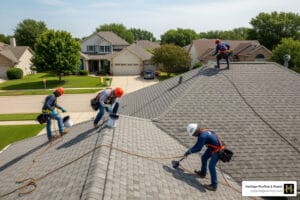
Before work begins, a professional crew prepares the site. This involves working with you to move outdoor furniture and protect landscaping with tarps. On their end, the crew establishes a safety perimeter, sets up fall protection, and strategically places a dumpster for efficient debris removal. A clear timeline, typically two to five days, is established to minimize disruption and give you peace of mind.
Step 2: The Tear-Off
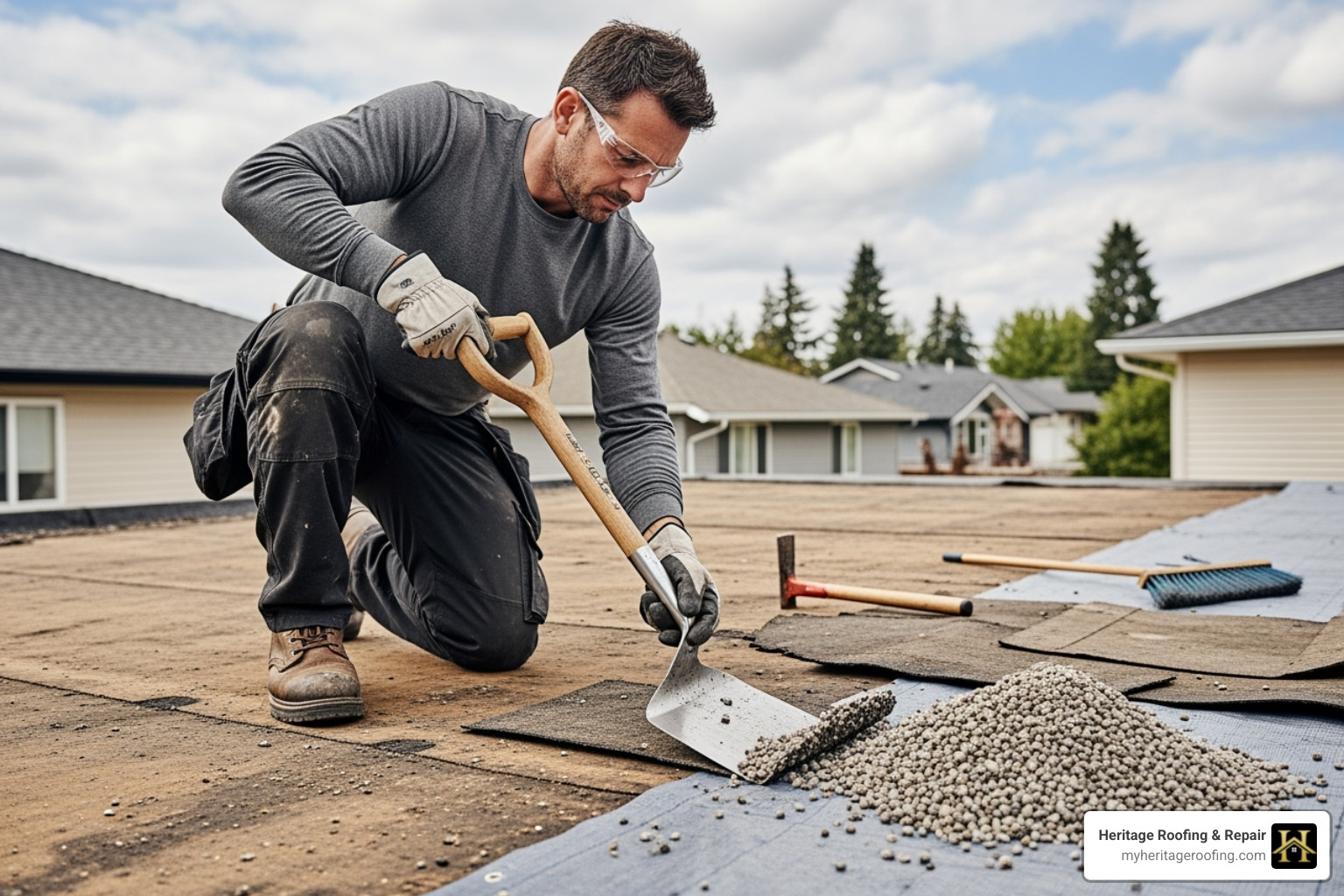
This is the demolition phase, where every layer of old roofing material is systematically removed down to the bare structural deck using specialized tools like spades and pry bars. A professional crew works efficiently, immediately transferring debris to the dumpster to maintain a safe and clean worksite. This step provides the first clear look at the underlying deck’s condition, revealing any hidden water damage or soft spots.
Step 3: Deck Inspection and Essential Repairs
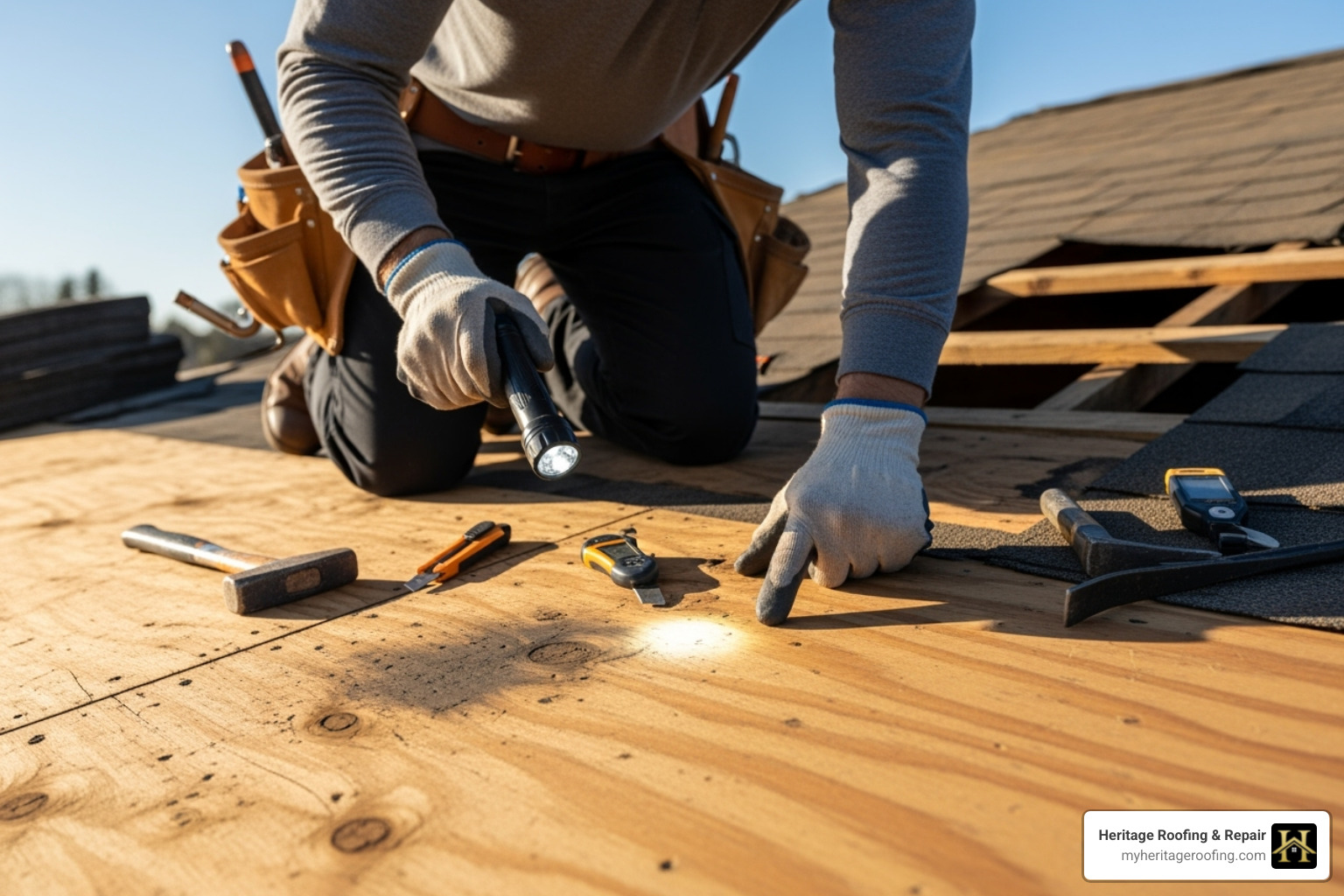
With the deck exposed, a thorough inspection is performed. This is arguably the most critical step. The crew checks every square foot for rot, moisture damage, and structural weakness. Any compromised plywood or OSB sheathing is cut out and replaced with new material. Installing a new roof over a rotten deck is a recipe for failure, so ensuring a solid, clean, and level substrate is non-negotiable.
Step 4: Installing the New Roof System
Now, the new roof is built. The process typically includes:
- Insulation & Underlayment: Depending on the roof design and climate, rigid insulation boards may be installed, followed by a vapor barrier or underlayment for an extra layer of protection.
- Membrane Installation: The primary waterproof membrane (e.g., EPDM, TPO, PVC) is unrolled and secured. For TPO and PVC, seams are heat-welded to create a single, continuous surface that is stronger than the membrane itself. For EPDM, specialized adhesives are used.
- Flashing and Details: Flashing is carefully installed around all penetrations—vents, chimneys, skylights, and walls. This is the unsung hero of flat roofing, as it directs water away from the most vulnerable areas and is critical for preventing leaks.
Throughout the installation, professionals follow manufacturer specifications to the letter. This not only ensures quality but also validates your material warranty.
DIY vs. Hiring a Pro: Making the Right Call for Your Flat Roof
When facing a flat roof replacement, the temptation to DIY can be strong. However, this decision isn’t just about cost—it’s about assessing complexity, safety risks, and the long-term consequences for your home. For a project as critical as your roof, the choice has implications that can last for decades.
The DIY Approach: What You Need to Know

A DIY approach might seem feasible for a small shed or garage using user-friendly materials like peel-and-stick membranes. However, for your home, the risks are substantial. Flat roofing is physically demanding work at height, and falls are a serious danger. Furthermore, small installation errors—an imperfectly sealed seam or incorrect flashing—can lead to major leaks and water damage down the line. Crucially, most material warranties are voided if not installed by a certified professional, leaving you without coverage if the material fails. As our DIY vs Professional Roofing guide explains, what seems like a cost-saving measure can quickly become a very expensive mistake.
Why Professional Installation is Recommended for Most Homes
When it comes to how to replace flat roof on a residential home, professional installation is essential. The stakes are simply too high. A professional crew has the expertise to handle complex systems, ensure proper drainage slope (a critical detail), and master the art of creating watertight seams and flashing. These are the areas where most DIY projects fail.
Professionals also provide robust workmanship warranties that complement material warranties, giving you comprehensive protection. They carry full insurance and liability coverage, protecting you from any accidents or damage during the project. For homeowners in Northwest Arkansas, partnering with a trusted local expert is an investment in your home’s long-term health.
At Heritage Roofing & Repair, we bring over 50 years of experience and a commitment to doing the job right the first time. Contact us for a professional assessment.
Heritage Roofing & Repair
3458 Arkansas State Hwy 221, Berryville, AR 72616
(870) 654-1164
Protecting Your Investment: Maintenance, Warranties, and Longevity
A new flat roof is a major investment. Understanding how to replace flat roof on a residential home is just the start; knowing how to protect it ensures you get the maximum lifespan and performance.
How to Maintain Your Flat Roof for a 50+ Year Lifespan
Even the best roof needs regular care to reach its full potential. While materials like EPDM can last 50 years, that longevity depends on proactive maintenance.
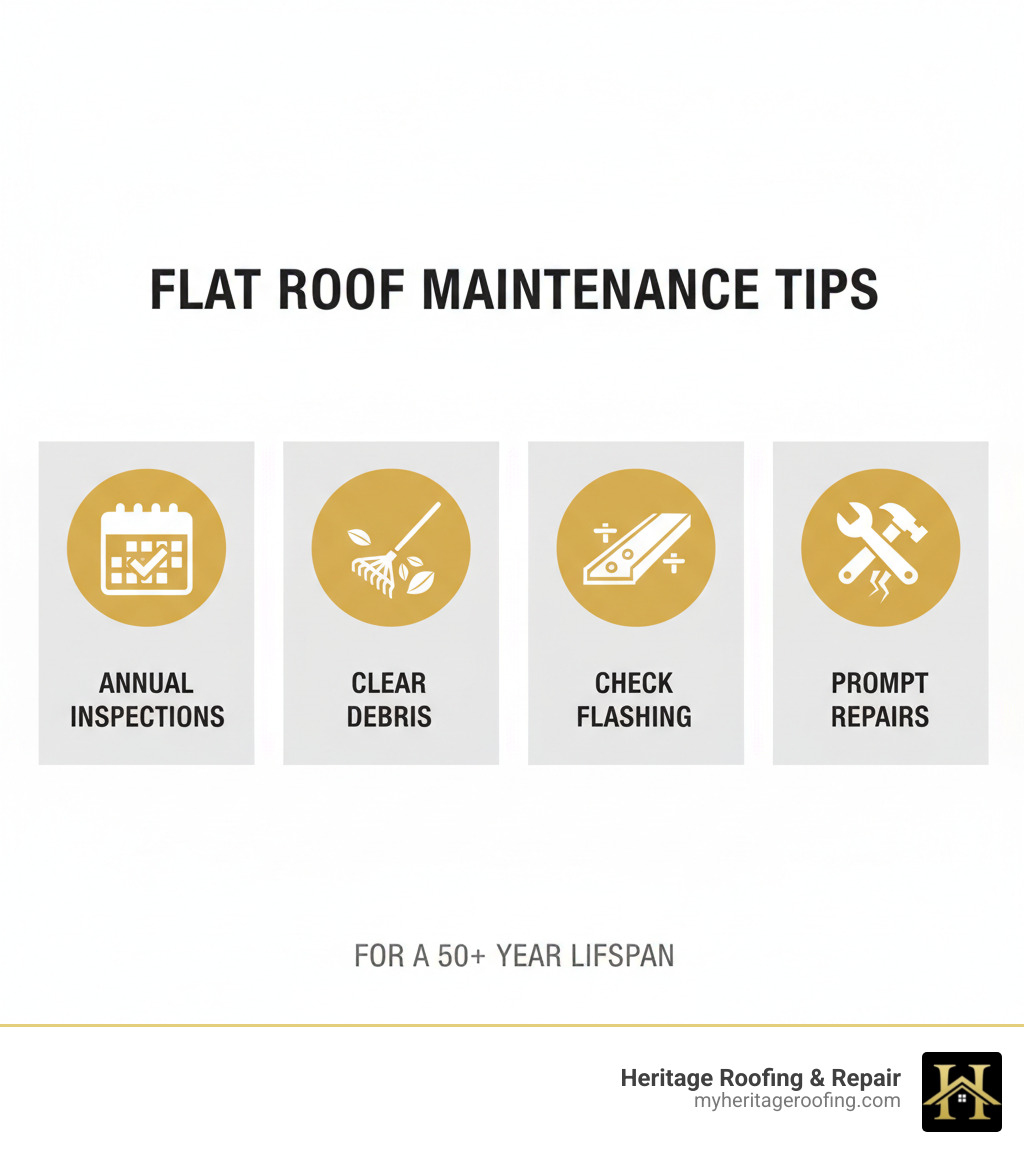
- Inspect Regularly: Visually inspect your roof twice a year (spring and fall) and after major storms.
- Clear Debris: Remove leaves, branches, and dirt, paying close attention to drains and scuppers to prevent blockages and pooling water.
- Check for Damage: Look for punctures, tears, or signs of seam separation on single-ply membranes. For BUR roofs, inspect the integrity of the top layer of protection and ensure gravel is evenly distributed.
- Schedule Professional Maintenance: An annual professional roof maintenance visit is invaluable. A trained eye can spot subtle issues before they become major problems.
Understanding Flat Roof Warranties
Your warranties are your safety net. Most systems come with 10 to 20 years of coverage. It’s crucial to understand the two types:
- Manufacturer’s Warranty: Covers defects in the roofing material itself. If the membrane fails prematurely due to a product flaw, the manufacturer is responsible.
- Workmanship Warranty: Provided by your contractor, this covers the quality of the installation. If the roof fails due to poor installation, the contractor will fix it.
Crucially, most manufacturer warranties are only valid if the roof is installed by a certified professional and may require documented regular maintenance. Always keep your warranty documents and understand their terms.
Mitigating Common Flat Roof Problems
Proactive measures are key to preventing the most common sources of flat roof failure.
- Prevent Pooling Water: Ensure your roof has a proper slope and that drains and scuppers are always clear of debris. This is the most effective way to combat the damaging effects of standing water.
- Secure Seams and Flashing: Since these are the most vulnerable points for leaks, the best defense is expert installation using heat-welding or professional-grade adhesives. Regular inspection of these areas is critical.
- Avoid Membrane Damage: Blistering and alligatoring are often signs of trapped moisture or age. Choosing quality materials and ensuring proper installation helps prevent these issues. To avoid punctures, limit foot traffic, use designated walk pads, and remove sharp debris promptly.
A thorough professional roof inspection is the best way to catch potential issues early, when repairs are simple and inexpensive.
Frequently Asked Questions about Residential Flat Roof Replacement
How much does a flat roof replacement cost in 2025?
The average cost to replace a residential flat roof is $4 to $19 per square foot, which typically translates to $4,000 to $19,000 for a 1,000 sq. ft. roof. The final price depends on the material (e.g., EPDM is less expensive than BUR), roof complexity, your location, and the condition of the underlying roof deck. For a precise quote custom to your home, call us at (870) 654-1164 for a detailed written estimate.
How is a flat roof different from a traditional pitched roof?
The key difference is water management. Pitched roofs use gravity and slope to shed water quickly. Flat roofs, which have only a slight slope (at least 1/4 inch per foot), rely on a continuous, seamless waterproof membrane and a drainage system (drains or scuppers) to manage water. This fundamental difference dictates the materials, installation techniques, and maintenance required for flat roofs.
Conclusion: Securing Your Home with a Quality Flat Roof Replacement
Replacing a flat roof on a residential home is a significant project, but one that ultimately protects your biggest investment. From choosing the right materials like durable EPDM membranes or energy-efficient TPO, to understanding the intricacies of the tear-off and installation process, every step contributes to a long-lasting, watertight result. While some small, simple jobs might tempt the DIY enthusiast, the expertise of a professional is invaluable for ensuring proper drainage, watertight seams, and a valid warranty.
With over 50 years of experience, our team at Heritage Roofing & Repair provides the quality craftsmanship and peace of mind Arkansas homeowners deserve. We’re here to guide you through every decision, ensuring your new flat roof is installed to the highest standards, protecting your home for decades to come.
Ready to protect your home with a new roof? Schedule your free estimate today at (870) 654-1164.