Why Filing a Roof Replacement Insurance Claim with an Adjuster Is Critical After Storm Damage
Knowing how to file a roof replacement insurance claim with an adjuster can feel overwhelming after a storm, but the process is manageable when you follow a clear path. For homeowners in Northwest Arkansas, partnering with a local expert who understands both insurance procedures and quality craftsmanship is the key to a successful outcome.
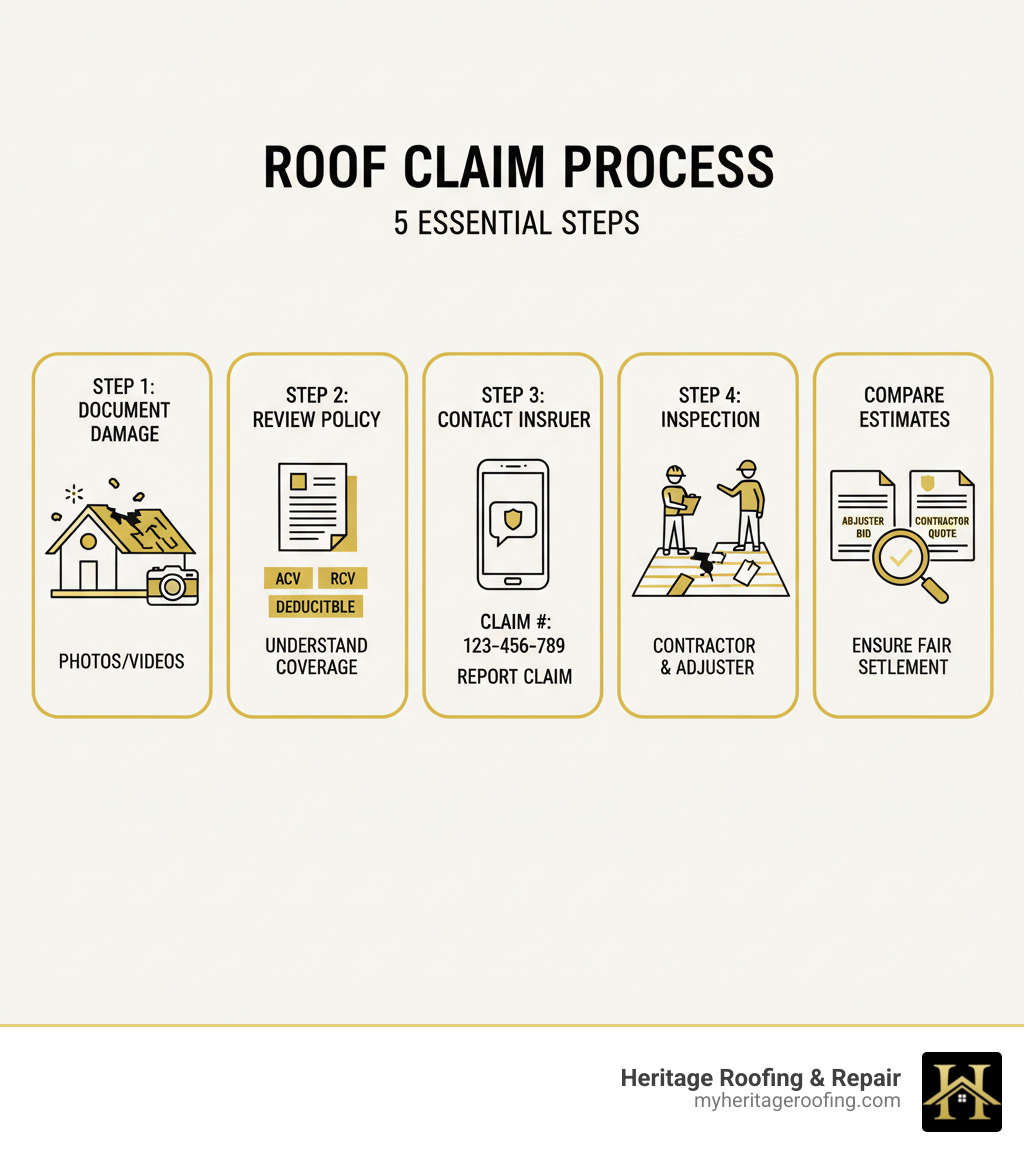
Quick Answer – The 5 Essential Steps:
- Document the damage immediately – Take photos and videos of all visible damage from multiple angles.
- Review your insurance policy – Understand your coverage type (ACV vs. RCV), deductible, and filing deadlines.
- Contact your insurance company – Report the damage promptly to get a claim number.
- Schedule the adjuster inspection – Have a professional roofing contractor present during this crucial visit.
- Review estimates carefully – Compare the adjuster’s assessment with your contractor’s quote and submit supplements if needed.
Most policies cover storm damage, but your final payout depends heavily on your coverage type. The average roof repair costs between $400 and $2,000, and knowing if you have Replacement Cost Value (RCV) versus Actual Cash Value (ACV) is critical to understanding your out-of-pocket expenses. After a storm, time is of the essence, as most policies require you to report damage within 30 to 60 days. Missing this window can result in a denied claim, leaving you to pay for everything.
I’m Rex Wisdom, owner of Heritage Roofing & Repair. For over 50 years, my family has helped homeowners in Berryville, AR, steer the complex roof replacement and insurance claims process. Our hands-on experience ensures you get the fair settlement you deserve. Let’s walk through what you need to know to protect your investment.
Step 1: Immediate Actions and Damage Documentation
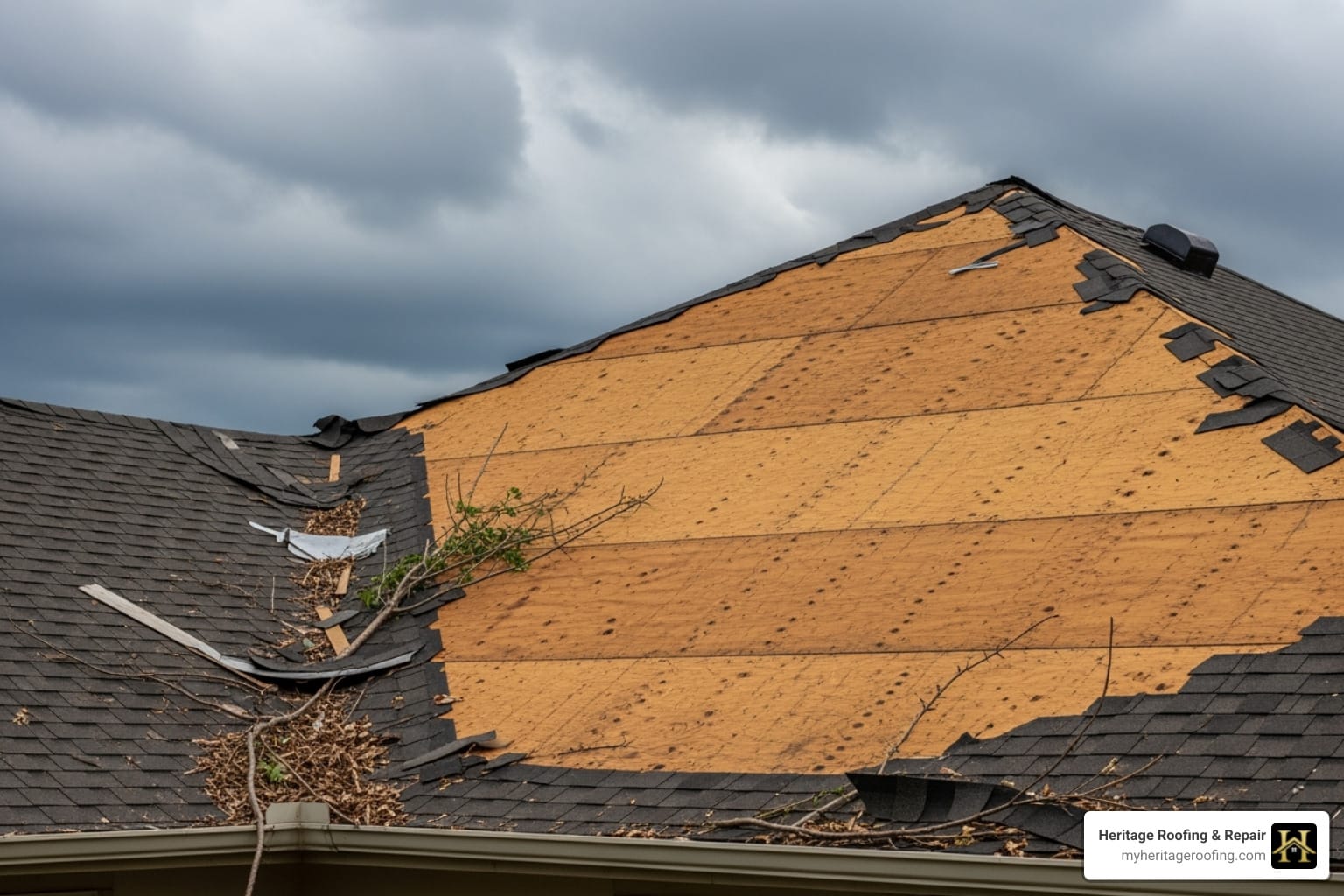
After a storm damages your roof, the first 48 hours are critical. The actions you take will directly impact the success of your insurance claim and how much coverage you receive. This methodical approach is central to learning how to file a roof replacement insurance claim with an adjuster effectively.
Prioritize Safety and Prevent Further Damage
Your first priority is safety. Never climb on a damaged roof, as it may be unstable or wet. If you see downed power lines or smell gas, evacuate your home and call emergency services immediately.
Next, you must take reasonable steps to prevent further damage, which is a standard requirement in most insurance policies. Cover active leaks with tarps to stop water from ruining insulation, weakening structures, and causing mold growth. Board up any broken windows to protect your home’s interior. Keep every receipt for these temporary repairs—tarps, plywood, or emergency service calls—as they are often reimbursable under your policy.
Crucially, do not make permanent repairs before the adjuster’s inspection. Emergency tarping is acceptable; calling for a full roof replacement is not. Doing so can lead to a claim denial because the insurer couldn’t assess the original damage. When in doubt, consult our Emergency Roof Repair Complete Guide or call your agent first.
How to Document Roof Damage for Your Claim
Comprehensive documentation is the key to a successful claim. Think like a detective building a case—the more evidence you gather, the stronger your position becomes.
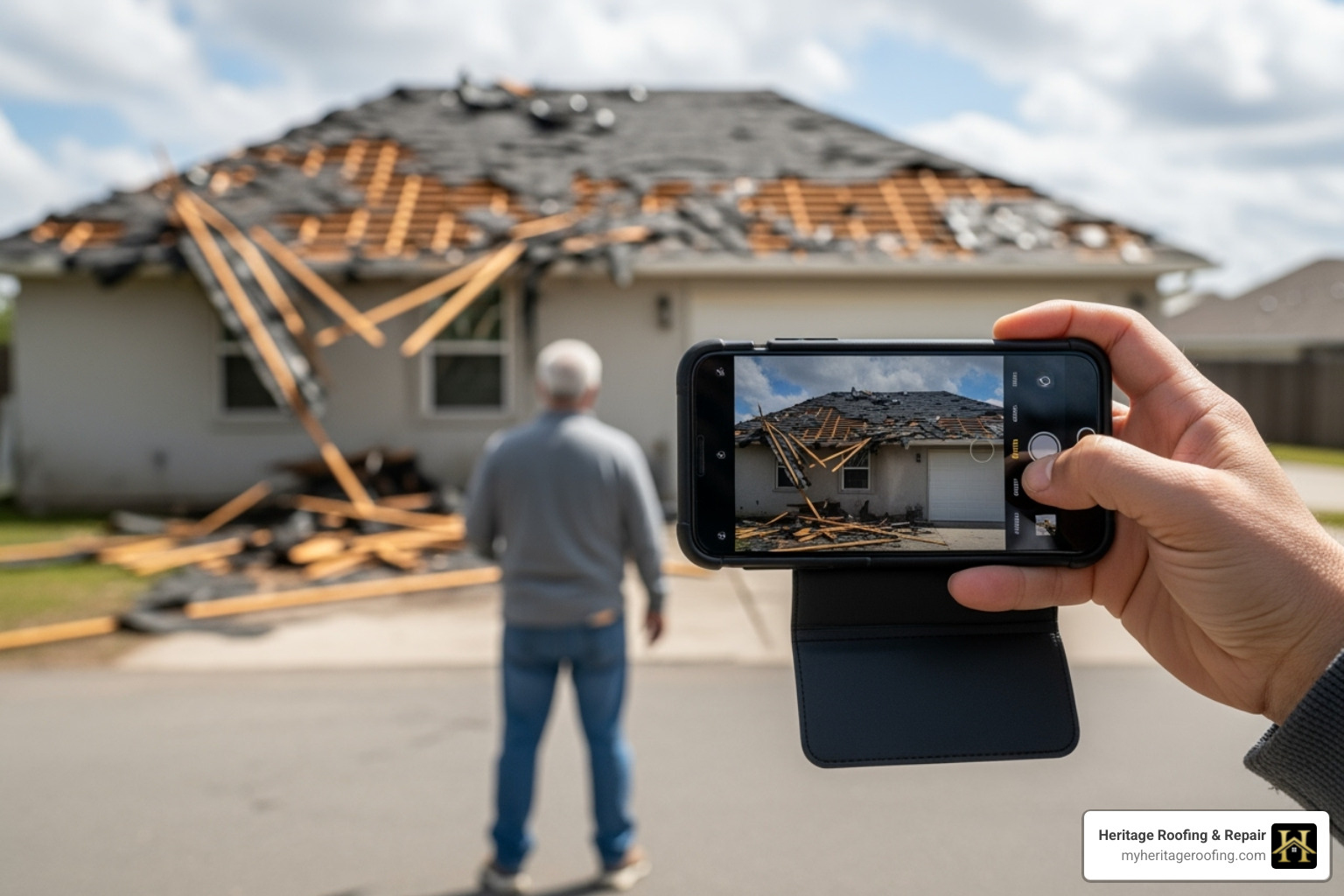
- Take Photos and Videos: From the ground, capture wide shots of the property and close-ups of damaged shingles, dents in gutters, and missing flashing. If you can do so safely, use a drone for aerial shots, but never climb on the roof yourself.
- Document Interior Damage: Photograph water stains on ceilings, wet insulation in the attic, and any other damage inside your home. This proves the roof failure caused consequential damage.
- Note the Storm Details: Record the exact date and time of the storm. Use local weather reports or National Weather Service data to link the damage to a specific, covered event.
- Keep a Communication Log: In a notebook or digital file, log every conversation related to your claim. Note the date, time, person’s name and title, and what was discussed. This log is invaluable if disputes arise.
Organized, detailed documentation shows you are serious and prepared, making the adjuster’s job easier and strengthening your claim from the start.
Step 2: Understanding Your Policy and Filing the Claim

Understanding your insurance policy can mean the difference between a smooth claim and a frustrating battle. It’s your contract with the insurer, outlining exactly what’s covered, what you’ll pay, and how long you have to act.
Decoding Your Homeowner’s Insurance Policy
The most critical distinction to understand is Actual Cash Value (ACV) versus Replacement Cost Value (RCV). This one factor can mean thousands of dollars difference in your settlement.
- Actual Cash Value (ACV) pays for your roof’s value at the time of loss, factoring in depreciation for age and wear. If your roof is old, you may only receive a fraction of what a new roof costs.
- Replacement Cost Value (RCV) pays the full cost to replace your damaged roof with new, similar materials, minus your deductible. It is typically paid in two installments: an initial check for the ACV, and a second check for the recoverable depreciation after you complete the repairs.
| Feature | Actual Cash Value (ACV) | Replacement Cost Value (RCV) |
|---|---|---|
| Payout Basis | Depreciated value of the roof | Cost to replace with new materials of similar quality |
| Age/Wear Factor | Significant reduction for age/wear | Eventually covers full cost regardless of age (after depreciation is recovered) |
| Initial Payment | Lower, based on depreciated value | Initial payment for ACV, then second payment for recoverable depreciation |
| Out-of-Pocket | Potentially higher, to cover depreciation gap | Typically lower, only deductible and any upgrades |
| Premiums | Generally lower | Generally higher |
Also, review your deductible, which is the amount you pay before insurance kicks in. In storm-prone areas, this may be a percentage (e.g., 1-2%) of your home’s insured value, which can be substantial. Pay close attention to policy time limits, as most insurers require you to report damage within 30 to 60 days. For more help, the Understanding Your Insurance Policy video series offers clear explanations.
How to Contact Your Insurer and Initiate the Claim
Once you’ve documented the damage, contact your insurance company immediately. Don’t wait. You can usually file a claim by phone, through an online portal, or via a mobile app.
Be prepared with your policy number, the date of the storm, and a clear description of the damage. During this initial contact, the insurer will assign you a claim number. Write it down immediately and keep it handy, as it will be your reference for all future communications. Log this call, the representative’s name, and your claim number in your communication log. This organized approach is a key part of how to file roof replacement insurance claim with adjuster and sets the stage for a successful outcome.
How to File a Roof Replacement Insurance Claim with an Adjuster: The Inspection Phase
The adjuster’s inspection is the most critical phase of your claim. This meeting is where the scope of damage is officially determined, and the adjuster’s assessment will form the basis of your settlement offer. Proper preparation can significantly improve your outcome.
What to Expect During the Insurance Adjuster’s Inspection
After you file, your insurer assigns an adjuster to evaluate the damage, determine its cause, and estimate repair costs. They will schedule a visit to your home to conduct a thorough inspection.
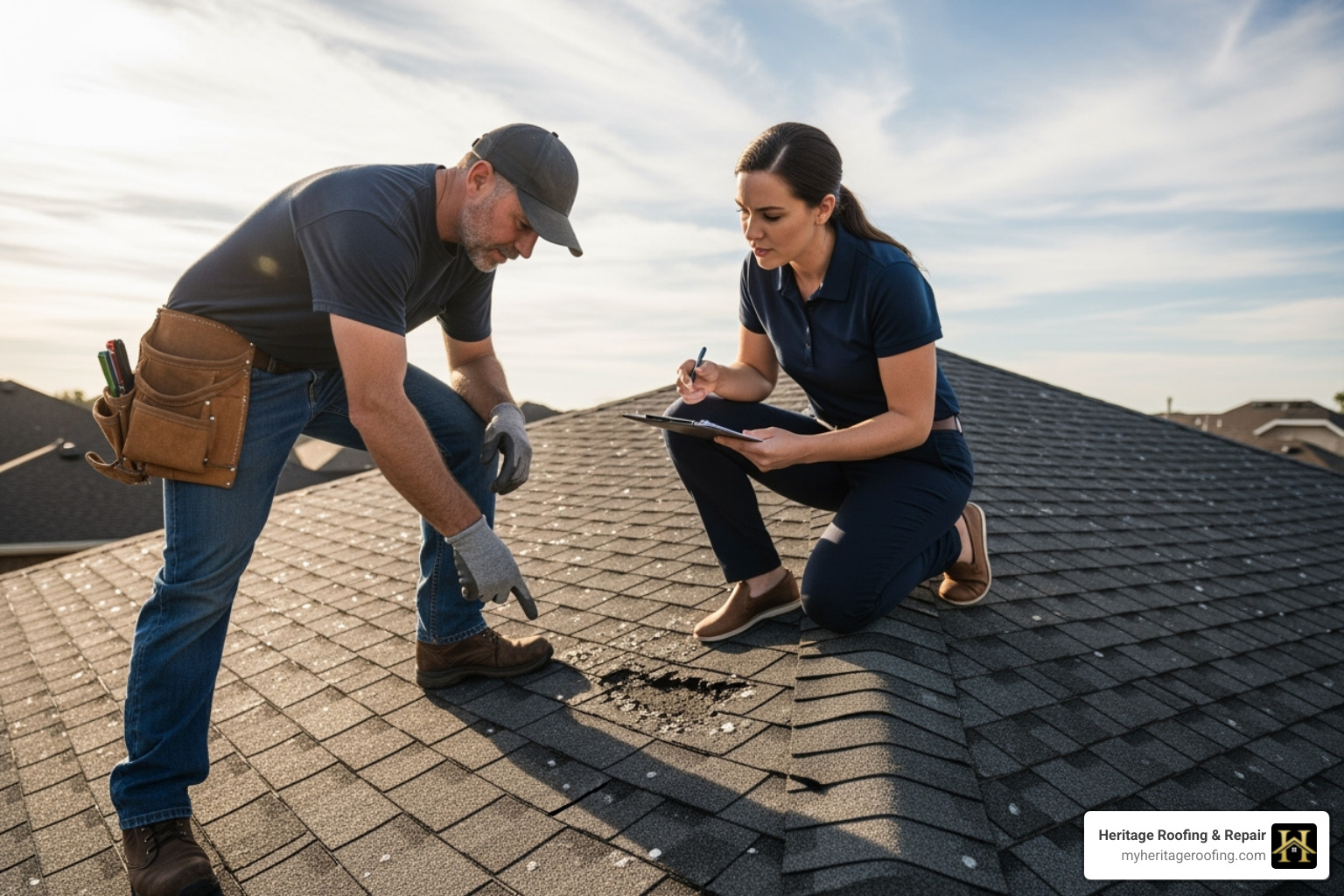
The adjuster will look for evidence that the damage is recent and caused by a covered event, like a storm. They will likely get on your roof to check for hail impacts, creased or missing shingles, and damage to vents or flashing. They will also inspect any interior damage you’ve reported. Throughout the process, they will take extensive measurements and photos to create a detailed report and cost estimate using specialized software.
Your role is to be present and engaged. Walk the adjuster through the damage you documented, pointing out specific areas of concern. This is your chance to ensure nothing gets missed.
Why Your Roofing Contractor Should Be Present
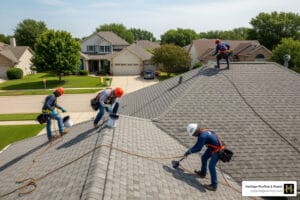
Here is our strongest recommendation: have a qualified roofing contractor present during the insurance adjuster’s inspection. This single step dramatically improves claim outcomes.
- They Are Your Advocate: A roofer has a trained eye for subtle damage an adjuster might overlook, ensuring a comprehensive assessment.
- They Ensure Accuracy: Your contractor can verify the adjuster’s measurements and scope of work on the spot, preventing your claim from being undervalued.
- They Know Local Codes: Roof replacements often require mandatory code upgrades. Your local roofer ensures these costs are included in the claim, something an out-of-town adjuster might miss.
- They Speak the Language: Roofers and adjusters use the same technical terms. This professional dialogue ensures clear communication and prevents misunderstandings about necessary storm-damage repairs.
Having an expert from a company like Heritage Roofing & Repair at your side levels the playing field. You can also learn more about what to look for when you Hire a qualified roof inspector.
What to Do if the Adjuster’s Estimate Seems Too Low
Receiving a low estimate is frustrating but common. Do not accept an inadequate settlement. You have the right to negotiate.
- Compare Estimates: Carefully review the adjuster’s line-item estimate with your contractor’s quote. Look for missing materials, incorrect pricing, or an insufficient scope of work.
- Request a Re-inspection: You can legally request a second inspection. Insist that your roofing contractor is present this time to point out discrepancies.
- Submit a Supplement: Your contractor can file a supplemental claim for any items that were missed or underpaid in the initial estimate. This is a standard and necessary part of the insurance process.
- Consider a Public Adjuster: If you reach a stalemate, a public adjuster works for younot the insurance companyto negotiate a fair settlement. While they charge a fee, they often secure significantly higher payouts.
Local Claim Support in Berryville, AR
Heritage Roofing & Repair
3458 Arkansas State Hwy 221, Berryville, AR 72616
(870) 654-1164
Step 4: Claim Approval, Contractor Selection, and Potential Denials
After navigating the inspection and estimate review, the final phase involves getting your claim approved, choosing the right contractor, and knowing how to handle potential denials. This is where your diligence pays off.

How to Choose a Reputable Roofing Contractor
Once your claim is approved, your choice of contractor determines the quality and longevity of your roof replacement. Beware of “storm chasers” who flock to disaster areas and disappear after collecting payment. Instead, look for a contractor who is:
- Local: Has a physical office and a long-standing reputation in your community.
- Licensed and Insured: Always verify their liability insurance and workers’ compensation. You can check credentials through your state’s consumer protection agency at www.usa.gov/state-consumer.
- Experienced with Claims: A contractor familiar with the insurance process can advocate for you effectively.
- Well-Reviewed: Check Google, the Better Business Bureau, and ask for local references.
- Transparent: Provides a detailed, written estimate and a strong workmanship warranty. Membership in organizations like the National Roofing Contractors Association is also a good sign.
Common Reasons a Roof Damage Claim is Denied
Understanding why claims are denied helps you avoid pitfalls. The most common reasons include:
- Lack of Maintenance: Insurance covers sudden, accidental damage, not gradual decay from neglect.
- Age or Wear and Tear: If a roof is past its expected lifespan, an insurer may argue the failure was due to age, not the storm.
- Improper Installation: Insurers will not pay to fix another roofer’s poor workmanship.
- Excluded Perils: Standard policies don’t cover everything. Floods, for example, require separate insurance.
- Missed Filing Deadline: Waiting longer than the 30-60 day window specified in your policy is an easy reason for denial.
What to Do if Your Claim is Denied
A denial isn’t necessarily the final word. If your claim is denied, take these steps:
- Get it in Writing: Request a formal denial letter that cites the specific policy language used to justify the decision.
- Review Your Policy: Compare the insurer’s reasoning against your policy’s actual terms.
- File an Appeal: Submit a formal appeal with new evidence, such as a detailed report from your roofing contractor that directly refutes the denial reasons.
- Request a Second Adjuster: You have the right to a second opinion. Insist your contractor is present for this meeting.
- Hire a Public Adjuster or Attorney: For complex or wrongfully denied claims, these professionals work on your behalf to secure the settlement you deserve.
Work With a Local Storm Damage Expert in Berryville, AR
When storm damage strikes, you need more than just a contractoryou need a local partner who understands the challenges Northwest Arkansas homeowners face. Learning how to file roof replacement insurance claim with adjuster is easier when you have an experienced team on your side.
Heritage Roofing & Repair has served this community for over 50 years, guiding families through the insurance process from start to finish. We know how to work with adjusters to ensure nothing is overlooked and that you get a fair settlement. We’re not just contractors; we’re your neighbors, committed to restoring your home and your peace of mind.
Ready to move forward? Contact our team to schedule your inspection and claim walkthrough, and well help you protect your home with proven, local expertise.
Conclusion: Securing Your Claim and Protecting Your Home
Knowing how to file roof replacement insurance claim with adjuster transforms a stressful ordeal into a manageable process. The keys to success are immediate action, thorough documentation, and a clear understanding of your policy. Having an expert advocate on your side during the adjuster inspection is the single most effective way to ensure your estimate is fair and complete.
If your initial offer is too low or the claim faces denial, remember you have the right to appeal. Persistence, backed by professional documentation from your contractor, often leads to a successful outcome.
At Heritage Roofing & Repair, we’ve helped hundreds of Northwest Arkansas homeowners steer this exact process. We’re not storm chasers; we’re your local partners, here to ensure your home is restored correctly and your claim is handled fairly. A successful claim is your path to peace of mind. When you partner with an experienced roofing contractor, you’re protecting your most valuable asset.
For a complete, step-by-step walkthrough, explore our Roofing Insurance Claims Ultimate Guide. It’s designed to give you the confidence to advocate for yourself effectively.