Homeowners Insurance Roof Damage: Definitive Guide to Coverage, Costs, and Claims
Homeowners insurance pays for sudden, accidental roof damage (wind, hail, fire, falling objects) and excludes wear, neglect, and age; your payout hinges on ACV vs. RCV and your deductible. The fastest way to protect your claim and control costs is to document early and work with a trusted Northwest Arkansas roofing contractor. Homeowners insurance roof damage coverage is one of the most confusing yet financially critical aspects of your policy. Understanding it can be the difference between a fully covered replacement and an unexpected bill for thousands of dollars. My family has been helping homeowners in Northwest Arkansas steer these complex claims for over 50 years, ensuring they get the protection they deserve.
Here’s what you need to know:
- Covered Damage: Policies typically cover sudden, accidental events like wind, hail, fire, and falling trees.
- Excluded Damage: Wear and tear, poor maintenance, neglect, and old age are generally not covered.
- Payout Types: Your policy will pay either Actual Cash Value (depreciated) or Replacement Cost Value (full cost).
- Your Deductible: This is the amount you pay out-of-pocket (typically $500-$2,000 or 1-5% of your home’s value) before insurance pays.
Many homeowners assume their roof is fully protected, but the reality is buried in your policy’s fine print. A full roof replacement can exceed $11,500, and filing a claim for minor damage that doesn’t significantly exceed your deductible could cost you more in increased premiums than paying for the repair yourself.
This guide breaks down what your homeowners insurance covers, what it excludes, and how to successfully file a claim. I’m Rex Wisdom, owner of Heritage Roofing & Repair. For over 50 years, my family has specialized in the intersection of roof repair and insurance claims. I’m here to share what I’ve learned from working with hundreds of adjusters and families to get claims approved.
Covered Perils vs. Exclusions: Exactly When Insurance Pays for Roof Damage
Your homeowners insurance policy operates on a simple principle: it protects you from unexpected events, not predictable failures. The difference between an approved claim and a denial often comes down to understanding what insurers call “perils”—sudden, accidental events that a homeowner could not reasonably prevent. Nationwide, wind and hail are the most frequently filed homeowners claims, according to the Insurance Information Institute (III). See: https://www.iii.org/fact-statistic/facts-statistics-homeowners-insurance
Homeowners insurance roof damage coverage extends to incidents like wind, hail, and fire because they happen without warning. Conversely, your policy won’t cover issues that develop slowly from neglect or old age. If your roof fails because you haven’t replaced aging shingles, you’ll be paying for the repairs yourself. Insurers view this as a preventable maintenance issue. Understanding this distinction is key to knowing whether you’re facing a $500 deductible or a $11,500 replacement bill.
Covered Roof Damage: When Your Insurance Steps In
Most standard homeowners policies protect against “sudden and accidental” damage—events beyond your control. Your claim is likely to be approved if the damage is caused by one of these covered perils:
- Wind Damage: Strong winds from thunderstorms or tornadoes that tear off shingles or lift flashing.
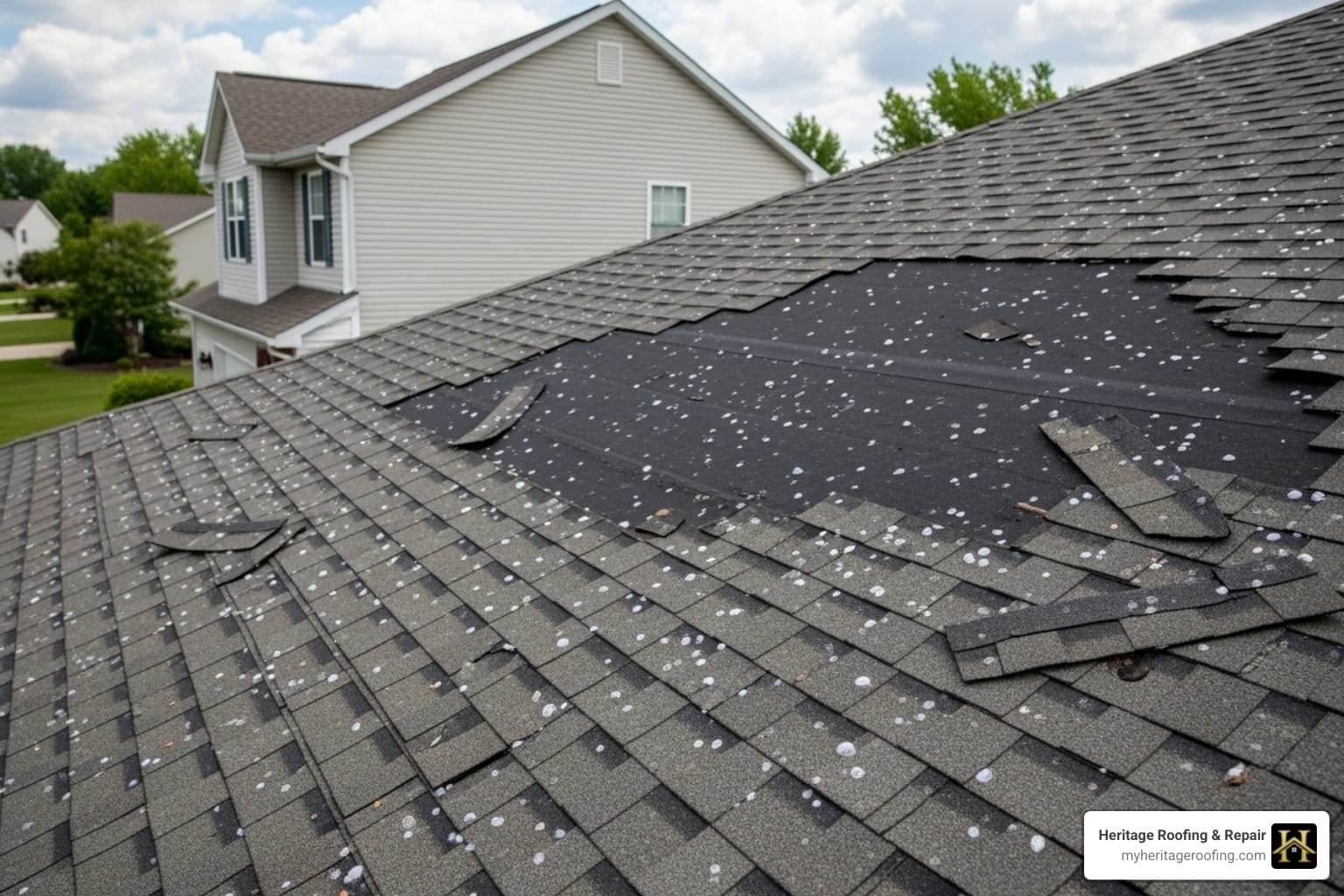
- Hail Damage: Dents, cracks, and granule loss on shingles caused by hailstones. Because hail storms are sudden, insurers typically cover the resulting damage.
- Fire Damage: Damage from fires starting inside or outside the home, including smoke damage and water damage from firefighting efforts.
- Falling Objects: A tree limb, satellite dish, or construction debris crashing through your roof.
- Weight of Ice and Snow: Structural damage or collapse from heavy accumulation, which is more common in colder climates.
- Vandalism: Intentional damage to your roof, such as graffiti or deliberate destruction.
- Interior Water Damage: If a covered peril creates an opening in your roof, the resulting water damage to ceilings, walls, and insulation is typically covered.
- Personal Belongings: The personal property portion of your policy often covers items like furniture and electronics damaged by water intrusion from a covered event.
Excluded Roof Damage: What You’ll Likely Pay For Out-of-Pocket
Understanding exclusions can save you the frustration of a denied claim. Insurers expect you to maintain your property, and they will not pay for damage resulting from:
- Wear and Tear: The natural degradation of roofing materials over time. A 20-year-old roof with curling shingles is considered to be at the end of its lifespan, not damaged by a peril.
- Neglect and Poor Maintenance: Failure to clean gutters, repair missing shingles, or address other obvious problems that lead to more extensive damage.
- Improper Installation: If your roof fails due to poor workmanship from an unqualified contractor, your insurance will not cover it.
- Old Age: Many insurers will not provide full replacement value for roofs over 15-20 years old and may deny claims entirely for roofs past their expected lifespan.
- Pest Damage: Damage from rodents or birds is considered preventable through proper pest control.
- Mold and Rot: These are not covered if they result from a long-term, unaddressed leak. However, mold from a sudden event (like a tree falling on the roof) may be covered.
- Earthquake and Flood Damage: These perils are specifically excluded and require separate, specialized insurance policies.
- Cosmetic Damage: Some policies exclude damage from hail that is purely cosmetic (e.g., dents) if it doesn’t affect the roof’s function or lifespan.
ACV vs. RCV: How Much You’ll Actually Get for Roof Damage Claims
When you file a homeowners insurance roof damage claim, the payout you receive depends on your policy’s specific terms. The amount hinges on two critical factors: how your policy values your roof—Actual Cash Value (ACV) or Replacement Cost Value (RCV)—and your deductible.
Understanding these details is crucial. A basic roof repair averages around $1,147, but a full replacement can exceed $11,500. A misunderstanding of your policy could leave you with a check that covers far less than you expected.
Actual Cash Value (ACV) vs. Replacement Cost Value (RCV)
This is the most important distinction in your policy for a roof damage claim. It determines whether you get enough money to install a new roof or just a fraction of the cost.
Actual Cash Value (ACV) pays you what your roof is worth today, after accounting for depreciation due to age and wear. For example, if a new roof costs $20,000 but your 15-year-old roof has depreciated by $5,000, an ACV policy would pay $15,000 (minus your deductible), leaving you to cover the $5,000 difference.
Replacement Cost Value (RCV) covers the full cost to replace your damaged roof with new materials of similar quality, without deducting for depreciation. In the same scenario, an RCV policy would pay the full $20,000 (minus your deductible), providing enough to actually replace what you lost.
| Feature | Actual Cash Value (ACV) | Replacement Cost Value (RCV) |
|---|---|---|
| Definition | Pays the depreciated value of your roof at the time of loss. | Pays the full cost to repair or replace your roof with new materials. |
| Depreciation | Deducts for age, wear, and tear. | Does not deduct for depreciation. |
| Payout Example | If a 15-year-old roof costs $20,000 to replace but has depreciated by $5,000, ACV pays $15,000 (minus deductible). | If a 15-year-old roof costs $20,000 to replace, RCV pays $20,000 (minus deductible). |
| Roof Age Impact | Significantly impacts payout; older roofs receive less. | Less impacted by age, as long as it’s not excluded due to age. |
| Policy Type | Generally cheaper premiums, but lower payouts. | Higher premiums, but higher payouts, ensuring full replacement. |
Many insurers only offer ACV coverage for roofs over a certain age (often 15-20 years). While RCV policies have higher premiums, they offer far greater financial protection.
Your Deductible’s Role in a Roof Damage Claim
Your deductible is the amount you pay out-of-pocket before your insurance coverage begins. Understanding it helps you decide when it’s worthwhile to file a claim.
- Fixed-Dollar Deductibles: A set amount, such as $500, $1,000, or $2,000. If a repair costs $5,000 and your deductible is $1,000, your insurer pays $4,000.
- Percentage-Based Deductibles: A percentage of your home’s insured value (e.g., 1-5%). For a $300,000 home with a 1% deductible, you would pay the first $3,000.
Some policies also have separate, higher deductibles for specific events like hurricanes or windstorms. Before filing, calculate your out-of-pocket cost. If the repair cost is only slightly more than your deductible, filing a claim may not be wise. A claim on your record can increase your premiums for 3-5 years, potentially costing you more in the long run than the small payout you’d receive. In such cases, paying the full Roof Repair Cost yourself is often the smarter financial move.
File Your Roof Damage Claim in 3 Steps (and Avoid Common Denials)
When you find roof damage, a methodical response can make the difference between a smooth claim and a frustrating denial. By acting quickly, documenting thoroughly, and partnering with the right professionals, you can steer the process successfully.
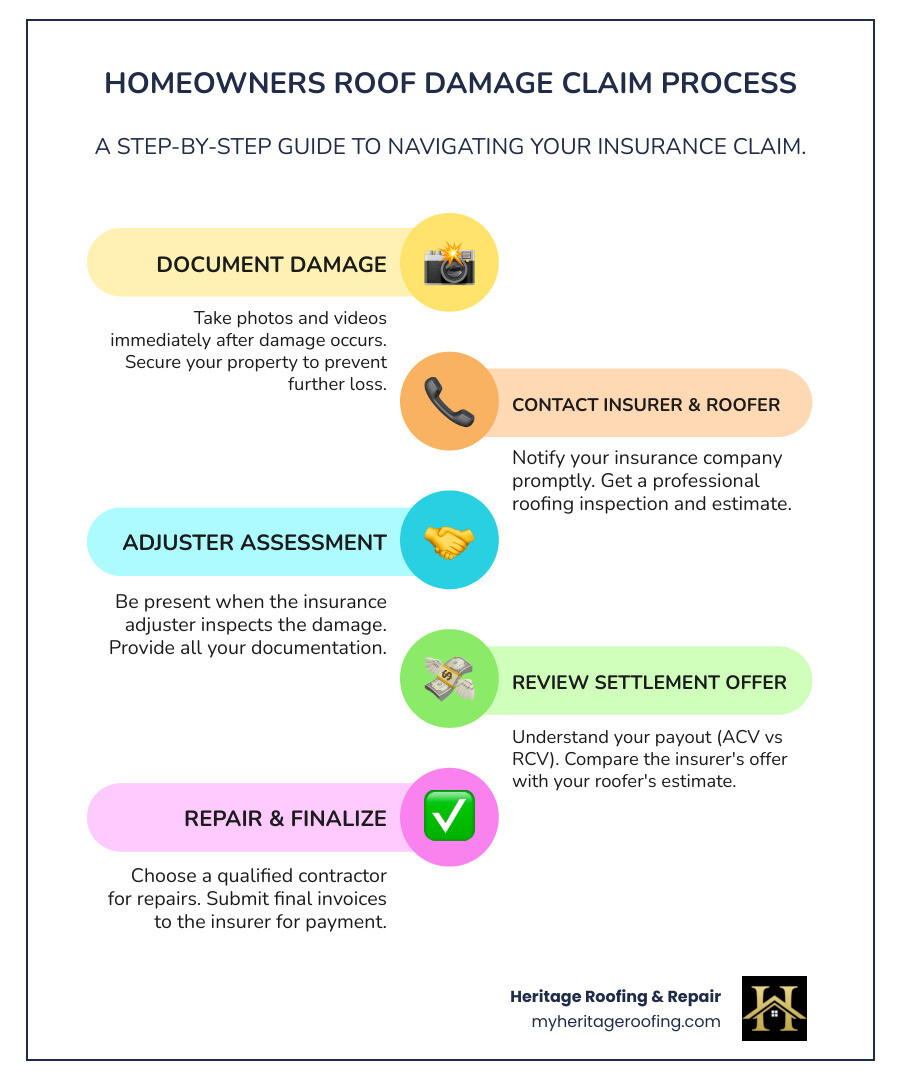
Step 1: Document Damage and Mitigate Further Loss
Your first priority is to document the damage and prevent it from getting worse. Your policy requires you to take reasonable steps to mitigate your loss.
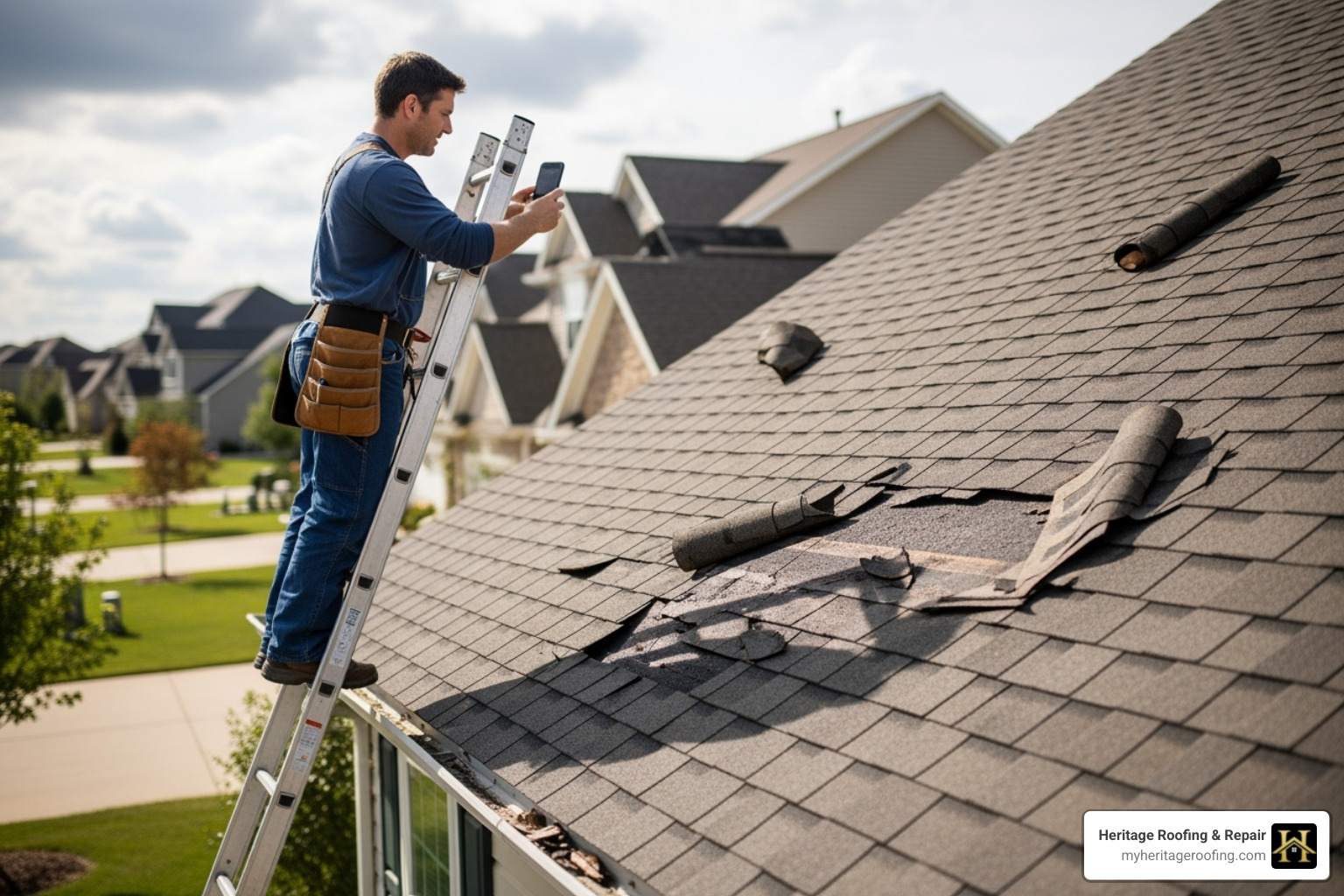
- Document Everything: Use your phone to take clear, time-stamped photos and videos of all damage, both outside and inside. Get wide shots and close-ups.
- Note the Cause: Record the date and time of the storm or event that caused the damage to establish a clear timeline.
- Prevent Further Damage: If there’s an active leak, you must take action. This may involve installing a temporary tarp. Our Emergency Roof Tarping Guide can help, but for safety, it’s often best to call a professional.
- Keep All Receipts: The cost of temporary repairs, like tarping, is typically reimbursable. Save every receipt to submit with your claim.
Safety First: Never climb onto a wet, steep, or structurally compromised roof. Document from the ground and let a professional handle the hands-on inspection.
Step 2: Contact Your Insurer and a Professional Roofer
With initial documentation complete, make two critical calls as soon as possible.
- Call Your Insurance Company: Report the damage immediately to get your claim started. You’ll receive a claim number—keep it handy. Most policies require notification within 30-60 days, but waiting is a mistake.
- Call a Reputable Roofer: Don’t wait for the insurance adjuster to assess the damage. An adjuster works for the insurer; a roofer works for you. A professional inspection ensures you get an independent, thorough evaluation.
Beware of “storm chasers”—out-of-state contractors who appear after storms, make big promises, and then disappear. Choose a local company with a solid reputation, proper licensing, and roots in your community. They understand local building codes and will be there if issues arise later. For more tips, see Forbes’ guide on how to hire a qualified roof inspector.
For homeowners in Northwest Arkansas, having a local expert is invaluable.
Heritage Roofing & Repair
3458 Arkansas State Hwy 221, Berryville, AR 72616
(870) 654-1164
Step 3: Meet the Adjuster and Finalize the Repair
The adjuster’s visit is the most critical moment in your claim. Your preparation here directly impacts your settlement.

- Be Present for the Inspection: You and your chosen roofer should meet the adjuster on-site. Your roofer can point out damage the adjuster might miss and provide technical justification for necessary repairs.
- Provide Your Documentation: Give the adjuster copies of your photos, videos, and any professional inspection reports. Strong evidence makes it harder to undervalue your claim.
- Review the Adjuster’s Estimate: Don’t just accept the initial offer. Initial insurance estimates are often 20% lower than the actual cost of repairs. Compare it to estimates from your own contractors.
- Sign a Clear Contract: Once you agree on the scope and cost, sign a detailed contract with your roofer that specifies all materials, timelines, and costs. Never sign a blank contract.
- Oversee Repairs and Finalize Payment: After the work is complete, you’ll submit final invoices to the insurer to receive the final payment, including any depreciation held back on an RCV policy.
Keep copies of all documents—contracts, invoices, reports, and photos—for your records.
Lower Risk, Lower Premiums: Maintenance, Materials, and Smart Endorsements
The best way to handle a homeowners insurance roof damage claim is to prevent damage in the first place. Regular maintenance and smart material choices not only extend your roof’s life but also positively impact your insurance coverage and premiums.
How Roof Age, Materials, and Maintenance Affect Your Coverage
Your roof’s age, material, and condition are major factors for your insurer. A well-maintained roof made of durable materials is seen as a lower risk, which can lead to better coverage and lower premiums.
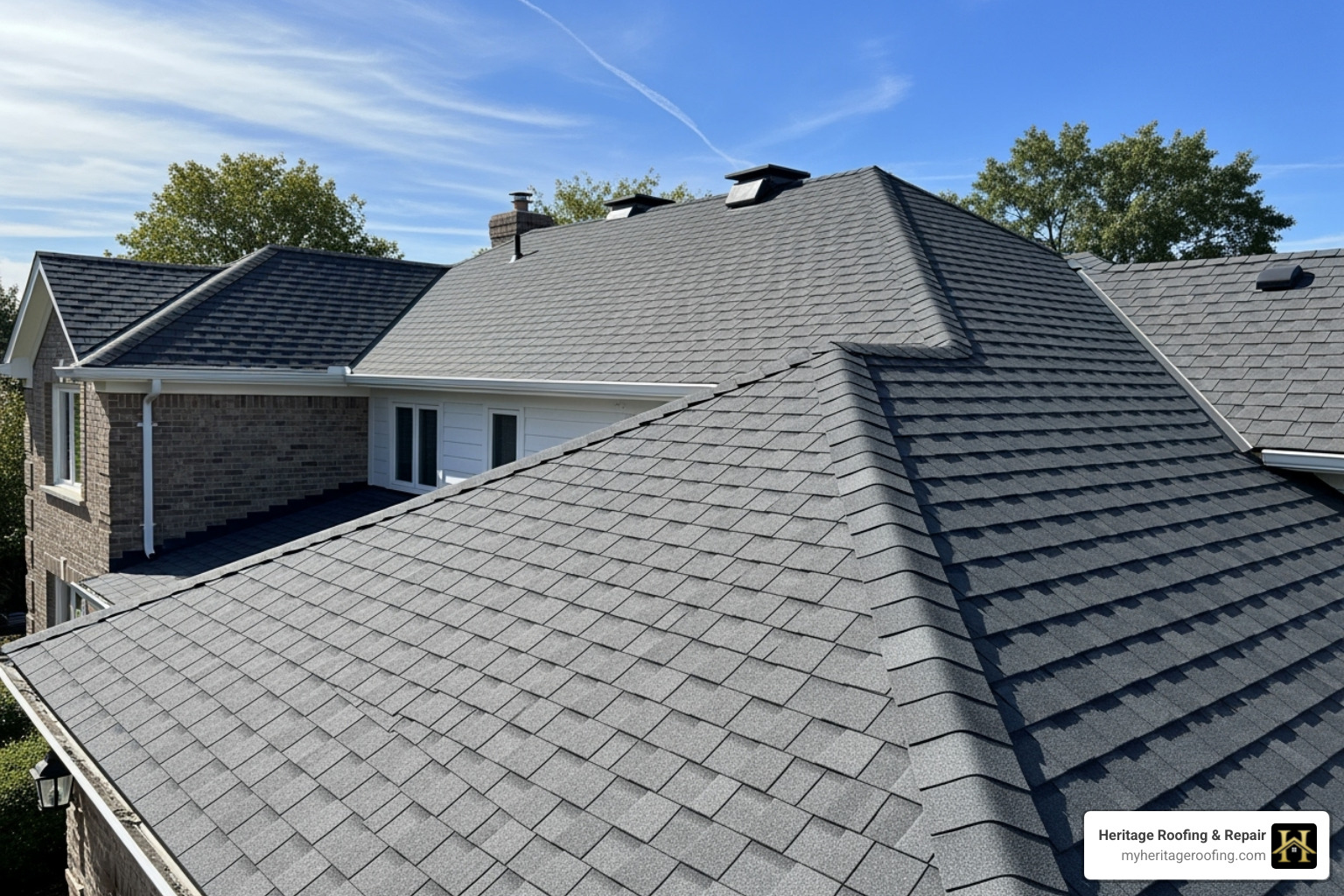
- Roof Lifespan: Different materials have different lifespans (e.g., asphalt shingles: 15-30 years; metal: 40-70 years). As a roof approaches the end of its expected life, insurers are more likely to offer only Actual Cash Value (ACV) coverage, which deducts for depreciation.
- ACV vs. RCV: A newer roof is more likely to qualify for full Replacement Cost Value (RCV) coverage. An older roof often defaults to ACV, resulting in a much lower payout.
- Insurance Discounts: Installing a new roof, especially with impact-resistant materials, can lower your insurance premiums, with potential premium reductions of 5% to 35%.
- Regular Maintenance: Insurers require homeowners to perform routine maintenance. Claims can be denied if damage results from neglect, such as clogged gutters or failure to repair minor issues promptly.
When to Consider Additional Coverage or Endorsements
Standard policies may not be enough, especially in high-risk areas. Endorsements (or riders) are optional add-ons that provide improved protection.
- Windstorm Endorsements: Crucial in areas prone to severe wind, like the thunderstorms we see in Fayetteville AR. This can provide better coverage or a lower deductible for wind damage.
- Flood Insurance: Standard policies exclude flood damage (rising water). If you live in a flood-prone area, a separate policy is essential.
- Earthquake Insurance: This is also excluded from standard policies and requires a separate purchase in seismically active regions.
- Matching Siding/Shingle Endorsement: If your exact shingles are discontinued, your insurer might only pay to replace the damaged section, creating a mismatch. This endorsement ensures they cover the cost to create a uniform appearance, protecting your home’s curb appeal.
Discuss these options with your agent to tailor your policy to your home’s specific risks. The small additional premium is often well worth the protection against major out-of-pocket expenses.
Quick Answers to Common Roof-Insurance Questions
Can my insurer drop me for filing a roof damage claim?
Filing a single, legitimate claim after a major storm is unlikely to result in non-renewal. However, filing multiple claims in a short period (3-5 years) can flag you as high-risk, potentially leading to non-renewal or higher premiums. It’s best to file claims for significant damage but consider paying for minor repairs yourself.
Does insurance cover damage to my personal belongings from a roof leak?
Yes, if the roof leak was caused by a covered peril (like a storm), your policy’s personal property coverage typically helps pay to repair or replace damaged belongings, up to your policy limits. If the leak was due to neglect or wear and tear, coverage for both the roof and your belongings would likely be denied.
Should I file a claim if the repair cost is close to my deductible?
Filing a claim for repairs only slightly more than your deductible is often not financially beneficial. For example, with a $1,000 deductible on a $1,200 repair, you’d only receive $200 from the insurer. The claim still goes on your record and could increase future premiums. We recommend filing a claim only when the repair costs are significantly more than your deductible.
Get an Advocate for Your Roof Insurance Claim
Navigating homeowners insurance roof damage claims is complex, but you don’t have to do it alone. Understanding your policy and having an experienced local partner on your side puts you in a strong position to get the full coverage you’re entitled to.
Successful claims are built on thorough documentation, prompt action, and working with a roofer who speaks the insurance company’s language. Too many homeowners go it alone, only to have their claim undervalued or denied for preventable reasons.
At Heritage Roofing & Repair, we partner with you through the entire insurance process. From the initial inspection to meeting with the adjuster and ensuring your settlement is fair, we advocate for you every step of the way. We know how to document damage, submit supplements for incomplete estimates, and fight for the restoration you deserve.
If you’re dealing with storm damage, don’t wait. The longer damage sits, the more complicated a claim can become. Get a professional assessment now to understand your options.
For a deeper dive into maximizing your settlement, explore our ultimate guide to roofing insurance claims. It’s packed with insider knowledge from our decades of experience. When your roof is damaged, you deserve a partner who will fight to restore it properly—that’s what we’ve been doing for three generations of Northwest Arkansas families.