After the Storm: Why Your Choice of Home Repair Company is Critical
When severe weather strikes, the integrity of your home depends on the immediate action of a professional home storm repair company. The contractor you choose determines not only how quickly you recover but also how well your home is protected against future events. In 2023 alone, the United States sustained 28 separate billion-dollar weather disasters, according to NOAA. This highlights a critical fact: homeowners face a crucial decision in selecting a company that can restore their property safely, efficiently, and fairly. The right partner becomes your advocate through assessment, insurance negotiations, and complete restoration.
The wrong choice, like falling victim to out-of-town “storm chasers,” can lead to shoddy work, abandoned projects, and significant financial loss. Improper repairs can also result in mold growth, long-term structural issues, and rejected insurance claims.
I’m Rex Wisdom, owner of Heritage Roofing & Repair, where my family has served Berryville and Northwest Arkansas for over 50 years. As a trusted home storm repair company, we’ve guided countless homeowners through the storm recovery process, ensuring quality craftsmanship and fair insurance settlements every step of the way.
Post-Storm Action Plan: Your First 3 Steps to Recovery
When a storm passes, leaving behind a trail of uncertainty and damage, the moments immediately following are crucial. It is imperative to deal with storm damage restorations immediately to avoid further issues. Our priority is always safety, followed by thorough documentation and taking steps to prevent additional damage. These initial actions can significantly impact the success of your recovery and insurance claim.
Prioritize Safety
First and foremost, your safety and the safety of your loved ones are paramount. Before you even think about assessing damage or contacting a home storm repair company, ensure everyone is out of harm’s way.
Here’s what to check for:
- Downed power lines: Never approach or touch downed power lines. Assume they are live and dangerous. Contact your utility company immediately.
- Gas leaks: If you smell gas or hear a hissing sound, evacuate your home immediately and call your gas provider from a safe distance.
- Structural instability: Look for obvious signs of structural damage, such as leaning walls, sagging ceilings, or severe cracks. If you suspect your home is unsafe, evacuate and do not re-enter until a professional deems it safe.
- Unsafe structures: If your home is severely compromised, do not stay there. Seek shelter elsewhere.
Document the Damage Thoroughly
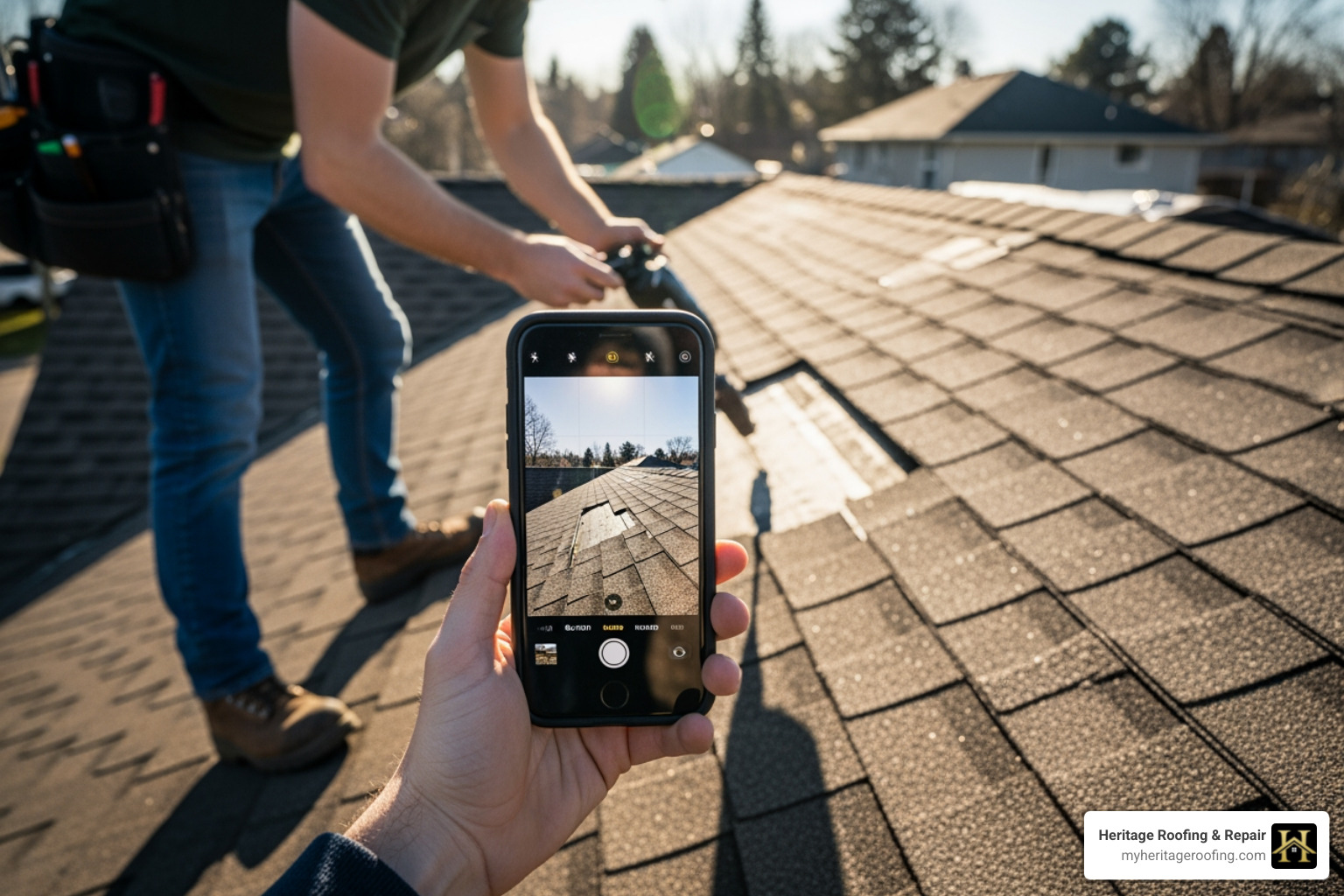
Once safety is assured, the next critical step is to document every piece of damage. This meticulous record-keeping is vital for your insurance claim and for ensuring that all necessary repairs are identified.
- Photographic evidence: Use your smartphone or a camera to take clear, well-lit photos of all visible damage. Get wide shots showing the overall impact and close-ups of specific areas.
- Video walkthroughs: A video can provide a comprehensive overview, showing the extent of the damage in context. Narrate your video, pointing out specific issues and noting the date and time.
- Detailed notes: Write down everything you observe, including the date, time, and specific locations of damage. Note any items that were damaged or destroyed.
- Before and after temporary repairs: If you undertake any temporary repairs (which we’ll discuss next), document the damage before and after these actions.
- This documentation is crucial for your roof insurance claim. The more evidence you have, the smoother the claims process will be.
Mitigate Further Damage
After documenting the initial damage, it’s important to take immediate steps to prevent further harm to your property. This is where an emergency home storm repair company can truly shine, offering rapid response services.
- Emergency tarping: If your roof has been compromised, emergency tarping can prevent rain from entering your home and causing water damage to your interior. We offer swift storm damage roof repair services to secure your property.
- Boarding up windows: Broken windows can leave your home vulnerable to weather and intruders. Boarding them up can offer temporary protection.
- Water extraction: If water has entered your home, prompt water extraction is crucial. Water damage can spread rapidly within minutes, leading to permanent damage to surfaces like wood and upholstery. Professional-grade air movers and dehumidifiers are used for effective drying.
- Preventing mold growth: After water intrusion, cleaning and sanitizing affected areas are essential to prevent mold growth, which can start within 24-48 hours. Mold can cause significant health issues and further property damage if not addressed quickly.
Wind, Water, & Hail: Identifying the Full Scope of Storm Damage
Storms are unpredictable forces of nature, and they can wreak havoc on homes in a multitude of ways. From subtle signs to obvious destruction, understanding the types of damage your home might face is the first step toward effective recovery. A thorough roof inspection is the only way to know the full extent of the damage.
Common types of storm damage include:
- Wind damage: High winds can lift, tear, or completely remove shingles, especially older or improperly installed ones. They can also cause trees or branches to fall onto your home, leading to significant structural damage.
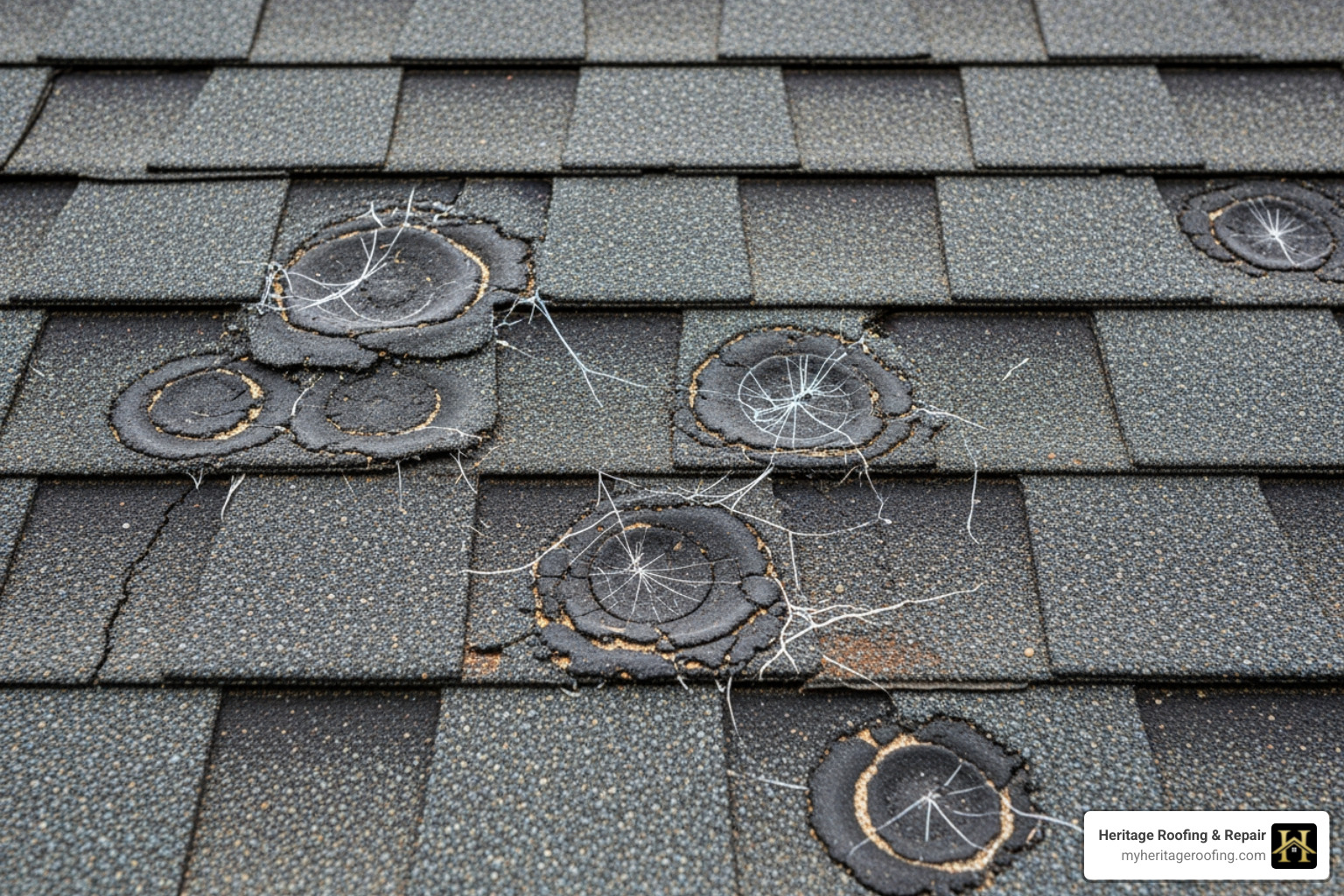
- Hail damage: Hailstones, even small ones, can bruise or crack shingles, dent gutters and flashing, and dislodge granules, reducing your roof’s lifespan. Severe hail can even “total” a roof, requiring full replacement. Solar panels, while designed to be storm-resistant, can also be damaged by severe hail.
- Water damage: This is often a secondary effect of wind or hail damage. Compromised roofs, broken windows, or overflowing gutters can allow water to seep into your home, leading to ceiling leaks, saturated insulation, damaged drywall, and potential mold growth. Basement flooding from heavy rainfall is also a common issue.
- Debris impact: Falling trees, branches, or other wind-blown debris can cause punctures, holes, or structural damage to your roof, siding, and other exterior components.
- Electrical damage: Power surges from lightning strikes or downed power lines can damage your home’s electrical system and appliances.
Common Signs of Roof Storm Damage
Your roof is your home’s first line of defense against the elements. After a storm, knowing what to look for can help you identify damage quickly.
- Missing or broken shingles: This is often the most obvious sign of wind damage. Look for bare spots on your roof or shingles scattered around your yard.
- Dents on gutters and flashing: Hailstones can leave noticeable dents on soft metal components like gutters, downspouts, and flashing around chimneys or vents.
- Granule loss in gutters: Asphalt shingles have a protective layer of granules. If you see an accumulation of these granules in your gutters or downspouts, it’s a strong indicator that your shingles have been damaged by hail.
- Bruised or cracked shingles: Hail can cause impact marks that look like bruises or cracks on shingles, even if they aren’t immediately broken. These can weaken the shingle and lead to future leaks.
- Leaks in the attic or ceiling: Water stains, drips, or active leaks inside your home are undeniable signs of roof damage, often caused by compromised shingles or flashing.
- For more detailed information on hail’s impact, see our page on Hail Damage Roof Repair.
Damage Beyond the Roof
While the roof often bears the brunt of a storm, other parts of your home’s exterior and interior can also suffer significant damage. A comprehensive inspection by a qualified home storm repair company will look at all affected areas.
- Siding and window damage: High winds can rip off siding panels, and hail can dent or crack siding materials. Windows can be broken by flying debris or strong impacts.
- Broken glass: Shattered windows or glass doors are not only a security risk but also expose your home’s interior to further weather damage.
- Damaged gutters: Beyond dents, gutters can be pulled away from your home, bent, or clogged with debris, preventing them from effectively channeling water away from your foundation. This can lead to serious water damage around your home’s perimeter.
- Flooded basements: Heavy rainfall, especially when combined with compromised drainage or foundation issues, can lead to basement flooding, requiring immediate water extraction and drying services.
- Structural issues from fallen trees: A tree falling on your home can cause localized or widespread structural damage, impacting walls, foundations, and the roof.
Understanding these various forms of damage is crucial for homeowners in areas like Berryville, Fayetteville, and throughout Northwest Arkansas, including Harrison, where we often experience a range of severe weather. For more insights into how wind affects your roof, check out our guide on Wind Damage Roof.
From Claim to Check: A Homeowner’s Guide to Storm Damage Insurance
The aftermath of a storm is stressful enough without the added headache of insurance paperwork. The insurance process can be complex, but a good contractor will guide you. Understanding the steps helps ensure you receive fair compensation for your repairs. Our experience as a home storm repair company has taught us that working closely with homeowners through this process is key to a smooth recovery.
Initiating Your Claim
Taking the right steps when initiating your claim can make a world of difference.
- Contact your insurance provider: As soon as you’ve secured your property and documented the damage, notify your insurance company. Many policies have time limits for filing claims, so prompt action is essential.
- Provide initial documentation: Share the photos and videos you took immediately after the storm. This initial evidence helps your insurer understand the scope of the damage.
- Schedule an adjuster meeting: Your insurance company will assign an adjuster to inspect your property. Coordinate this meeting with your chosen home storm repair company so they can be present.
- Understand your policy coverage: Review your homeowners’ insurance policy to understand what types of storm damage are covered, your deductible, and any limitations. Homeowners insurance coverage for storm damage varies significantly by geographic location and the types of storms common to the area. Our Homeowners Insurance Roof Damage Claim Guide can offer more detailed insights.
Working with the Insurance Adjuster
The insurance adjuster’s role is to assess the damage and determine the cost of repairs covered by your policy. Having your contractor involved at this stage can be highly beneficial.
- Have your contractor present: When the insurance adjuster inspects your home, it’s invaluable to have a representative from your home storm repair company there. They can point out damage that might be missed, ensure the adjuster sees the full extent of the issues, and speak the “language” of roofing and construction.
- Review the adjuster’s report: Once the adjuster completes their assessment, you’ll receive a report detailing their findings and the approved repair costs. Review this report carefully alongside your contractor’s assessment.
- Negotiate discrepancies: If there are differences between the adjuster’s estimate and your contractor’s, your home storm repair company can help negotiate with the insurance company. They can provide detailed estimates, photographic evidence, and their professional opinion to justify the necessary repairs. The average homeowners insurance claim for wind and hail damage is over $12,000, making professional advocacy essential.
- Supplementing the claim: Sometimes, additional damage is finded during the repair process that wasn’t visible during the initial inspection. A good contractor will document this new damage and submit a “supplemental claim” to your insurance company. Our guide on How to File Roof Replacement Insurance Claim with Adjuster offers comprehensive advice on this critical step.
Vetting Your Contractor: 7 Must-Haves for a Storm Repair Company
Selecting the right contractor is the most critical decision in the repair process. A reputable company ensures quality work and a smooth experience, turning a stressful situation into a manageable recovery. The difference between a smooth restoration and a nightmare often comes down to the company you choose.
What to Look for in a Reputable Storm Repair Company
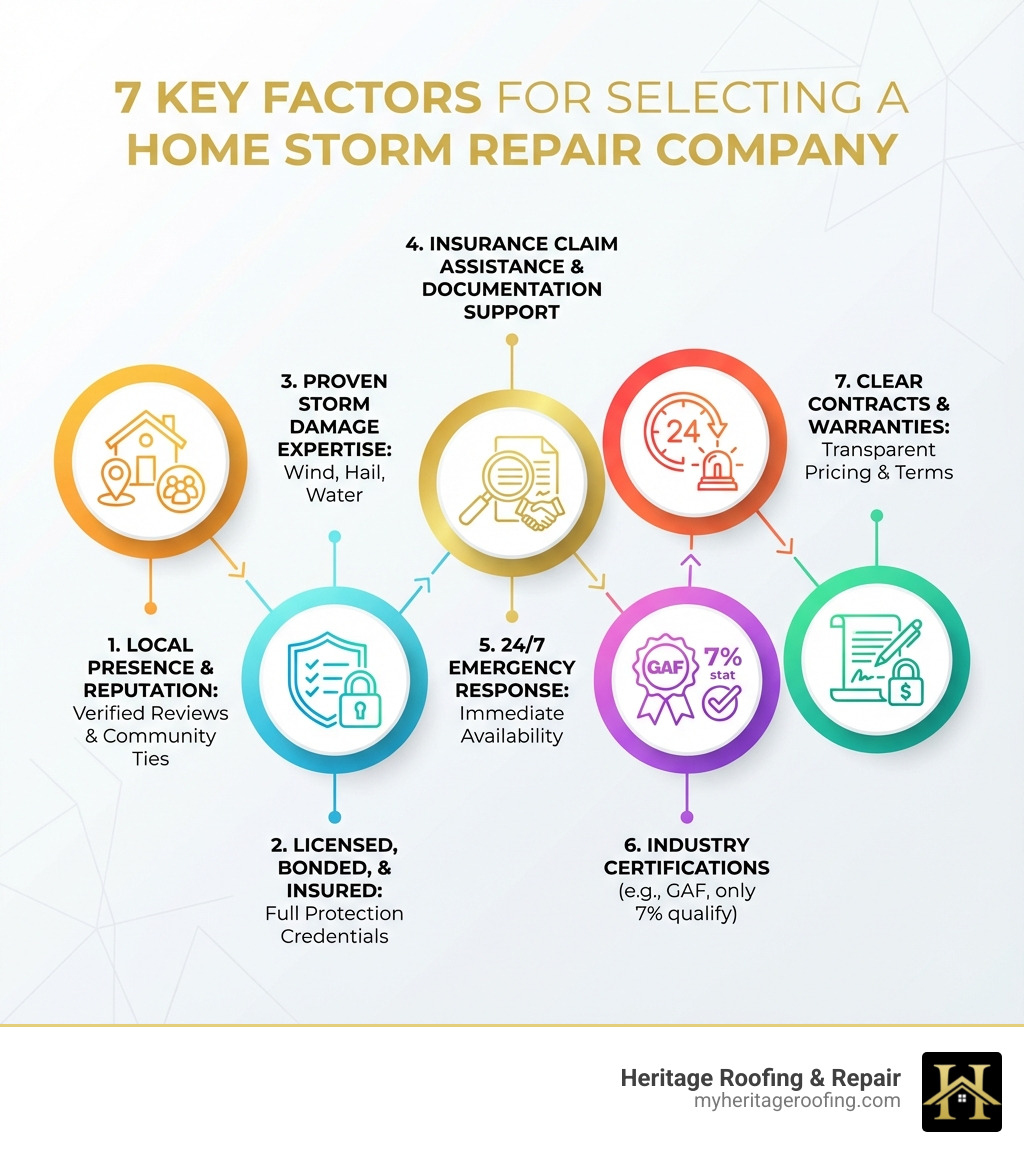
When your home has been hit by a storm, you need a home storm repair company you can trust. Here are key qualifications we believe every homeowner should look for:
- Local presence: Choose a company with deep roots in your community, like ours in Berryville, Fayetteville, and Harrison. Local contractors have a vested interest in their reputation and are readily available for follow-up. They understand local building codes and common storm patterns in Northwest Arkansas.
- Proper licensing and insurance: Verify that the company holds all necessary licenses for construction and roofing in your area. They should also carry comprehensive liability insurance and workers’ compensation. This protects you from financial responsibility if an accident occurs on your property.
- Positive reviews and references: Check online reviews (Google, BBB, Yelp) and ask for local references. A company with a consistent track record of customer satisfaction is a strong indicator of reliability and quality. You can check local contractors on the Better Business Bureau for their ratings and accreditation.
- Experience with storm damage: General contractors might handle repairs, but a company specializing in storm damage understands the nuances of storm-related issues, from hidden hail damage to complex water intrusion.
- Clear contracts and warranties: A reputable company provides a detailed, written contract outlining the scope of work, materials to be used, timeline, and payment schedule. They should also offer strong warranties on both materials and labor.
- Excellent communication: You want a company that keeps you informed every step of the way, answers your questions promptly, and is transparent about the process.
The Importance of GAF Certification
When it comes to roofing, certification matters. GAF is one of the largest roofing manufacturers in North America, and their certifications are a mark of excellence.
- Only about 7% of roofers are GAF Certified. This statistic highlights how exclusive and rigorous the certification process is. It’s not just a participation trophy; it signifies a commitment to the highest standards in the industry.
- Professional standard of excellence: GAF Certified contractors meet stringent criteria, including being properly licensed, adequately insured, having a proven reputation, and committing to ongoing training.
- Access to lifetime limited warranties: One of the biggest advantages for homeowners is that GAF Certified contractors can offer improved warranties, including lifetime limited warranties on GAF roofing systems, providing superior protection for your investment.
- Up-to-date with latest technologies: These contractors are regularly trained on the latest roofing techniques and materials, ensuring your home benefits from cutting-edge solutions.
- Choosing a GAF Certified contractor means you’re working with a truly experienced roofing contractor who is dedicated to quality and customer satisfaction.
Red Flags: Avoiding ‘Storm Chasers’
After a major storm, unfortunately, opportunistic “storm chasers” often descend upon affected areas. These out-of-town contractors aim to profit from the disaster, often at the homeowner’s expense. We’ve seen it happen too many times in Northwest Arkansas.
Be wary of:
- Out-of-town contractors: They often arrive right after a storm, going door-to-door, and then disappear once the work is done (or unfinished), leaving no local presence for warranty claims or follow-up.
- High-pressure sales tactics: They might try to rush you into signing a contract, claiming materials are limited or that your insurance claim has a strict deadline. Don’t fall for it.
- Vague contracts: Look for contracts that lack specific details about the scope of work, materials, timeline, or payment terms.
- Demands for large upfront payments: While a deposit is normal, be cautious of companies demanding a significant portion of the total cost upfront, especially if they haven’t started work or delivered materials.
- Unwillingness to provide credentials: If a contractor can’t or won’t provide proof of licensing, insurance, or local references, consider it a major red flag.
Always choose a trusted local home storm repair company like Heritage Roofing & Repair, who has a long-standing reputation in the Berryville, Fayetteville, and Harrison communities.
The Storm Restoration Process: A Step-by-Step Timeline
A professional storm restoration project follows a structured timeline to ensure efficiency and quality, restoring your home as quickly as possible. When you partner with a dependable home storm repair company, you’re not just getting repairs; you’re getting a guiding hand through a complex process.
What Services Do Storm Repair Companies Offer?
A comprehensive home storm repair company like ours offers a wide array of services designed to address every aspect of storm damage, from immediate emergencies to complete structural restoration. The difference between storm damage restoration and general home repair lies in the specialized knowledge of storm impact, emergency response capabilities, and expertise in navigating insurance claims.
- Emergency services (24/7): We understand that storms don’t keep office hours. Our team is available around the clock to provide immediate assistance, such as emergency tarping or boarding up, to prevent further damage.
- Damage assessment: A thorough inspection of your entire property, including the roof, siding, windows, gutters, and interior, to identify all visible and hidden damage.
- Water mitigation: Rapid response to water intrusion, including extraction, drying, and dehumidification services to prevent secondary damage like mold growth.
- Debris removal: Clearing away fallen trees, branches, and other storm-related debris from your property.
- Roof Repair: Repairing or replacing damaged shingles, flashing, underlayment, and other roofing components.
- Siding and gutter repair: Restoring your home’s exterior envelope, including repairing or replacing damaged siding and ensuring your gutter system is functioning correctly to divert water away from your foundation.
- Full Roof Replacement: If damage is too extensive, we provide complete roof replacement services, often completed efficiently to minimize disruption.
- Insurance claim assistance: Guiding you through the entire insurance claim process, from documentation to negotiation, to maximize your settlement.
The Typical Timeline for Home Storm Repair
While every storm damage situation is unique, there’s a general timeline you can expect when working with a professional home storm repair company.
- Initial Inspection (24-48 hours): After your initial call, we aim to be on-site quickly to assess the damage, provide emergency services if needed, and give you an initial report.
- Insurance Process (1-4 weeks): This phase involves filing your claim, the adjuster’s visit, and the insurance company’s review and approval of the estimate. This can be the longest phase, but our team works to streamline it.
- Material Ordering (1-2 weeks): Once the claim is approved, we order the necessary materials. Lead times can vary based on material availability and manufacturer.
- Repairs/Replacement (1-5 days): For residential roofing, many replacements can be completed in as little as one or two days, depending on the size and complexity of the job and weather conditions. More extensive repairs or full home restoration projects might take longer. We pride ourselves on efficient, high-quality work.
- Final Inspection: Upon completion, we conduct a thorough final inspection with you to ensure all work meets our high standards and your complete satisfaction.
Contacting a Local Professional in Berryville, AR
For homeowners in the Berryville, Fayetteville, Harrison, and wider Northwest Arkansas areas, having a local, trusted expert like Heritage Roofing & Repair is key. We understand the specific weather patterns and community needs here, ensuring custom solutions and reliable service.
Heritage Roofing & Repair
3458 Arkansas State Hwy 221, Berryville, AR 72616
(870) 654-1164
Secure Your Home’s Future: Take the Next Step in Storm Recovery
After a storm, the path to recovery can seem long, but you don’t have to walk it alone. By taking immediate safety precautions, thoroughly documenting the damage, and understanding the insurance process, you can take control of the situation. The most important step is choosing a reputable, local home storm repair company with a proven track record. A qualified contractor not only provides expert craftsmanship but also acts as your advocate, ensuring your home is restored to its pre-storm condition or better. If your home has been impacted by severe weather, don’t wait for small problems to become costly disasters. Take the first step toward peace of mind by scheduling a professional storm damage roof repair assessment today.