Why Commercial Roof Insurance Claims Matter for Your Business
Commercial roof insurance claims are a critical financial safeguard when your property suffers damage from storms, hail, or other unexpected events. For many business owners, the claims process can feel overwhelming, but understanding the key steps can mean the difference between a fair settlement and significant out-of-pocket costs. With over 50 years of experience, Heritage Roofing & Repair has been helping property owners across Northwest Arkansas recover from roof damage and successfully steer complex claims.
Quick Answer: How to File a Commercial Roof Insurance Claim
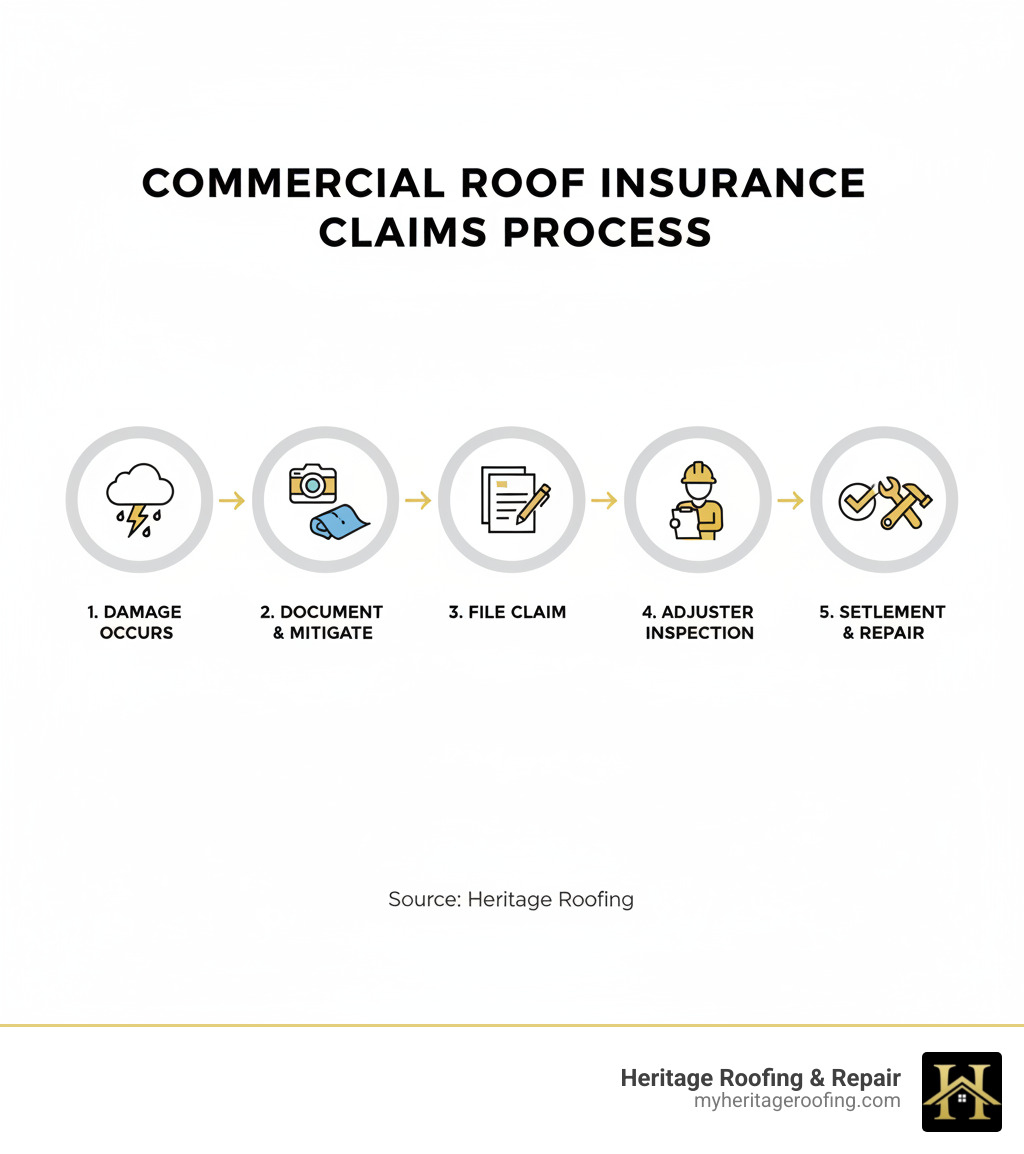
- Document the damage immediately with photos and videos.
- Make temporary repairs to prevent further loss (save all receipts).
- Hire a professional roofing contractor for a detailed inspection.
- File the claim promptly with your insurance provider.
- Prepare for the adjuster’s visit with your contractor present.
- Review the settlement offer carefully and negotiate if needed.
When a commercial roof is damaged, business interruptions and structural risks escalate quickly. In Arkansas, where severe weather is a routine threat, knowing how to manage the claims process is essential. The average insurance payout for hail damage can cover most repair costs, but only if the claim is properly documented and managed. Many claims are denied or underpaid due to insufficient documentation or missed deadlines. This is where an experienced partner makes all the difference in securing fair compensation for your commercial roof insurance claims.
First Steps: What to Do Immediately After Finding Roof Damage
When you find damage to your commercial roof, your immediate response not only protects your property but also sets the foundation for a successful commercial roof insurance claims process. Acting quickly and methodically is essential.
Identifying and Documenting the Damage
The moment you find damage, begin documenting everything. This evidence is crucial for your claim.
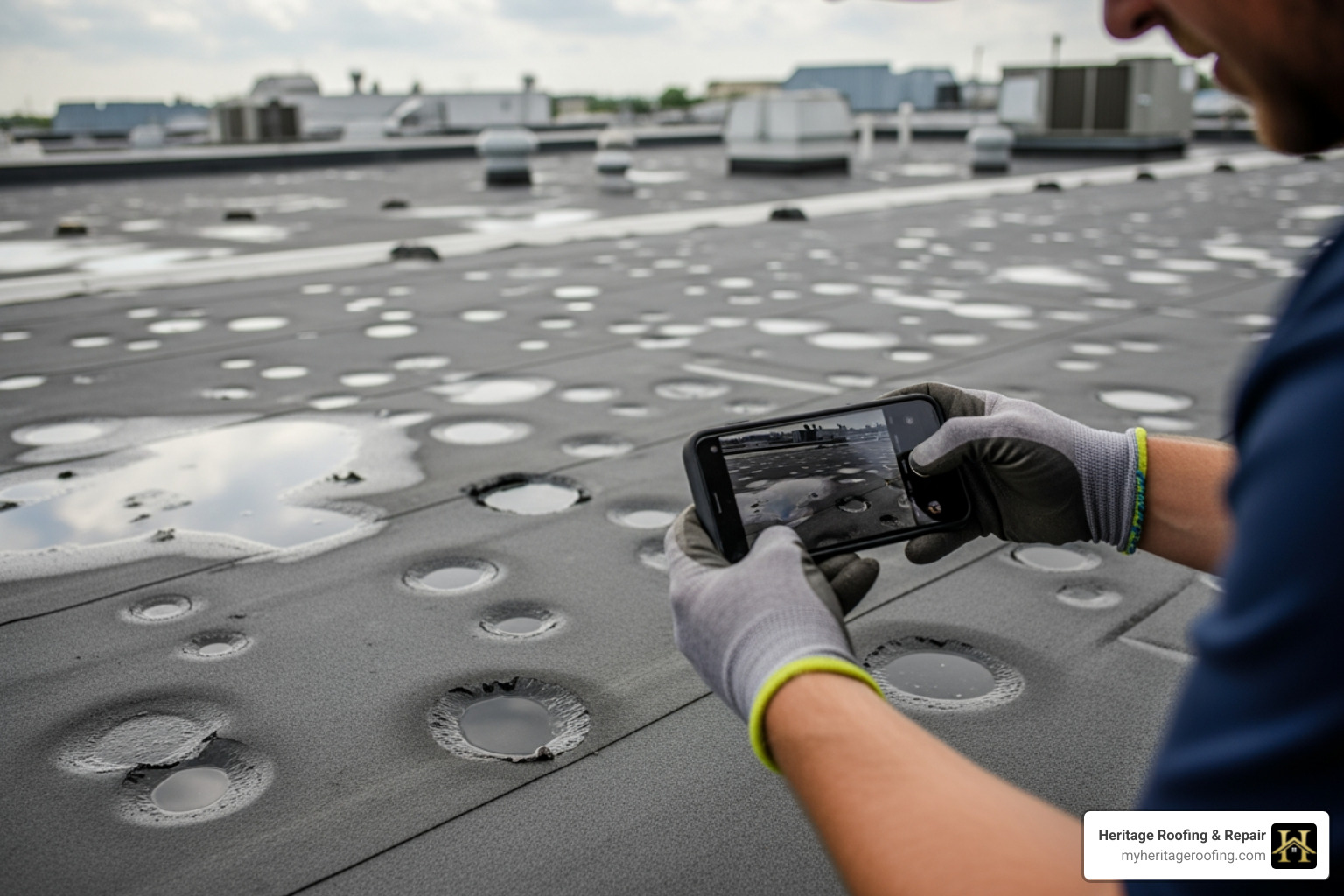
Take comprehensive photos and videos from every safe angle. Capture wide shots for scope and close-ups for detail. Modern smartphones embed timestamps, but tools like TagCam can add geo-tagged reports with GPS and weather data, which adjusters find valuable. Also, create written logs of when the damage occurred and what you observed. Gather any pre-damage records, like previous inspection reports, to show before-and-after evidence.
Key damage signs to document include:
- Interior Damage: Leaks or stains on the ceiling or walls.
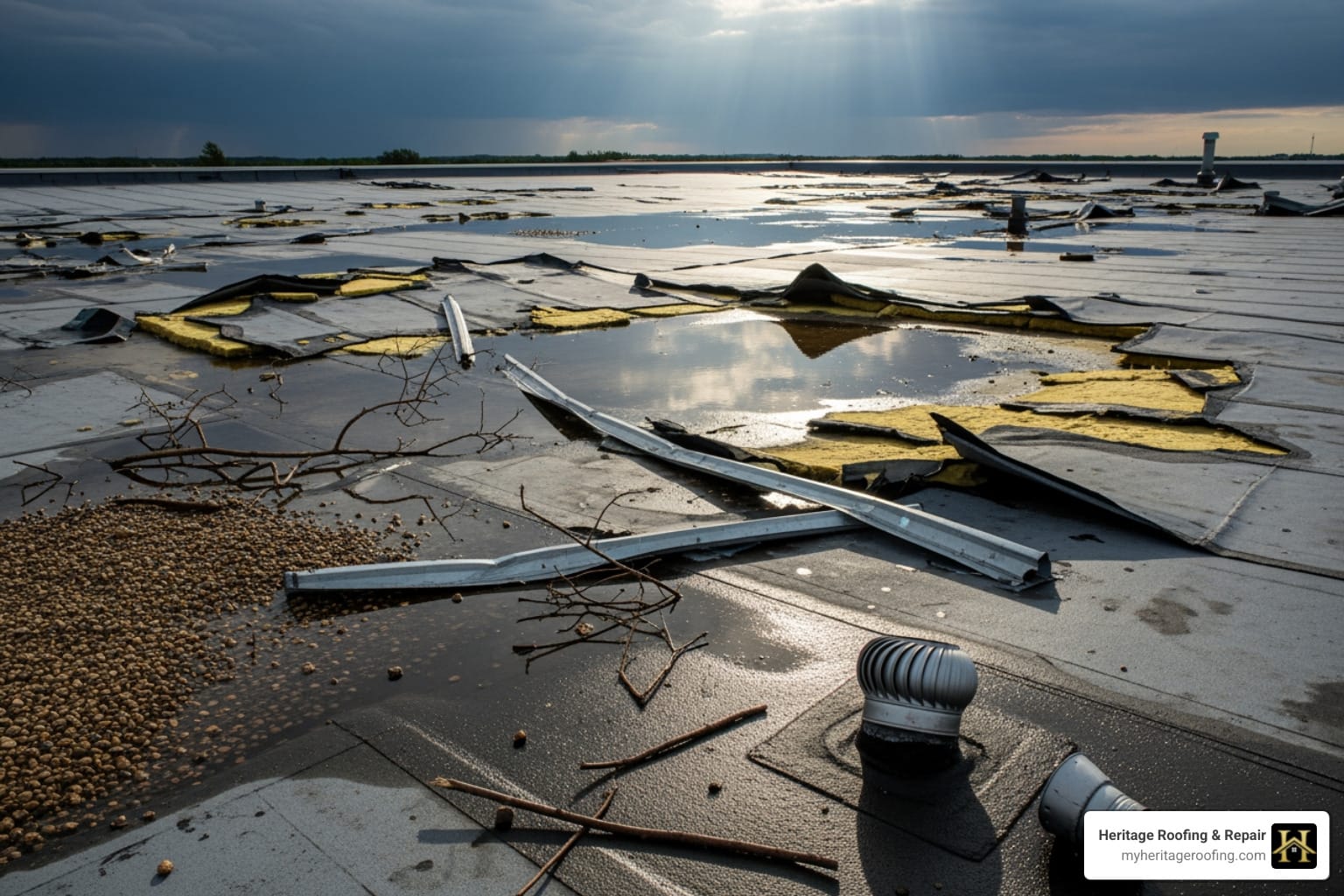
- Membrane Damage: Punctures, tears, or blistering in the roof membrane.
- Flashing Issues: Missing, cracked, or displaced flashing around vents and walls.
- Hail Impact: Dents from hail on roof surfaces that can compromise the material.
- Ponding Water: Water that remains on your roof more than 48 hours after rain.
- Debris Impact: Damage from tree branches or other storm debris.
Making Temporary Repairs to Mitigate Further Loss
After documentation, your priority is to prevent further damage. Temporary repairs, like tarping damaged areas or placing buckets to catch drips, are emergency measures required by most insurance policies. These actions show you acted responsibly to minimize the loss.
Crucially, do not make permanent repairs before the insurance adjuster’s inspection. The adjuster must see the full extent of the original damage. If you’ve already made permanent fixes, the insurer may argue they cannot verify the loss, jeopardizing your claim. Save every receipt for temporary repair materials and labor, as these costs are typically reimbursable. Our Emergency Roof Repair services can help you mitigate risks while preserving your claim.
Contacting a Professional Roofing Contractor
Your next call should be to a professional roofing contractor, ideally before the adjuster’s visit. A qualified contractor provides an expert assessment that insurers respect. They can identify hidden damage—like compromised underlayment or decking—that an adjuster might miss.
Your contractor will provide a detailed damage report and a comprehensive repair estimate. This document serves as independent, expert evidence for your claim. An Experienced Roofing Contractor also acts as your advocate, attending the adjuster’s inspection to ensure all damage is noted and that the settlement offer is fair.
Heritage Roofing & Repair
3458 Arkansas State Hwy 221, Berryville, AR 72616
(870) 654-1164
The Step-by-Step Process for Commercial Roof Insurance Claims
Filing a claim is a structured process where diligence and attention to detail are paramount. Following these steps helps streamline your commercial roof insurance claims and avoid common pitfalls that can jeopardize fair compensation.
Filing the Claim with Your Insurance Provider
After documenting the damage and getting a contractor’s assessment, formally file your claim with your insurance provider. Prompt notification is critical. Most policies have strict deadlines for reporting damage, and waiting too long can result in a denial.
When you contact your insurer, provide your policy number, the date the damage occurred, and a detailed description of the loss. Be ready to submit your documentation—photos, videos, and your contractor’s report. Being specific and thorough upfront will smooth the process. For a detailed walkthrough, our Filing Roof Insurance Claim Guide offers comprehensive advice.
Preparing for the Insurance Adjuster’s Inspection
Your insurance company will assign an adjuster to assess the damage and determine if it’s covered. This inspection is a pivotal moment, as their findings directly impact your settlement offer.

It is highly recommended that your roofing contractor be present during the adjuster’s inspection. Your contractor can point out specific damage, explain technical aspects, and ensure nothing is overlooked, especially hidden issues. They can also discuss industry-standard material and labor costs with the adjuster, providing a professional counterbalance to the insurer’s perspective. Have all your documentation ready to present. This collaborative approach leads to a more accurate and fair assessment.
Reviewing the Settlement Offer
The insurance company will issue a settlement offer with a scope of work and a line-item breakdown of costs. Do not accept the first offer at face value.
Carefully compare the insurer’s scope and costs against your contractor’s estimate. Look for discrepancies in materials, quantities, and labor costs. Adjusters sometimes underestimate needs or price lower-quality materials than what is required for a code-compliant repair. If the settlement doesn’t cover the full cost of repairs as outlined by your contractor, you have the right to dispute it and negotiate a fair resolution. Your contractor is your advocate in this process, and their expertise can make all the difference.
Understanding Your Policy: Coverage, Exclusions, and Valuations
Your commercial property insurance policy is a contract. Knowing its key terms is your best defense against an unfair denial or underpayment on commercial roof insurance claims.
Actual Cash Value (ACV) vs. Replacement Cost Value (RCV)
One of the most critical distinctions in a policy is between Actual Cash Value (ACV) and Replacement Cost Value (RCV). This difference can mean thousands of dollars in your settlement.
- Actual Cash Value (ACV) is the value of your roof today, accounting for depreciation due to age and wear. If a 15-year-old roof is damaged, an ACV policy pays for the replacement cost minus 15 years of depreciation.
- Replacement Cost Value (RCV) covers the full cost to replace your roof with new, similar materials, without deducting for depreciation. RCV is the superior coverage for commercial roofing, as it allows you to fully restore your property.
Here is a simple comparison:
| Feature | Actual Cash Value (ACV) | Replacement Cost Value (RCV) |
|---|---|---|
| Depreciation | Deducted from payout | Not deducted |
| Payout Amount | Lower (reflects roof’s “used” value) | Higher (covers full replacement cost) |
| Out-of-Pocket Cost | You pay the depreciation difference | Minimal to none (deductible only) |
| Roof Age Impact | Older roofs receive significantly less | Age has less impact on payout |
Some policies include recoverable depreciation, where you receive the ACV upfront and can claim the withheld depreciation after repairs are complete and paid for. Non-recoverable depreciation means that withheld amount is gone for good. The older your roof, the more depreciation is applied under an ACV policy, making RCV coverage essential for protecting your investment. For more details, see our Roof Insurance Guide 2025.
Common Reasons for Denial and Exclusions in Commercial Roof Insurance Claims
Even with a solid policy, claims can be denied. Understanding why helps you avoid common pitfalls.
- Improper or Lack of Maintenance: This is the top reason for denial. Insurers require property owners to maintain their roofs. If neglect (e.g., clogged drains, unrepaired minor damage) contributed to the failure, the claim may be denied. Keep detailed maintenance logs as proof of care.
- Wear and Tear: Insurance covers sudden, accidental damage, not the natural aging of a roof.
- Roof Age: Many policies have limitations or exclusions for roofs over 20 years old, often only offering ACV coverage.
- Damage Caused by Property Owner: Accidental damage during maintenance or unapproved repairs is not covered.
- Excluded Perils: Policies specifically list events that are not covered, such as flooding (requires separate insurance), pest infestations, or gradual seepage.
- Unapproved Roofing Materials: Using materials that don’t meet building codes or are considered high-risk can jeopardize a claim.
How Roof Age, Condition, and Materials Affect Your Claim
The specifics of your roof directly influence your claim’s outcome.
- Maintenance Logs: These are your proof of responsible ownership, countering claims of neglect.
- Pre-existing Conditions: Adjusters will separate new damage from old problems. Pre-damage inspection reports establish a baseline condition, proving the new damage is from a covered event.
- Impact-Resistant Materials: Roofs with a UL 2218 Class 4 rating are designed to withstand severe hail. Insurers often reward this with premium discounts and more favorable terms. Upgrading to impact-resistant materials not only protects your property but can also make future claims smoother.
Understanding Your Policy: A Quick Guide to Coverage Terms
Your commercial property insurance policy is a complex document, but understanding a few key concepts is vital for managing commercial roof insurance claims effectively. Here’s a quick guide to the terms that most impact your settlement.
Actual Cash Value (ACV) vs. Replacement Cost Value (RCV)
The most important distinction in your policy is how your roof is valued.
- Actual Cash Value (ACV): This is your roof’s depreciated worth. The insurer pays the cost of a new roof minus a deduction for its age and wear. This results in a lower payout and higher out-of-pocket costs for you.
- Replacement Cost Value (RCV): This covers the full cost to replace your roof with new materials of similar quality, with no deduction for depreciation. RCV provides far better financial protection, which is why it’s the recommended coverage for commercial properties.
Also, check if your policy has recoverable depreciation, which allows you to claim the depreciated amount after repairs are done, or non-recoverable depreciation, where that money is lost permanently.
Common Reasons for Claim Denial
Insurers may deny claims for several reasons. Being aware of these can help you prepare a stronger case.
- Poor Maintenance: Failure to perform and document regular upkeep is the #1 reason for denial.
- Age and Wear: Policies cover sudden damage, not gradual deterioration from age. Roofs over 20 years old often face coverage limitations.
- Excluded Events: Standard policies typically exclude damage from floods, pests, and gradual water seepage.
- Improper Repairs: Damage caused by the owner or unapproved modifications is not covered.
How Your Roof’s Condition Affects Your Claim
The age, materials, and condition of your roof directly influence your claim’s success.
- Maintenance Records: These are your best defense against claims of neglect.
- Pre-existing Damage: Insurers will only pay for new damage, so having records of your roof’s prior condition is crucial.
- Impact-Resistant Materials: Using materials with a high impact rating, like a UL 2218 Class 4, can lead to lower premiums and a smoother claims process.
For a more comprehensive look at policy details, refer to our Roof Insurance Guide 2025.