Will Insurance Cover My Roof Leak? The Deciding Factors
Can I claim a roof leak on insurance? The answer depends on a single, critical question: was the damage sudden and accidental, or did it develop gradually over time? Insurance is designed to cover unexpected disasters, not problems from poor maintenance or old age. With water damage and freezing accounting for 27.6 percent of homeowner claims in 2022, understanding your policy is the first step. An adjuster will investigate the source of the leak to determine if it was caused by a covered peril—an unforeseen event—or an excluded issue like neglect.
Covered Perils: When Your Policy Says “Yes”
Your home insurance policy typically covers damage from unexpected, uncontrollable events. If your leak stems from one of these, your policy will likely cover the roof repair and any resulting interior damage.
Common covered perils include:
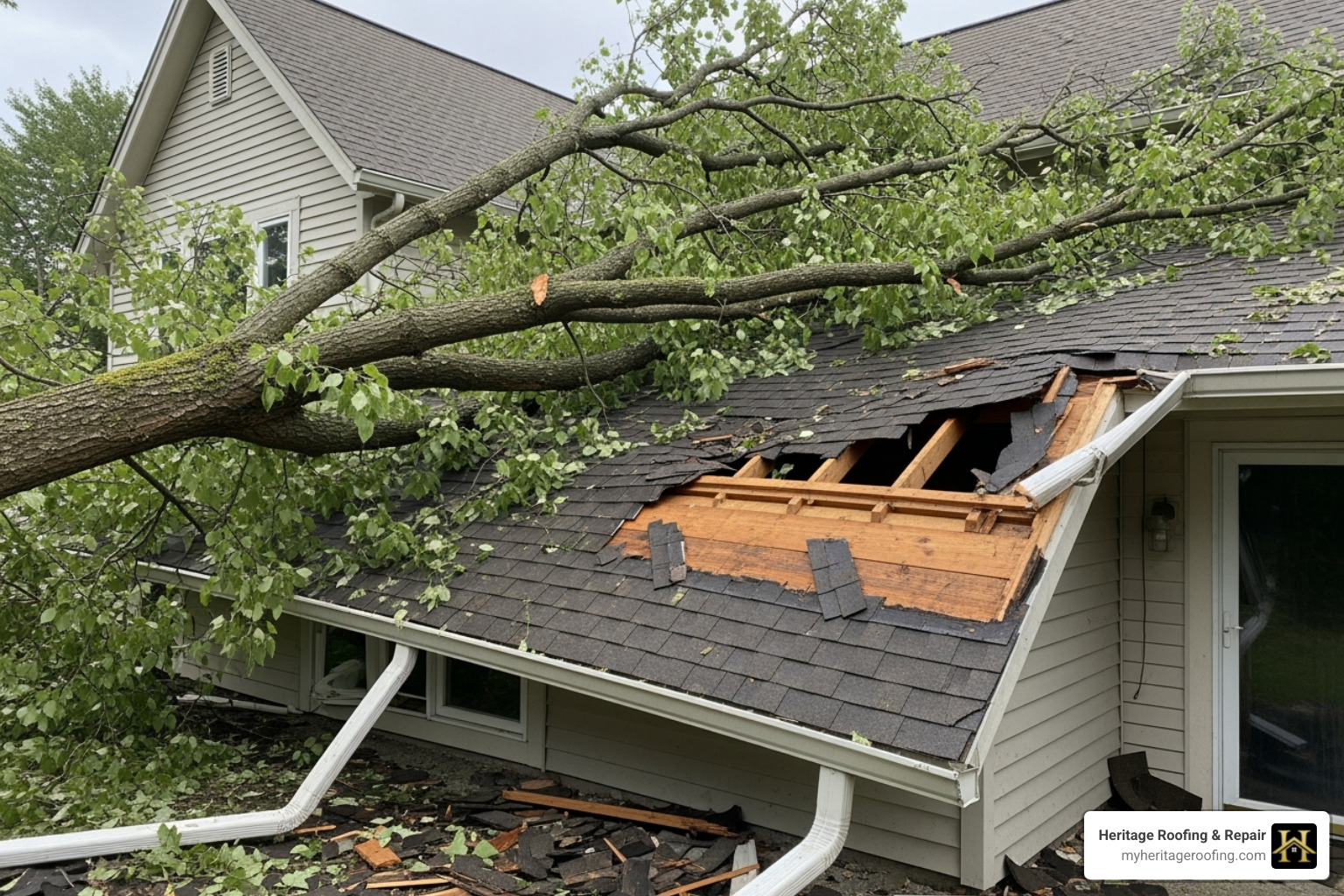
- Storm Damage: High winds that lift or remove shingles and hail that cracks or bruises them are leading causes of covered claims. Homeowners insurance typically covers roof damage caused by covered perils, such as thunderstorms, hail, and fallen trees.
- Fallen Trees or Branches: If a storm or unexpected event causes a tree or branch to fall on your roof, the resulting damage and leaks are generally covered.
- Fire and Lightning: Damage from fire, whether it starts inside or outside your home, is almost always covered. The same applies to lightning strikes.
- Vandalism and Accidental Damage: If someone intentionally damages your roof or a sudden accident occurs (like a vehicle hitting your home), your policy should cover the repairs.
Most policies operate on an “open peril” basis, covering all damage sources except those specifically excluded.
Common Exclusions: When Your Insurer Will Likely Deny the Claim
Insurance is not designed to pay for problems you could have prevented. Claims are often denied for the following reasons:
- Lack of Maintenance: This is the number one reason for denial. Clogged gutters, debris pile-ups, or ignoring small issues can lead an insurer to argue you failed to maintain your property.
- Normal Wear and Tear: Roofing materials degrade over time. Shingles crack, curl, and lose granules. If your leak is due to your roof reaching the end of its natural lifespan, it’s considered a maintenance issue.
- Old Age: Many policies reduce or eliminate coverage for roofs over 20 years old, especially if you have an Actual Cash Value policy.
- Faulty Workmanship: If a leak stems from poor installation, your recourse is with the contractor’s warranty, not your insurance.
- Pest Infestations: Damage from rodents, termites, or birds is considered a homeowner’s responsibility to prevent.
- Gradual Damage: Slow-developing issues like wood rot, rust, or mildew are generally not covered. Common policy exclusions are detailed in your policy documents.
- Floods and Earthquakes: These events require separate, specific insurance policies.
The Deciding Factor: Is Your Roof Leak Covered by Insurance?
When filing a claim, the core principle insurance companies follow is this: was the damage sudden and accidental, or did it develop gradually over time? Insurance policies are designed to protect you from unexpected disasters, not to serve as a maintenance plan. An adjuster will investigate the source of the leak to determine if it was caused by a covered peril—an unforeseen event—or an excluded issue like neglect.
Covered Perils: When Your Policy Says “Yes”
Your home insurance policy typically covers damage from unexpected, uncontrollable events. These are called “covered perils,” and they account for most successful roof leak claims. If your leak stems from one of these events, your policy will likely cover the roof repair and any resulting interior damage.
Common covered perils include:
- Storm Damage: High winds that lift or remove shingles and hail that cracks or bruises them are leading causes of covered claims. Homeowners insurance typically covers roof damage caused by covered perils, such as thunderstorms, hail, and fallen trees.
- Fallen Trees or Branches: If a storm or unexpected event causes a tree or branch to fall on your roof, the resulting damage and leaks are generally covered.
- Fire and Lightning: Damage from fire, whether it starts inside or outside your home, is almost always covered. The same applies to lightning strikes.
- Vandalism and Accidental Damage: If someone intentionally damages your roof or a sudden accident occurs (like a vehicle hitting your home), your policy should cover the repairs.
Most policies operate on an “open peril” basis, covering all damage sources except those specifically excluded.
Common Exclusions: When Your Insurer Will Likely Deny the Claim
Insurance is not designed to pay for problems you could have prevented. Claims are often denied for the following reasons:
- Lack of Maintenance: This is the number one reason for denial. Clogged gutters, debris pile-ups, or ignoring small issues can lead an insurer to argue you failed to maintain your property.
- Normal Wear and Tear: Roofing materials degrade over time. Shingles crack, curl, and lose granules. If your leak is due to your roof reaching the end of its natural lifespan, it’s considered a maintenance issue.
- Old Age: Many policies reduce or eliminate coverage for roofs over 20 years old, especially if you have an Actual Cash Value policy.
- Faulty Workmanship: If a leak stems from poor installation, your recourse is with the contractor’s warranty, not your insurance.
- Pest Infestations: Damage from rodents, termites, or birds is considered a homeowner’s responsibility to prevent.
- Gradual Damage: Slow-developing issues like wood rot, rust, or mildew are generally not covered. Common policy exclusions are detailed in your policy documents.
- Floods and Earthquakes: These events require separate, specific insurance policies.
Understanding Your Policy: ACV, RCV, and Deductibles
Beyond the cause of the leak, your policy’s specific terms dictate your payout. Your coverage type, deductible, and maintenance records all play a critical role. Understanding these details before you file is essential for managing expectations.
Key coverages that may apply include Dwelling Coverage (Coverage A) for the roof itself, Personal Property Coverage (Coverage C) for damaged belongings, and Additional Living Expenses (Coverage D) if your home becomes uninhabitable. However, the financial impact truly depends on two factors: your policy’s valuation method and your deductible.
Actual Cash Value (ACV) vs. Replacement Cost Value (RCV)
The most important distinction in your policy is whether it pays Actual Cash Value (ACV) or Replacement Cost Value (RCV). This can mean a difference of thousands of dollars.
- Actual Cash Value (ACV) pays for the depreciated value of your roof. If your 20-year-old roof with a 30-year lifespan is destroyed, an ACV policy might only pay for one-third of its replacement cost.
- Replacement Cost Value (RCV) pays the full cost to replace your roof with new materials of similar quality, without deducting for depreciation. RCV policies have higher premiums but offer far greater financial protection.
| Feature | Actual Cash Value (ACV) | Replacement Cost Value (RCV) |
|---|---|---|
| Payout Calculation | Original cost minus depreciation | Full cost to replace with new materials |
| 15-Year-Old Roof Example | $10,000 roof might pay out $5,000 | $10,000 roof pays out $10,000 |
| Monthly Premium | Lower cost | Higher cost |
| Out-of-Pocket Expense | Homeowner pays significant difference | Homeowner pays minimal difference |
How Your Deductible and Maintenance History Affect Your Claim
Your deductible is the amount you pay out-of-pocket before insurance kicks in. If your repair cost is $2,000 and your deductible is $1,500, filing a claim for a $500 payout may not be worth the potential increase in your premiums.
Your maintenance history is also crucial. Insurers will scrutinize your roof’s condition. If they find evidence of neglect, they can deny your claim by arguing the leak was preventable. Keeping records of inspections, cleaning, and minor repairs serves as proof that you’ve been a responsible homeowner. Always weigh the repair cost against your deductible and potential premium hikes before filing.
A Step-by-Step Guide: What to Do When You Find a Leak
Finding a leak is stressful, but a methodical response can save you money and strengthen your insurance claim. Your policy requires you to prevent further damage, so acting quickly is your top priority. The steps you take in the first few hours can make or break your claim.
Step 1: Immediate Actions to Mitigate Damage
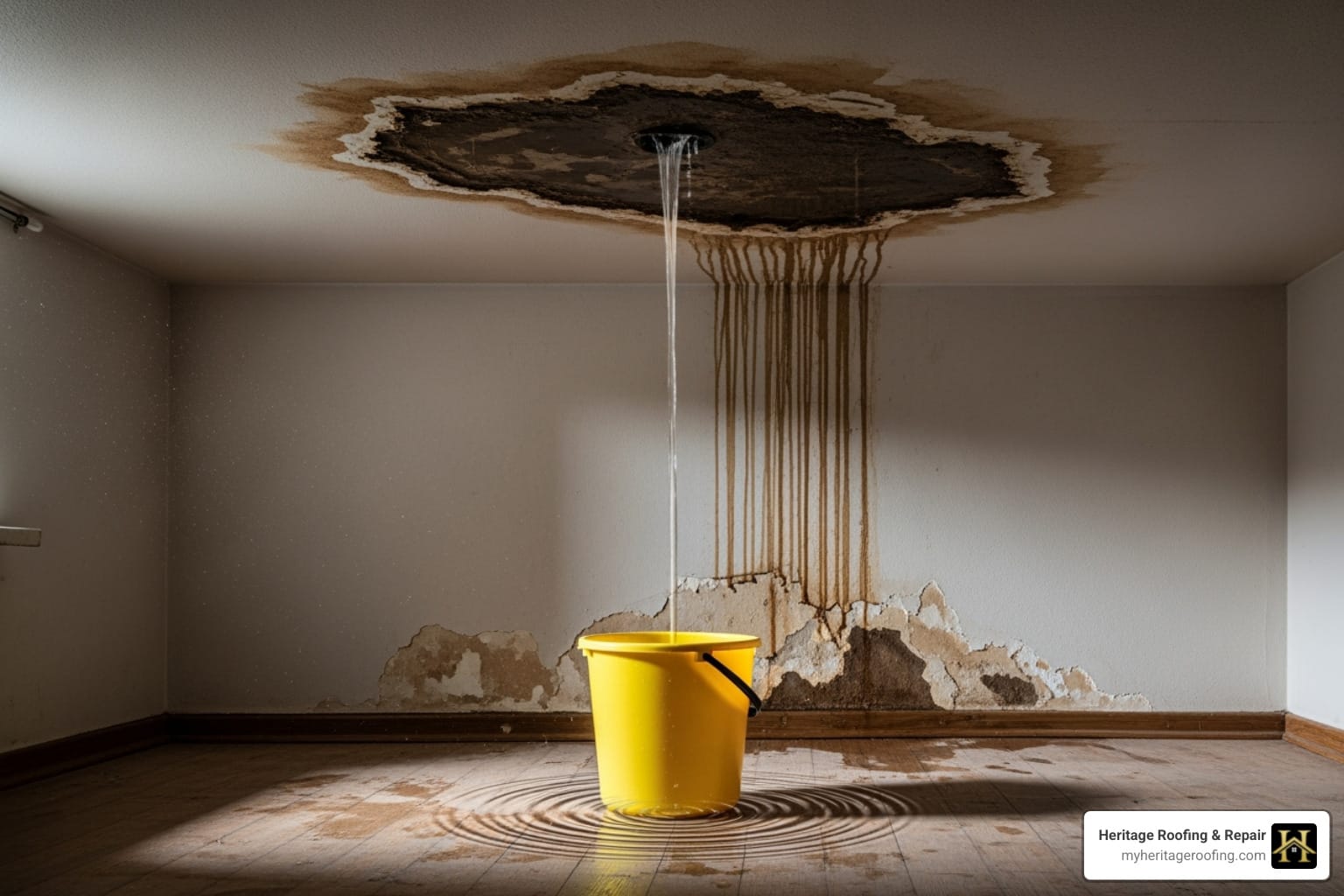
- Contain the Water: Place buckets or trash cans under drips. If the ceiling is bulging, carefully puncture it to allow controlled drainage and prevent a collapse.
- Protect Your Belongings: Move furniture, electronics, and valuables away from the wet area. Cover anything that can’t be moved with plastic tarps.
- Document Everything (Before Cleanup): Take extensive photos and videos of the leak, the water stain, damaged items, and pooled water. This visual evidence is essential for your claim.
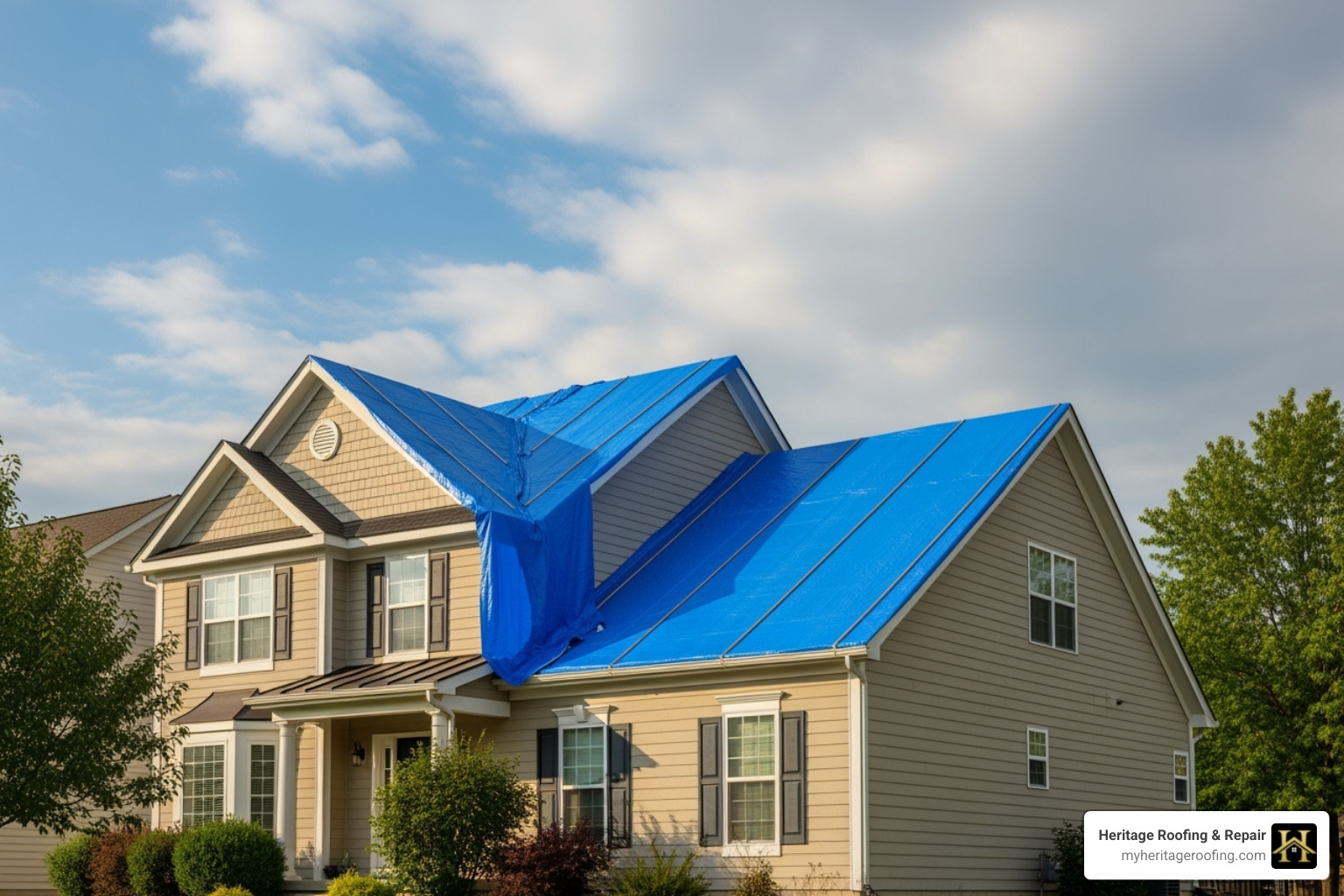
- Make Temporary Fixes (If Safe): If you can safely access the area, place a bucket in the attic under the leak or have a professional secure a tarp over the exterior damage. Never climb onto a wet or damaged roof yourself.
- Call a Professional Roofer: An expert can identify the source of the leak, assess the full scope of damage, and provide a detailed estimate that will be a cornerstone of your insurance claim.
Step 2: How to File Your Roof Leak Insurance Claim
Once the immediate situation is stable, it’s time to file your claim.
- Review Your Policy: Before calling your insurer, understand your coverage, deductible, and exclusions. This will empower you during the conversation.
- Contact Your Insurance Provider: Notify your insurer promptly. Be ready to provide details about when you noticed the leak, the suspected cause, and the mitigation steps you’ve taken.
- Document All Communication: Keep a log of every call and save all emails and letters. Note the date, time, representative’s name, and a summary of the discussion.
- Meet the Adjuster: Be present for the adjuster’s inspection. Provide your photos, videos, and any receipts for emergency repairs. Point out all areas of concern.
- Get Independent Quotes: You have the right to choose your own roofer. Obtaining quotes from reputable local companies ensures you receive fair pricing. At Heritage Roofing & Repair, we provide comprehensive estimates and assistance with Insurance Roof Claims to ensure all necessary work is documented for your insurer.
- Review the Settlement Offer: Carefully read the settlement offer to ensure it covers all necessary repairs. If it seems too low, you can negotiate. A trusted contractor can help you build a case for a fair settlement.
After the Claim: Denials, Appeals, and Future Prevention
A claim doesn’t always end with an approved check. Knowing how to handle a denial and prevent future leaks is key to protecting your investment.
What if my roof leak claim is denied?
A denial isn’t always the final word. You have options.
- Request a Written Explanation: Demand a detailed letter from your insurer explaining the specific reasons for the denial.
- Review Your Policy: Compare the denial reasons against your policy’s language. There may be room for interpretation.
- Get an Independent Inspection: A report from a trusted, third-party roofing professional can provide evidence to counter the insurer’s findings. This is often the key to a successful appeal.
- Submit a Formal Appeal: Present a clear, organized argument supported by your independent inspection report, photos, and maintenance records.
- Seek Further Help: If your appeal fails, consider filing a complaint with your state’s Department of Insurance or consulting an attorney who specializes in insurance claims.
How can I prevent future leaks and claim denials?
Proactive maintenance is the best defense against leaks and claim denials.
- Perform Regular Maintenance: Keep gutters clear of debris, trim tree branches away from your roof, and inspect for damaged shingles after storms.
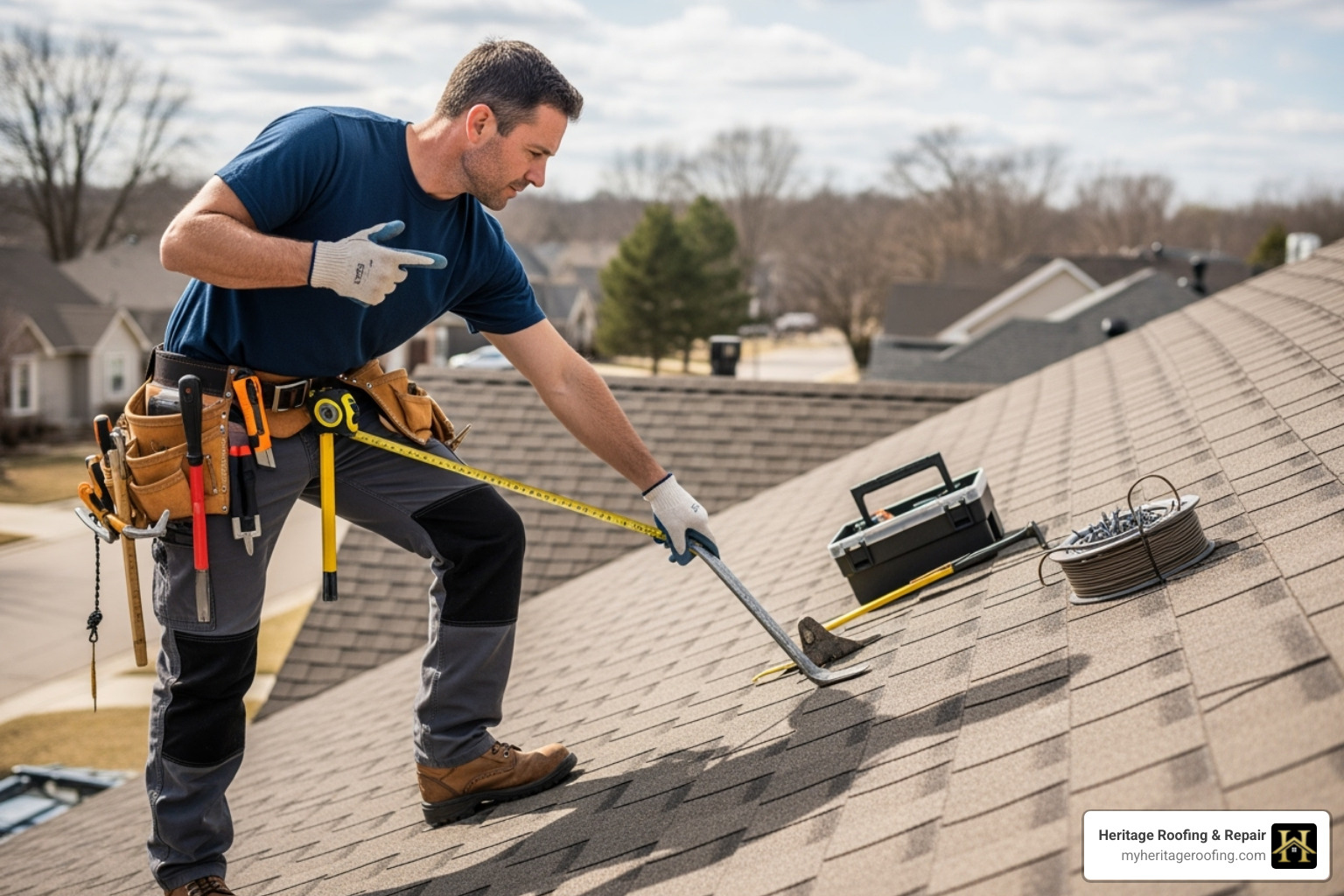
- Schedule Professional Inspections: An annual inspection by a trained professional can catch subtle issues like compromised flashing or early signs of rot before they cause major damage.
- Choose Durable Materials: When it’s time for a replacement, consider impact-resistant shingles or metal roofing. These materials are more durable and may qualify you for insurance discounts.
- Ensure Proper Attic Ventilation: Good ventilation prevents moisture buildup that can lead to rot and mold, protecting your roof structure from the inside out.
- Document Everything: Keep a file with all maintenance records, repair receipts, and inspection reports. This documentation is your best defense against a claim of neglect.
By taking these steps, you not only protect your home but also build a strong case for any future insurance claims.
Your Local Roofing Partner in Berryville, AR
Navigating a roof leak and an insurance claim is overwhelming. When you’re asking can I claim a roof leak on insurance, having a local, experienced partner on your side makes all the difference. For homeowners in Berryville, AR, and the surrounding Northwest Arkansas communities, Heritage Roofing & Repair is that trusted partner.
We understand the unique weather our region faces and know how to document damage in a way that insurance adjusters approve. When you call us, you get a local advocate who will provide a detailed assessment, help you with your claim, and ensure all repairs meet the highest standards. We’ve helped hundreds of local families restore their homes, and we’re proud to serve our community with dependable, quality work.
Heritage Roofing & Repair
3458 Arkansas State Hwy 221, Berryville, AR 72616
(870) 654-1164
Conclusion: Secure Your Home and Your Investment
Successfully navigating a roof leak insurance claim comes down to three key actions: proactive prevention, understanding your policy, and taking swift action when damage occurs. Regular maintenance and professional inspections are your best defense against both leaks and claim denials based on neglect.
Before you ever need to file, know whether you have an Actual Cash Value (ACV) or Replacement Cost Value (RCV) policy and be aware of your deductible. This knowledge empowers you to make smart financial decisions.
Finally, if a leak does happen, remember to act fast: document everything, take steps to prevent further damage, and call a professional roofer who can guide you through the insurance process. At Heritage Roofing & Repair, we’ve guided hundreds of Northwest Arkansas homeowners through this exact situation. We’re here to help you make the right decisions for your home and your budget.
For a complete overview of the claims process, explore our Roofing Insurance Claims Ultimate Guide. It’s packed with additional insights to ensure you’re fully prepared.