Why Commercial Property Roof Repair Demands Your Immediate Attention
Commercial property roof repair is essential for protecting your business from costly water damage, structural deterioration, and operational downtime. Whether you’re dealing with a minor leak or planning a major renovation, understanding your options can save you thousands of dollars and years of headaches. For over 50 years, the team at Heritage Roofing & Repair has provided dependable roofing solutions, giving us unique insight into protecting your commercial investment in Northwest Arkansas.
Quick Answer: What You Need to Know About Commercial Property Roof Repair
- Common Issues: Leaks, ponding water, membrane damage, flashing failures, and punctures
- Typical Costs: $500 to $5,000+ depending on damage extent and roof type
- Average Lifespan: 20-30 years for most commercial roofs (metal roofs can last 30-50 years)
- Key Decision Point: If 25% or more of your roof is damaged, full replacement is usually more cost-effective than extensive repairs
- Three Options: Repair (isolated damage), Restoration (aging surface with sound structure), or Replacement (widespread damage or end of lifespan)
- Emergency Signs: Active uncontrollable leaks, storm damage, or peeled-back membrane sections require immediate professional response
Your commercial roof isn’t just a protective barrier—it’s a critical asset that directly impacts your property value, tenant satisfaction, and operating costs. Unlike residential roofing, commercial systems face unique challenges: larger surface areas, specialized drainage requirements, and the added complexity of rooftop equipment like HVAC units. A single leak can damage inventory worth thousands, create safety hazards for employees, and trigger insurance complications.
The stakes are particularly high in Northwest Arkansas, where severe thunderstorms, hail, and temperature extremes put constant stress on commercial roofing systems. According to industry data, preventative maintenance and timely repairs can extend your roof’s lifespan significantly—potentially saving you from a premature $50,000+ replacement project.
This guide breaks down everything property owners and managers need to know: how to identify problems early, when to repair versus replace, what materials and techniques professionals use, and how to choose a contractor you can trust. We’ll also cover the financial implications, emergency response protocols, and how Arkansas’s climate affects your roof’s performance.
With over 50 years of providing commercial property roof repair and installation services throughout Northwest Arkansas, our family-owned business has seen it all. Our experience with everything from flat TPO systems to metal roofing gives us unique insight into what works—and what doesn’t—when it comes to protecting your commercial investment.
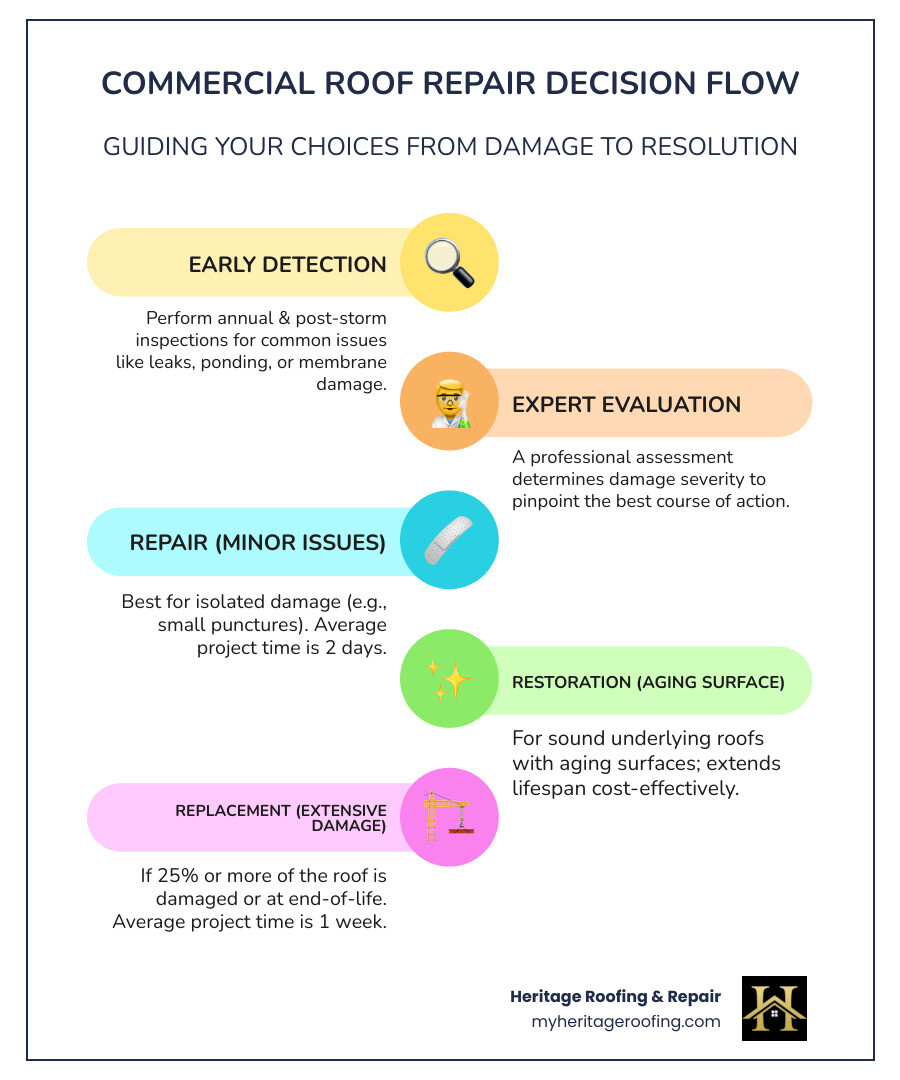
Quick commercial property roof repair definitions:
Identifying the Problem: Common Roof Types and Telltale Signs of Damage
A typical commercial roof has a lifespan of 20 to 30 years, but this depends heavily on the material and maintenance. Recognizing early warning signs is crucial to preventing small issues from becoming catastrophic failures. Different roofing systems have unique vulnerabilities that property managers should be aware of.
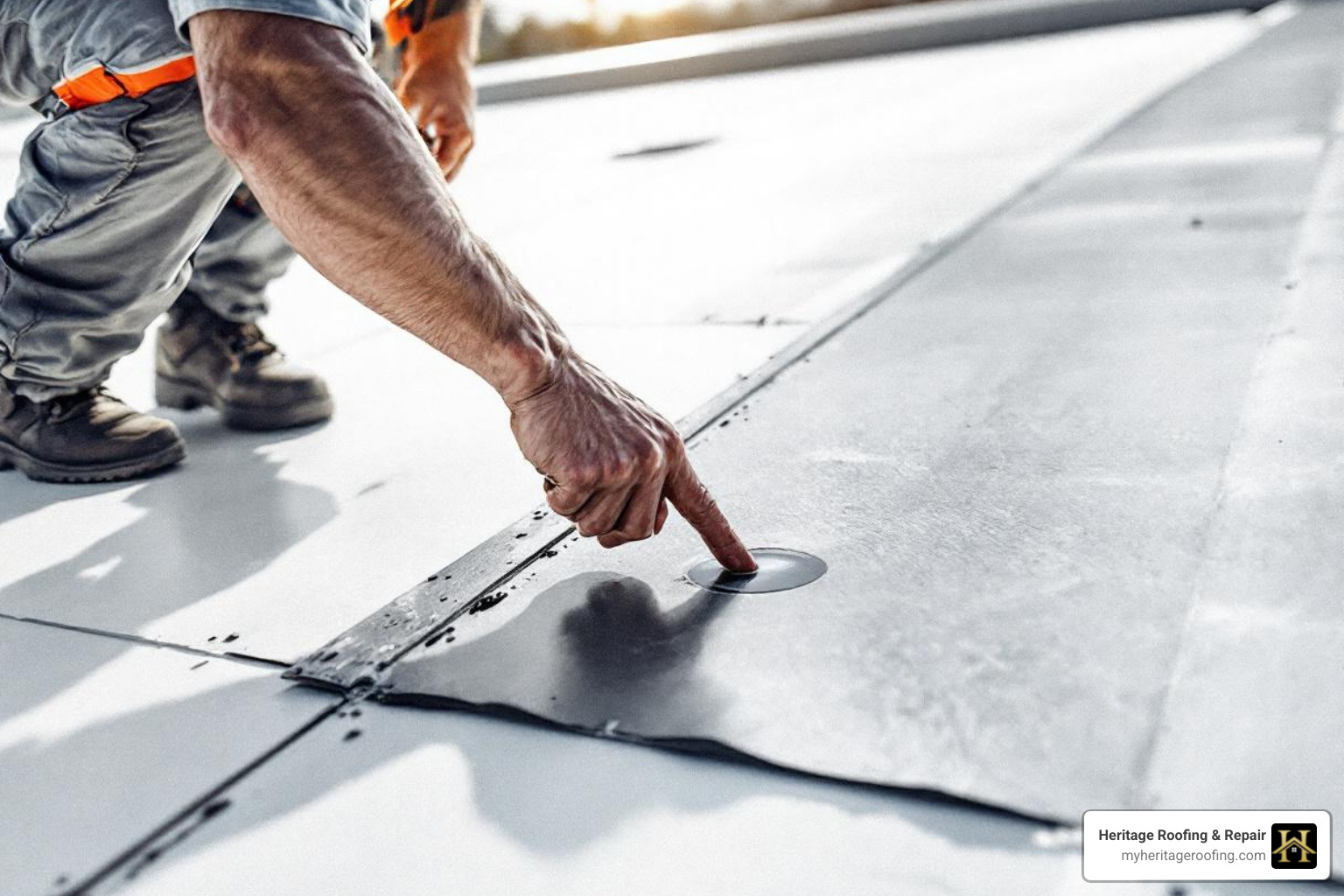
Common Commercial Flat Roofs and Their Vulnerabilities
Commercial flat roofs are a popular choice for businesses across Berryville, Fayetteville, and Harrison, AR, due to their cost-effectiveness and accessibility. However, each type comes with its own set of vulnerabilities. Understanding these nuances is key to effective commercial property roof repair. For a deeper dive into these systems, check out our Commercial Flat Roof Ultimate Guide.
- TPO (Thermoplastic Olefin): Known for energy efficiency, TPO roofs can suffer from punctures and seam separation. These issues are often due to foot traffic, falling debris, or UV degradation.
- EPDM (Ethylene Propylene Diene Monomer): This durable rubber roofing can experience shrinkage, punctures, and seam adhesion failure over time. Shrinkage can pull at flashings and perimeters, creating vulnerabilities. Punctures often occur from sharp objects or maintenance activities.
- Modified Bitumen: A multi-ply system often used on low-slope or flat roof structures, modified bitumen can develop cracks, blisters, and surface wear, especially from thermal cycling and UV exposure. Blisters form when moisture gets trapped between layers.
- Metal Roofs: While incredibly durable with a lifespan often exceeding 30 years, metal roofs can have issues with loose fasteners, panel corrosion, and seam separation. Loose fasteners allow water intrusion, and corrosion can weaken the panels. Metal roofs, with their high reflectivity, can also be helpful in high-UV intensity areas, which is a consideration for energy efficiency in our Arkansas summers.
Signs of Damage: Regardless of the roof type, early detection of issues is paramount. Property managers should conduct regular inspections—at least annually and after major storms—to catch small problems before they escalate. A comprehensive guide to commercial roof inspections can help you identify common warning signs:
- Leaks and Water Stains: The most obvious sign. Water stains on ceilings or walls, especially after rain, indicate a breach in the roofing system. Don’t ignore a small drip; it can quickly become a torrent.
- Ponding Water: Standing water on a flat roof for more than 48 hours is a major concern. It puts extra stress on the roof structure and accelerates membrane degradation.
- Blistering or Bubbling: These visible raised areas on the roof surface indicate trapped moisture or air, weakening the membrane and making it vulnerable to punctures.
- Membrane Damage: Cracks, tears, punctures, or areas where the membrane is lifting or peeling back are direct pathways for water.
- Damaged Flashing: Flashing, the material used to seal around roof penetrations (vents, skylights, parapet walls), is a common failure point. Look for tears, detachment, or corrosion.
The Assessment: Deciding Between Repair, Restoration, and Replacement
Once damage is identified, a professional assessment is needed to determine the best course of action. This decision impacts both your immediate budget and your property’s long-term value. A key industry benchmark suggests that if 25% or more of the roof is damaged, a full replacement is often more cost-effective than extensive repairs.
| Factor | Repair | Restoration | Replacement |
|---|---|---|---|
| Cost | Lowest ($500-$5,000) | Moderate (fraction of replacement cost) | Highest (often $50,000+) |
| Lifespan Added | Short-term (1-5 years) | Medium-term (10-20 years) | Long-term (20-30+ years) |
| Ideal Scenarios | Isolated, minor damage; budget-constrained | Aging but structurally sound roof; extend life | Widespread damage, end-of-life, wet insulation |
| Disruption | Minimal | Low to Moderate | Moderate to High |
| Warranty | Limited (often 1-2 years) | Good (5-15 years) | Excellent (15-30 years) |
| Energy Savings | Minimal | Significant (especially with reflective coatings) | Significant (new, efficient materials) |
A thorough Roof Inspection Service Complete Guide can help us determine the best path forward.
Making the right choice for your commercial roof isn’t always straightforward. It requires careful consideration of the damage extent, the roof’s age, your budget, and your long-term plans for the property. As industry guides on roof repair and maintenance emphasize, this decision is critical. Our team employs professional diagnostic methods to help you decide:
-
Professional Diagnosis: We start with a comprehensive assessment, including:
- Visual Inspection: Our experienced technicians perform an exterior walk-through, looking for obvious signs like membrane tears, punctures, ponding water, corrosion, and loose flashings. We also conduct interior checks for water stains, mold, wet insulation, and ceiling bubbles. We document everything with photos for transparency and insurance purposes.
- Infrared Moisture Scans: This non-destructive technique uses infrared technology to detect hidden moisture trapped within the roof assembly, even when there are no visible leaks. Wet insulation shows up as warmer spots, indicating areas that need attention.
- Core Sampling: In some cases, we may take small core samples to physically inspect the layers of the roof, determine the extent of water saturation in the insulation, and assess the condition of the underlying deck.
-
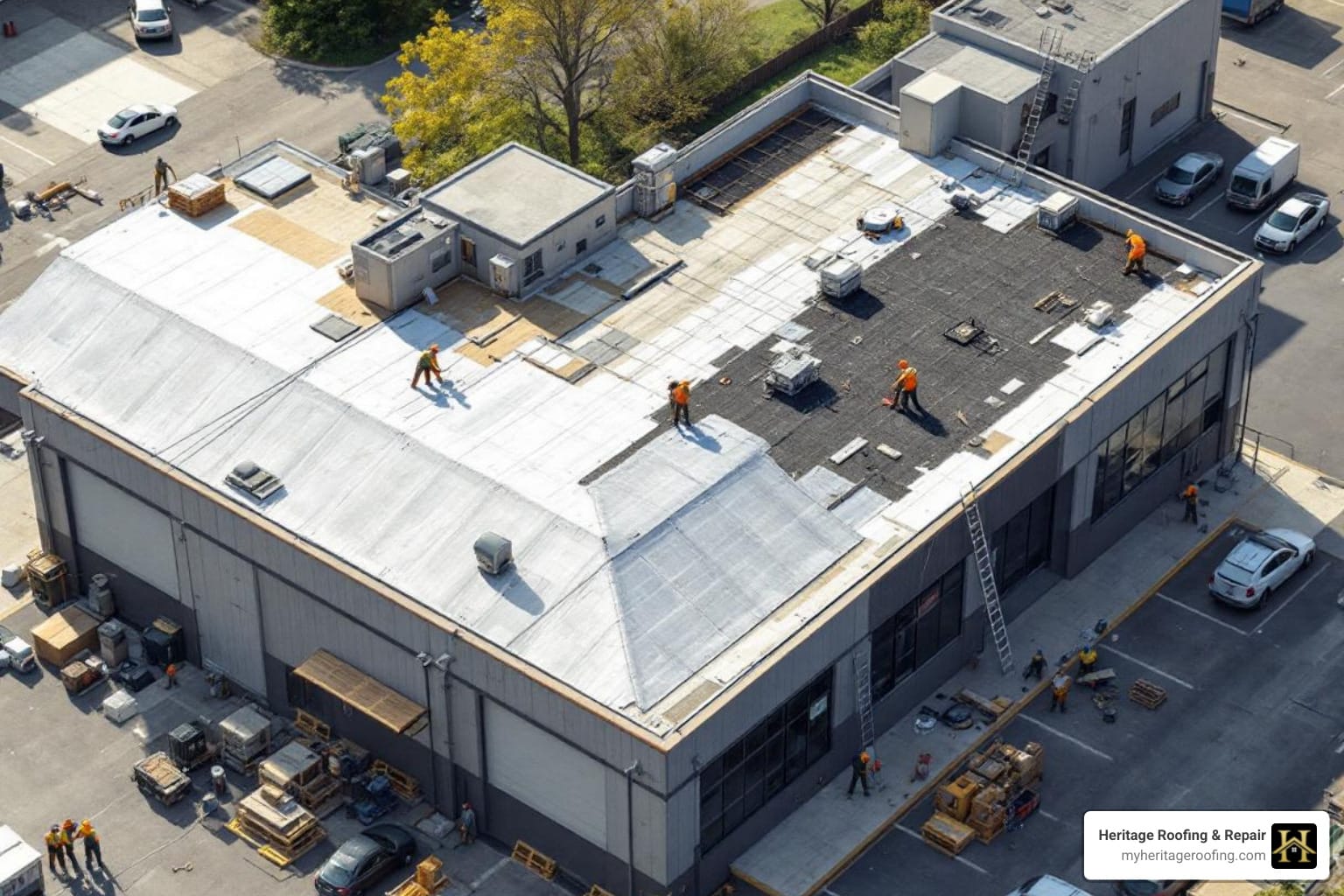
Repair: This is the go-to solution for isolated damage like small punctures, minor cracks, or localized flashing issues. If the majority of your roof is sound and the damage is less than 25% of the total area, a targeted repair is often the most cost-effective and least disruptive option. For example, a small tear in a TPO membrane can be cleaned and heat-welded, or a loose metal panel can be refastened and sealed. Repairs can often be completed quickly, minimizing disruption to your business. We believe in providing quality commercial property roof repair that extends the life of your existing system.
-
Restoration: A good middle-ground when the underlying roof system is structurally sound but the surface is aging, showing signs of wear, or experiencing minor leaks across multiple areas. Restoration typically involves a thorough cleaning, minor repairs to any penetrations or seams, and then applying a fluid-applied roof coating system (like silicone or acrylic) over the entire existing roof. This creates a new, seamless, and often highly reflective waterproof membrane, extending the roof’s life by 10-20 years at a fraction of the cost of a full replacement. It’s an excellent way to improve energy efficiency and delay a costly tear-off.
-
Replacement: This is necessary when the roof has widespread damage (25% or more), saturated insulation throughout, structural issues with the deck, or has simply reached the end of its service life (typically 20-30 years for TPO/EPDM, 30-50 for metal). While the most expensive option, it provides a brand-new, long-term warranty and the highest level of protection. Investing in a full roof replacement ensures your business is protected for decades to come, bringing peace of mind and often improved energy performance.
-
Section-by-Section Repairs: For owners facing the dilemma of a costly full replacement, especially for large commercial flat roofs, section-by-section repairs offer a practical and economically advantageous alternative. This approach allows us to address urgent leaks or damaged sections promptly, spreading the cost over time and minimizing immediate financial strain and operational disruption. It’s crucial that this type of work is entrusted only to qualified roofers knowledgeable in flat roof installations and repairs, ensuring quality workmanship and adherence to manufacturer specifications.
The Nuts and Bolts of Commercial Property Roof Repair
The materials and techniques used in a repair are critical for its longevity. A professional contractor will match the repair materials to your existing roof system to ensure compatibility and a durable bond. Beyond simple patches, modern solutions like coatings and green systems can improve a roof’s performance and lifespan.
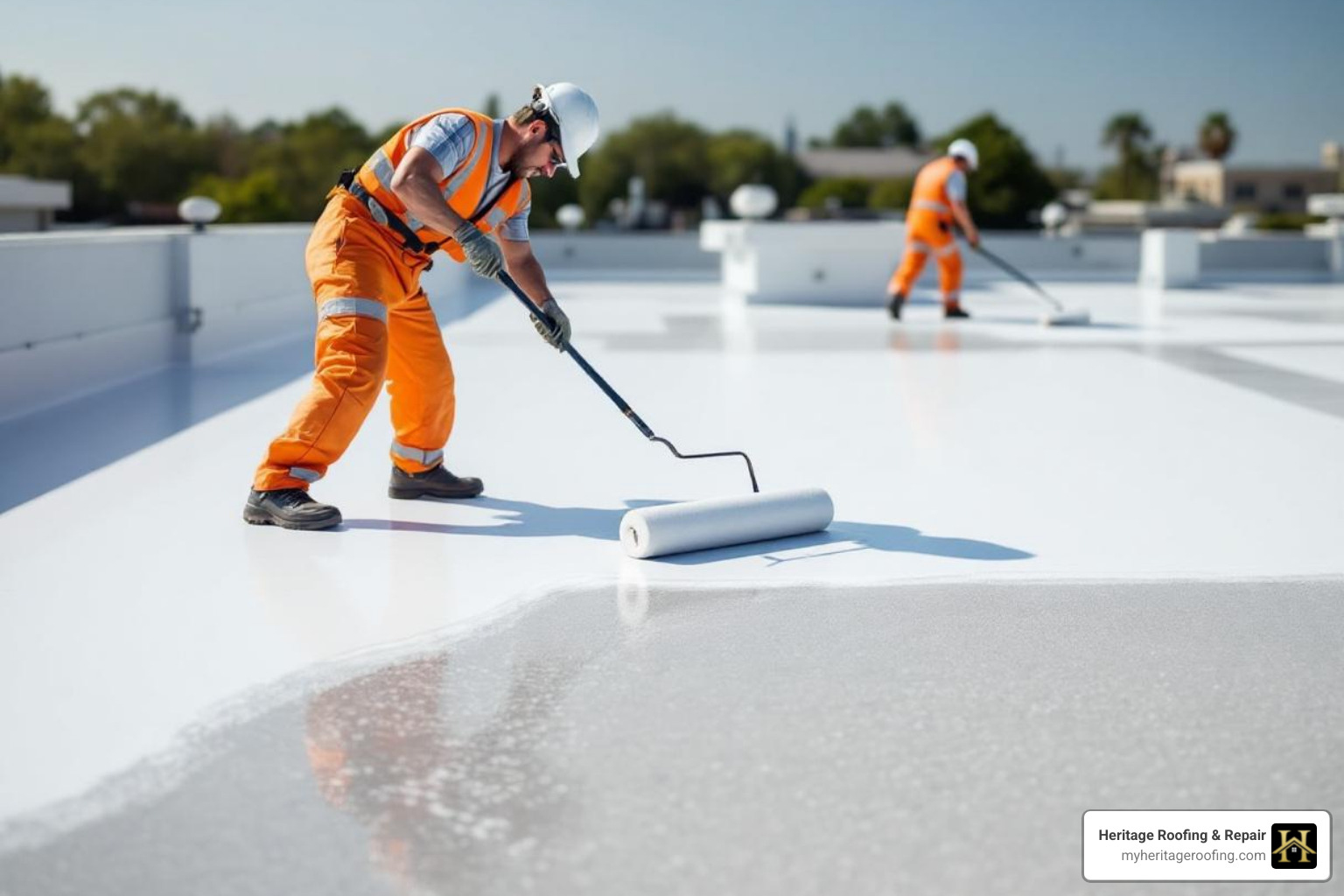
When it comes to commercial property roof repair, the right technique and materials are paramount. Our goal is always to provide a repair that is not only effective but also durable and compatible with your existing roofing system.
- Single-Ply (TPO, EPDM, PVC): For these membrane roofs, repairs involve a meticulous process. First, the area is thoroughly cleaned and often primed to ensure optimal adhesion. Then, a patch of the same material is either heat-welded (for TPO and PVC) or adhered with specialized adhesives and pressure-sensitive tapes (for EPDM) over the damaged area. The key is to create a seamless, watertight bond that will withstand the elements.
- Built-Up/Modified Bitumen: For these asphalt-based systems, which are common for their robustness, technicians may cut away damaged felts. A new ply sheet (or multiple layers of felt) is then installed, often embedded in hot asphalt or cold-applied adhesive. A gravel-surfaced flood coat might be applied to match the existing surface and provide UV protection. This layering technique ensures the integrity of the multi-ply system.
- Metal Roofs: Repairs for metal roofs typically focus on addressing loose fasteners, seam separation, and corrosion. Loose screws are replaced with oversized, self-sealing fasteners to prevent future leaks. Butyl tape or specialized sealants are added under panel laps or directly onto seams to create a waterproof barrier. For areas with rust, the surface is cleaned, treated with a rust inhibitor, and then often coated to prevent further degradation.
The Role of Coatings and Green Roofs
Beyond traditional patching, modern commercial property roof repair often incorporates advanced solutions like roof coatings and, increasingly, green roofing systems.
- Roof Coatings: These liquid-applied systems are revolutionizing the repair and restoration landscape. Silicone, acrylic, and polyurethane coatings can be applied over an existing roof to seal leaks, extend its life, and significantly improve energy efficiency by reflecting UV intensity. For example, a white reflective coating can drastically reduce the amount of heat absorbed by the roof, lowering cooling costs for your business in the hot Arkansas summer. Coatings are a cost-effective way to revitalize an aging roof without the expense and disruption of a full replacement. Learn more in our Commercial Roof Coating Guide.
- Green Roofs: Also known as vegetative or living roofs, a green roof involves planting a layer of grasses, plants, or other vegetation over a waterproofing membrane. While not a direct repair technique, they play a crucial role in maintenance and longevity. A green roof can protect the underlying system from the elements—UV radiation, extreme temperatures, and physical damage—potentially doubling or tripling its lifespan. They also offer significant insulation benefits, reducing heating and cooling costs, and contribute to environmental sustainability. While less common in our immediate area, they are a testament to innovative roofing solutions.
Financial and Logistical Considerations for Property Owners
Investing in your commercial roof is not just an expense; it’s a strategic decision that protects your property’s value. Understanding the costs, maintenance benefits, and insurance process is key to making sound financial choices.
Cost Factors in Commercial Property Roof Repair
The cost to repair a commercial roof can range from $500 for a simple fix to over $5,000 for more complex issues, but this is a broad average. Factors influencing the price include the type of roofing material (TPO, EPDM, metal), the extent and location of the damage, accessibility of the roof, and local labor rates. For example, repairs over critical business areas or expensive equipment might necessitate more immediate and thorough solutions, potentially increasing costs to minimize business interruption.
Proactive maintenance, including semi-annual inspections (spring and fall are ideal) and clearing debris from drains and gutters, is the most effective way to prevent these costs from escalating. Investing in a quality repair or a roof maintenance plan provides significant long-term financial benefits. This includes preventing inventory loss, structural damage, and premature roof failure. An inexpensive fix today may cost far more in the long run if it fails, leading to greater damage and disruption. We can help you devise a robust Roof Maintenance Plans Guide to protect your investment.
Insurance Claims Process
Dealing with roof damage, especially after a severe storm, often involves navigating insurance claims. We understand this can be complex. Our team assists with roof inspections, detailed damage reports, and documentation to support your claim. We work closely with insurance adjusters to ensure you receive the compensation you deserve, simplifying a potentially stressful process. For more information, refer to our Commercial Roof Insurance Claims Guide.
Handling the Unexpected: Emergency Repairs and Weather in Arkansas
Severe weather in Arkansas, from high winds and hail to torrential rain, can cause sudden and severe roof damage. Knowing how to respond in an emergency can minimize interior damage and keep your business operational.
When You Need Emergency Service in Berryville, AR
An emergency situation warrants an immediate call to a professional roofer. This includes active, uncontrollable leaks, significant storm damage (like a fallen tree), or sections of the roof membrane being peeled back by wind. In Northwest Arkansas, we’re all too familiar with sudden, intense storms that can turn a small leak into a major problem overnight.
When a leak is active and damage could result, every minute counts. Our 24/7 emergency service is designed to dispatch a team to implement temporary solutions, like tarping, to secure the building and prevent further water intrusion while a permanent repair plan is developed. This minimizes immediate damage, protects your assets, and helps you maintain business continuity. For a complete understanding of what to do, consult our Emergency Roof Repair Complete Guide.
For immediate assistance in the Berryville area, you can reach out to local experts:
Heritage Roofing & Repair
3458 Arkansas State Hwy 221, Berryville, AR 72616
Click to call: (870) 654-1164
Arkansas Weather Impact
Our local climate in Northwest Arkansas presents unique challenges for commercial roofs. High humidity, heavy rainfall, strong winds, and hailstorms are common. These conditions can accelerate wear and tear, lead to rapid deterioration of materials, and cause sudden, significant damage. For example, hailstorms can puncture membranes, and strong winds can lift metal panels or peel back single-ply systems. Regular inspections and using materials rated for high wind and impact resistance are crucial for commercial properties in our region. We ensure our repair methods and materials are suited to withstand these specific local weather conditions.
Choosing Your Partner: How to Select a Reliable Commercial Roofing Contractor
The success of your commercial roof repair depends heavily on the quality of the contractor you hire. A reliable partner will not only perform the work correctly but also provide transparent communication, fair pricing, and robust warranties.
When selecting a contractor for your commercial property roof repair, you’re not just hiring someone to fix a leak; you’re choosing a partner to protect a significant investment. Here’s what to look for:
- Experience and Credentials: Look for a company with a proven track record specifically in commercial roofing. We bring over 50 years of trusted experience to every project, understanding the unique demands of large-scale buildings in Berryville, Fayetteville, and Harrison, AR.
- Licensing and Insurance: Always verify that the contractor is fully licensed and carries comprehensive liability and Workers’ Compensation insurance. This protects you from potential damages or accidents on your property.
- Manufacturer Certifications: Certified contractors have undergone specific training from roofing material manufacturers. This means they are qualified to install and repair products according to strict guidelines, often a requirement for maintaining manufacturer warranties.
- Clear, Detailed Estimates: A reputable contractor will provide a transparent, written estimate that details the scope of work, materials to be used, timelines, and costs, with no hidden fees.
- Robust Warranties: Inquire about warranties on both materials and labor. These can range from 5 to 25 years. A strong warranty demonstrates a contractor’s confidence in their workmanship and the quality of their materials.
- References and Reviews: Ask for local references and examples of past commercial projects. Online reviews and testimonials offer valuable insights into a company’s reliability and customer satisfaction.
- Safety Record: A good safety record is non-negotiable. Ask about their safety protocols, especially for tasks involving hot work or rooftop access.
- Communication and Responsiveness: You want a partner who communicates clearly and responds promptly, especially during emergencies.
- Understanding of Local Codes: Ensure the contractor is knowledgeable about local building codes and regulations in our Arkansas communities.
- Custom Solutions: Avoid contractors who offer a “one-size-fits-all” approach. A reliable partner will assess your specific needs and recommend custom solutions, whether it’s repair, restoration, or replacement.
Choosing an Experienced Roofing Contractor makes all the difference.
Protect Your Investment with Professional Roof Care
Your commercial roof is a dynamic system that requires professional attention to perform at its best. From identifying the earliest signs of wear and tear to understanding the complex decision between repair and replacement, being an informed property owner is your best defense. By prioritizing regular maintenance, acting quickly when damage occurs, and partnering with a trusted, experienced contractor, you can ensure your roof remains a durable, protective asset for decades to come.
Ready to protect your commercial property in Fayetteville, AR? Contact our team for a comprehensive roof assessment today!