Why Understanding Roofing Contractors and Insurance Adjusters Matters
Roofing contractors and insurance adjusters collaborate during the roof damage claims process, but they have very different roles. Understanding this dynamic is key to getting your claim approved and fully funded. When storms damage your roof, navigating the insurance process can be overwhelming, but choosing a trusted local roofing company ensures you have an expert advocate on your side.
Here’s a quick overview:
- Key to Success: Thorough preparation, detailed documentation, and written confirmation of all agreements.
- Common Mistake: Relying on verbal promises or letting the adjuster conduct the inspection alone.
With the average roof replacement costing between $9,000 and $10,000, a successful claim depends on how well your contractor and adjuster work together. The adjuster works for the insurance company, not you. Their goal is to verify the loss according to your policy, while your contractor’s goal is to ensure all legitimate damage is covered.
I’m Rex Wisdom, owner of Heritage Roofing & Repair. For over 50 years, our family has helped Berryville homeowners manage the relationship between roofing contractors and insurance adjusters to secure fair settlements. This guide will show you how to prepare for and succeed in your roof insurance claim.
Quick roofing contractors and insurance adjusters terms:
The Key Players: Understanding Your Roofer’s and Adjuster’s Roles
Think of your roof insurance claim as a three-person team. While both roofing contractors and insurance adjusters inspect your roof, their objectives differ. The adjuster’s role is to verify damage for the insurance company and determine a settlement based on your policy. Your roofing contractor is your advocate, ensuring all damage is identified, documented, and included in the scope of work.
Your Roofing Contractor: The Damage Expert and Advocate
Your roofing contractor is your primary ally in the claims process. The burden of proof is on you, the homeowner, to prove your loss, and an Experienced Roofing Contractor is essential for this.
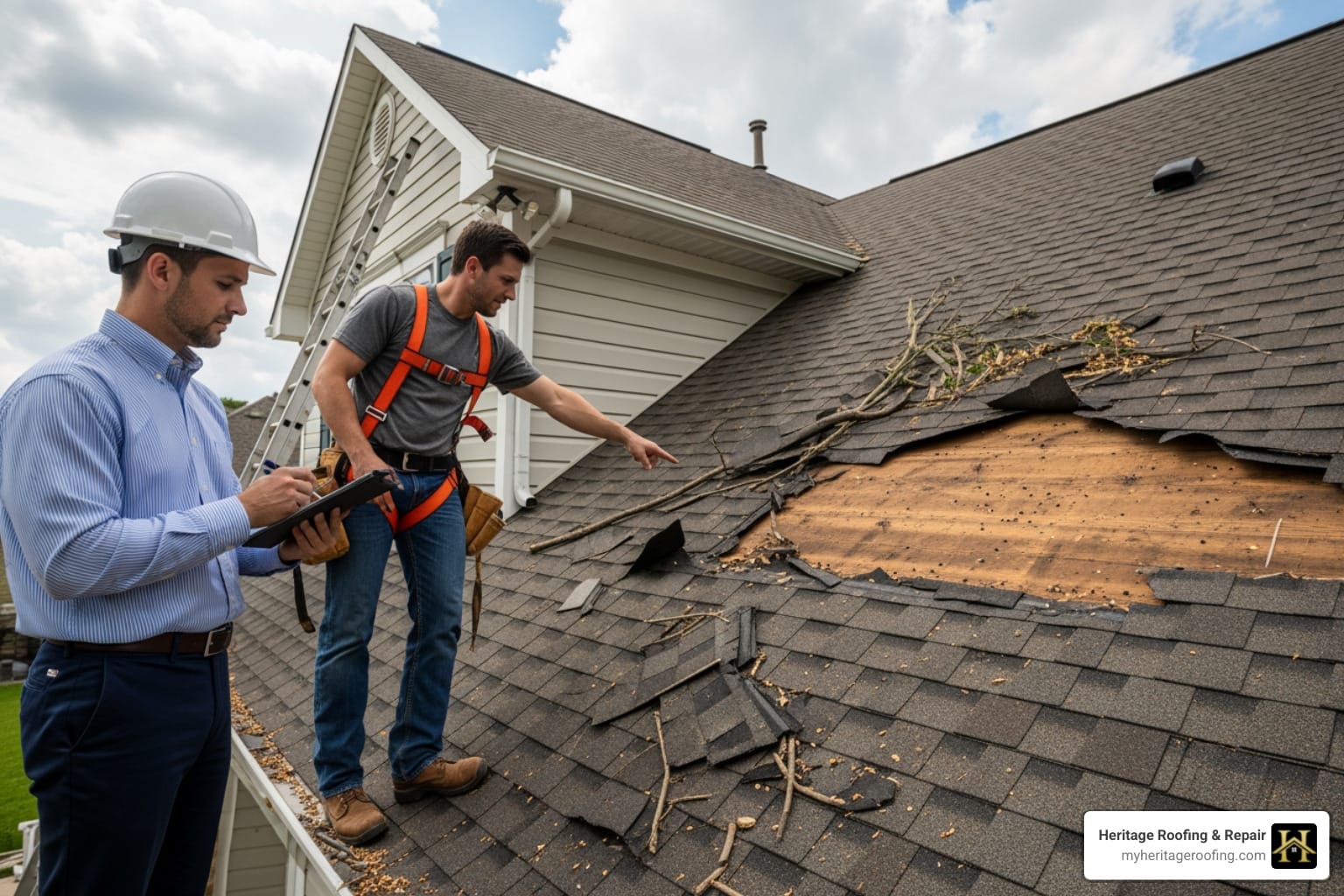
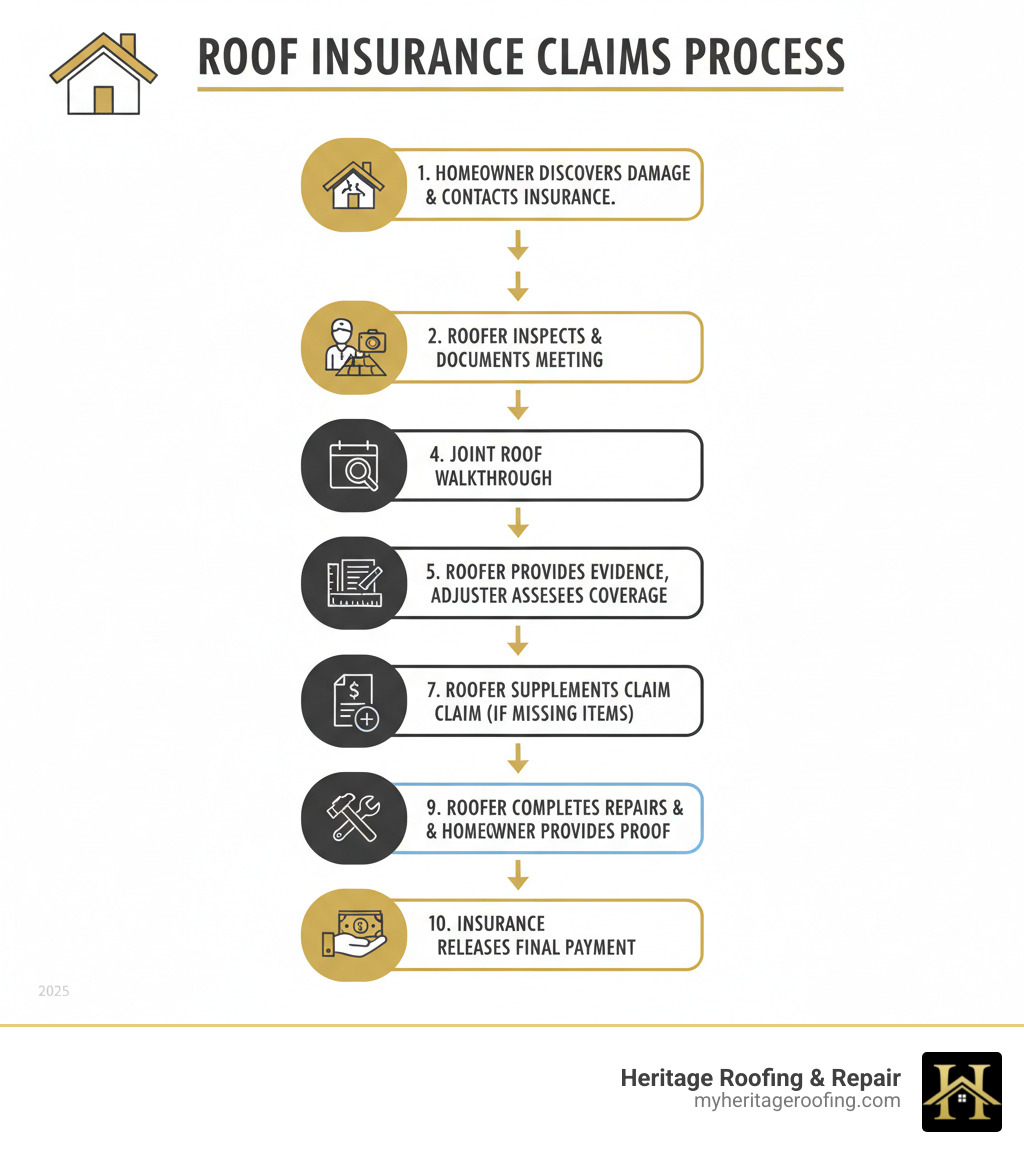
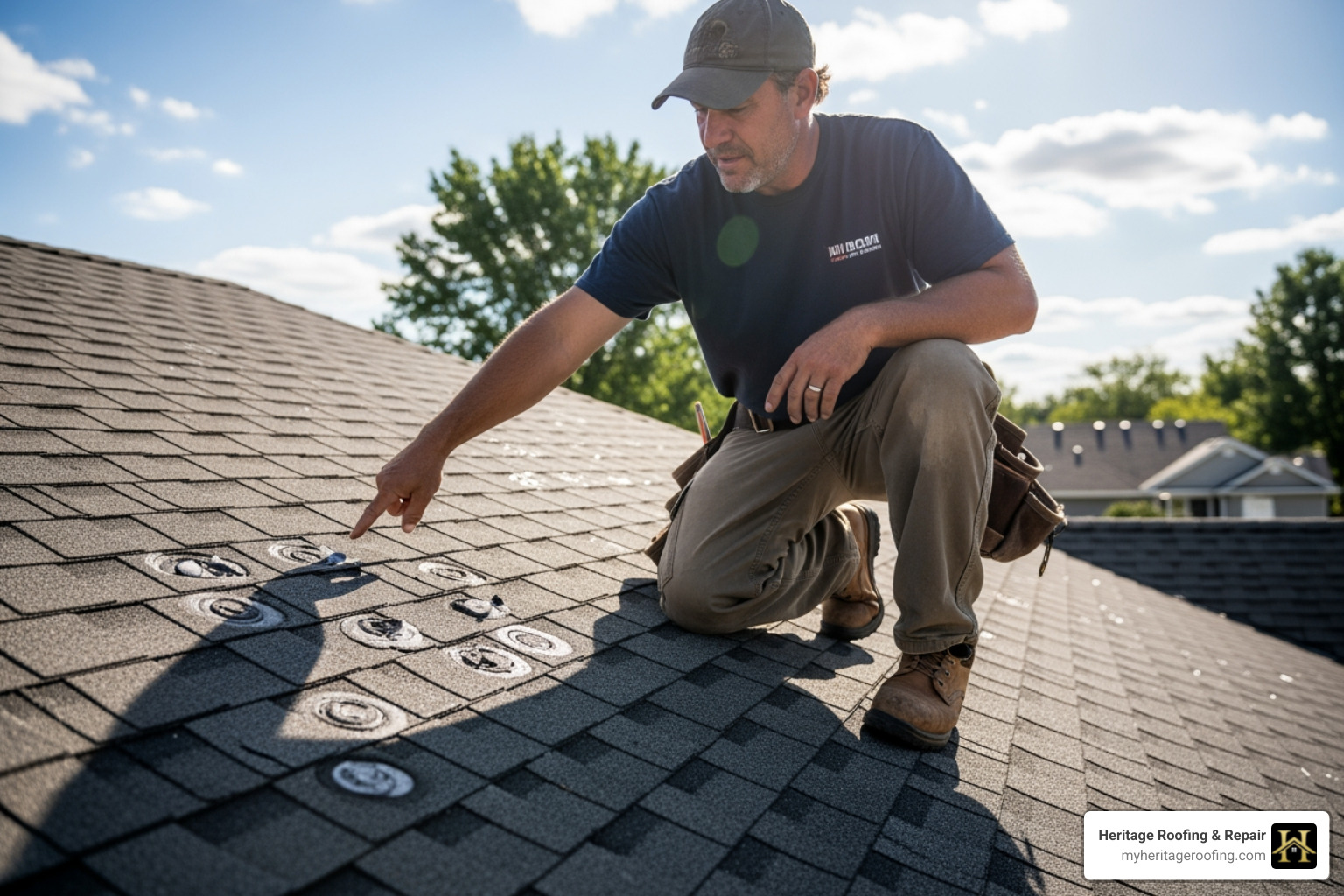
Our role extends beyond just repairs. We conduct a thorough inspection to find all damage, from missing shingles to subtle hail impacts. We document these findings with detailed notes and photos, preparing a precise scope of work and an accurate estimate that accounts for materials, labor, and local building codes. We then present this evidence to the adjuster, explaining why the proposed work is necessary. During the adjuster meeting, we negotiate to ensure every line item is included, so you receive a fair settlement that covers the full cost of restoring your roof.
The Insurance Adjuster: The Policy Enforcer
The insurance adjuster represents your insurance company. Their job is to assess the reported damage, verify its cause, and determine if it’s covered under your policy. They take their own photos and measurements and create an estimate based on your policy’s terms. The adjuster has the authority to approve or deny your claim and set the initial settlement amount.
While adjusters are professionals, their allegiance is to their employer. This doesn’t make them adversaries, but it highlights the need for your own expert advocate during the inspection. When roofing contractors and insurance adjusters work together professionally with clear documentation, the process is smoother and homeowners get fair settlements.
The Homeowner: The Project Manager
As the homeowner, you are the project manager. You coordinate between your contractor and the adjuster and make key decisions.
Your responsibilities include filing the claim promptly, as time is critical. You must also choose a reputable, local roofing contractor experienced with insurance claims. Understanding your deductible is also crucial; you are legally required to pay it. Be wary of any contractor who offers to “waive” or “pay” your deductible, as this is insurance fraud. Finally, you approve the completed work before making the final payment. With our 50 years of experience, we guide homeowners through every step, handling the technical details and advocating for your best interests.
Preparing for the Adjuster Meeting: A Contractor’s Guide to Success
The meeting between your roofing contractor and insurance adjuster is the most pivotal moment in your claim. This appointment can determine whether you get a full replacement, a partial repair, or a denial. At Heritage Roofing & Repair, we know a well-prepared, professional approach makes all the difference.
Our goal is collaboration, not confrontation. We help the adjuster justify approving the claim by providing them with clear, irrefutable documentation. This makes their job easier and your claim more likely to succeed.
The ‘Do’s’: Setting the Stage for a Positive Outcome
- Arrive Early and Be Prepared: We arrive early to set up and organize our documentation. This shows professionalism and respect for the adjuster’s time.
- Have Accurate Measurements Ready: We come equipped with precise aerial measurements from technology like EagleView or HOVER. This provides concrete data and streamlines the process.
- Document Everything: We take our own extensive photos, including context shots and detailed close-ups. This serves as undeniable proof and satisfies the homeowner’s burden of proof.
- Maintain a Collaborative Attitude: We treat adjusters with respect. A positive, collaborative attitude builds rapport and makes them more receptive to our findings. Arguing is counterproductive.
- Ask Open-Ended Questions: Instead of making demands, we ask questions like, “What do you think of this area?” This invites their expertise and encourages them to identify damage themselves.
- Get Written Confirmation: Verbal agreements are unreliable. We always seek written confirmation of the agreed-upon scope of work. If the adjuster won’t provide it, we advise you, the homeowner, to request it from the insurance company.
Before the meeting, we discuss expectations with you, explaining that the final decision rests with the adjuster and your policy. For more details, see our guide on homeowners insurance and roof damage.

The ‘Don’ts’: Common Mistakes That Can Derail a Claim
- Don’t Argue or Be Confrontational: This creates animosity and makes adjusters less cooperative.
- Don’t Rely on Verbal Agreements: What’s said on the roof may not appear in the report. Always get it in writing.
- Don’t Chalk the Roof (Unless Asked): Insurance companies may view chalking damage as manipulation. We let the evidence speak for itself.
- Don’t Let the Adjuster Lead the Entire Inspection: We actively participate, guiding them to the damage we’ve found and presenting our evidence to prevent missed items.
Navigating the Claim: From Policy Types to Payouts
The type of insurance policy you have significantly impacts your claim payout. With most roof replacements costing $9,000 to $10,000, understanding the difference between an Actual Cash Value (ACV) and a Replacement Cost Value (RCV) policy is critical for your finances.
It’s also important to know that the initial insurance estimate rarely covers everything. A key role for your roofing contractor is to “supplement” the claim by identifying missing items needed for a complete, code-compliant repair. This is a normal part of the process when roofing contractors and insurance adjusters work together.
Understanding Your Policy: ACV vs. RCV
An Actual Cash Value (ACV) policy pays for the depreciated value of your roof. If your roof is 15 years old, the insurer deducts for wear and tear. You receive a check for what your old roof was worth, not what a new one costs, leaving you to pay the difference plus your deductible.
A Replacement Cost Value (RCV) policy is generally better, as it pays the full cost to replace your roof with new materials of similar quality. The payout is typically staged:
- You first receive the ACV amount (depreciated value minus your deductible).
- After the work is done and you submit the contractor’s invoice, the insurer releases the “recoverable depreciation,” which is the remaining balance.
With an RCV policy, your only out-of-pocket cost should be your deductible. The final payout process differs greatly; ACV is a single payment, while RCV involves two payments to ensure repairs are completed.
What to Do When a Claim is Denied or Underpaid
A denied or underpaid claim is frustrating, but it’s often not the final word. Many claims are approved after a second review or re-inspection.
The first step is to request a re-inspection. We will gather more evidence and request another meeting, sometimes with a different adjuster. A fresh perspective can make a significant difference. Providing additional documentation is crucial for an appeal. We compile detailed photos, measurements, and a comprehensive estimate to prove the damage warrants the requested repairs.
If the claim remains denied, you might consider hiring a public adjuster. Unlike the insurance company’s adjuster, a public adjuster works exclusively for you. They typically charge a percentage of the settlement (around 15%), so this option is best for large, complex, or persistently denied claims. Before hiring one, we recommend exhausting all options with your insurance company first. You can find qualified professionals through directories like GAPIA.
Avoiding Roofing Scams and Choosing a Trustworthy Contractor
After a major storm in Northwest Arkansas, you’ll see an influx of contractors. Unfortunately, this includes fraudulent “storm chasers” who take your money and disappear. Knowing how to spot a reputable local contractor and the red flags of a scam is your best defense.
Red Flags: Spotting Roofing Scams and Protecting Yourself
Be vigilant when choosing a contractor after a storm. Here are major warning signs:
- Storm Chasers: These out-of-state contractors appear after storms and vanish after collecting payment, leaving shoddy work and no warranty. Always choose a local, licensed, and insured contractor with an established reputation in communities like Berryville, AR.
- Offers to Pay Your Deductible: This is insurance fraud. Your policy legally requires you to pay your deductible. A contractor offering to “waive” or “cover” it is breaking the law and asking you to do the same.
- High-Pressure Tactics: A legitimate contractor will give you time to review a contract. Never sign a blank contract or one you don’t understand, especially if you feel pressured.
- Lack of Licensing and Insurance: Always verify a contractor’s license and insurance. If they hesitate to provide proof, walk away.
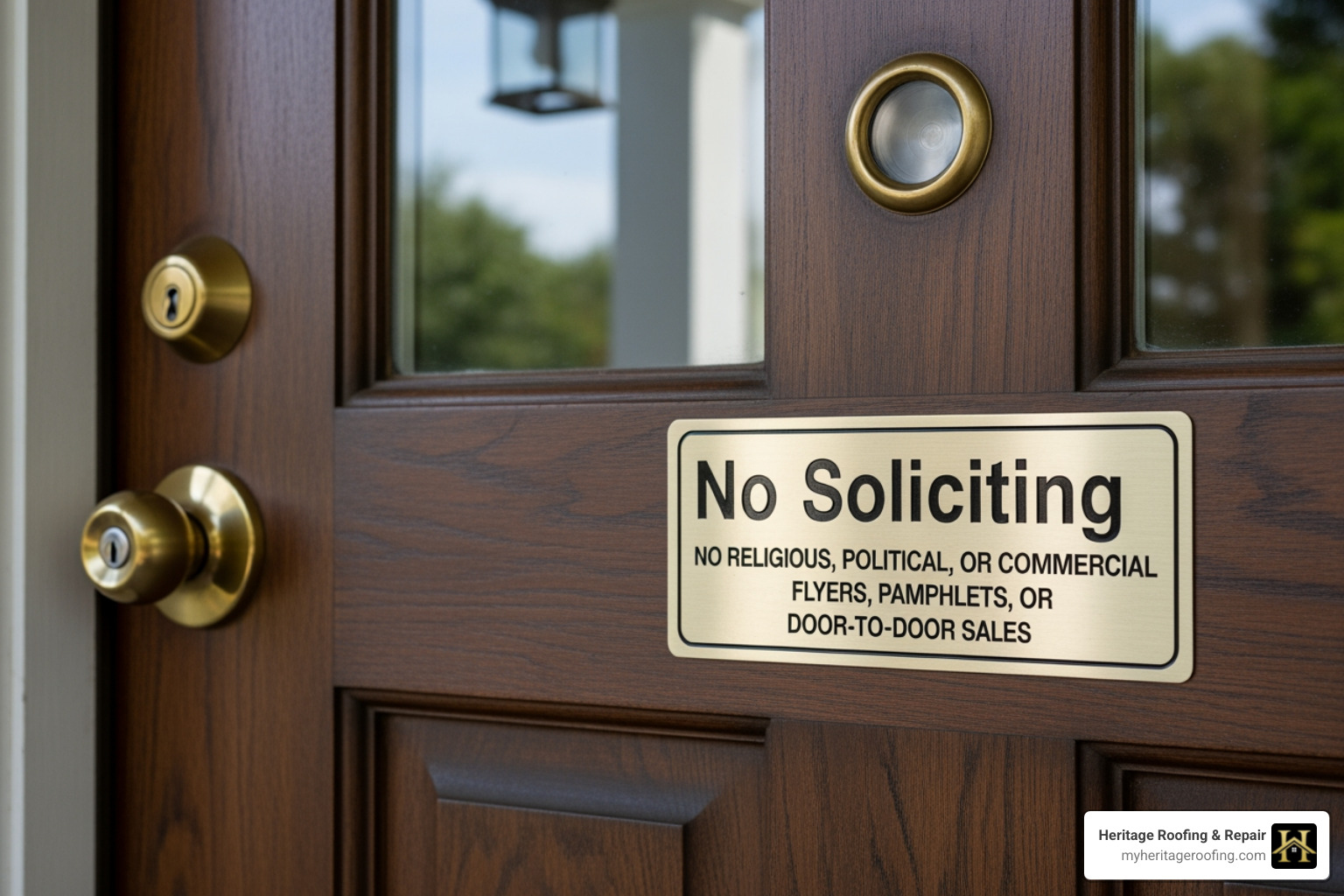
- Unsolicited Door-to-Door Sales: Be cautious of aggressive door-to-door salespeople making promises that sound too good to be true. A reputable contractor’s reputation brings them business.
- Sharing Policy Information Prematurely: Don’t give out your policy number until you’ve vetted a contractor and are ready to sign an agreement.
For more tips, the Insurance Information Institute offers resources on Avoiding scams after a disaster. At Heritage Roofing & Repair, we’ve built our 50-year reputation on honest, transparent service.
The Future is Here: How Technology is Changing Roof Insurance Claims
Technology is revolutionizing how roofing contractors and insurance adjusters process claims. Drones, AI, and digital platforms are making assessments more accurate, efficient, and transparent, leading to faster and fairer settlements for homeowners.
Drones, AI, and Digital Platforms
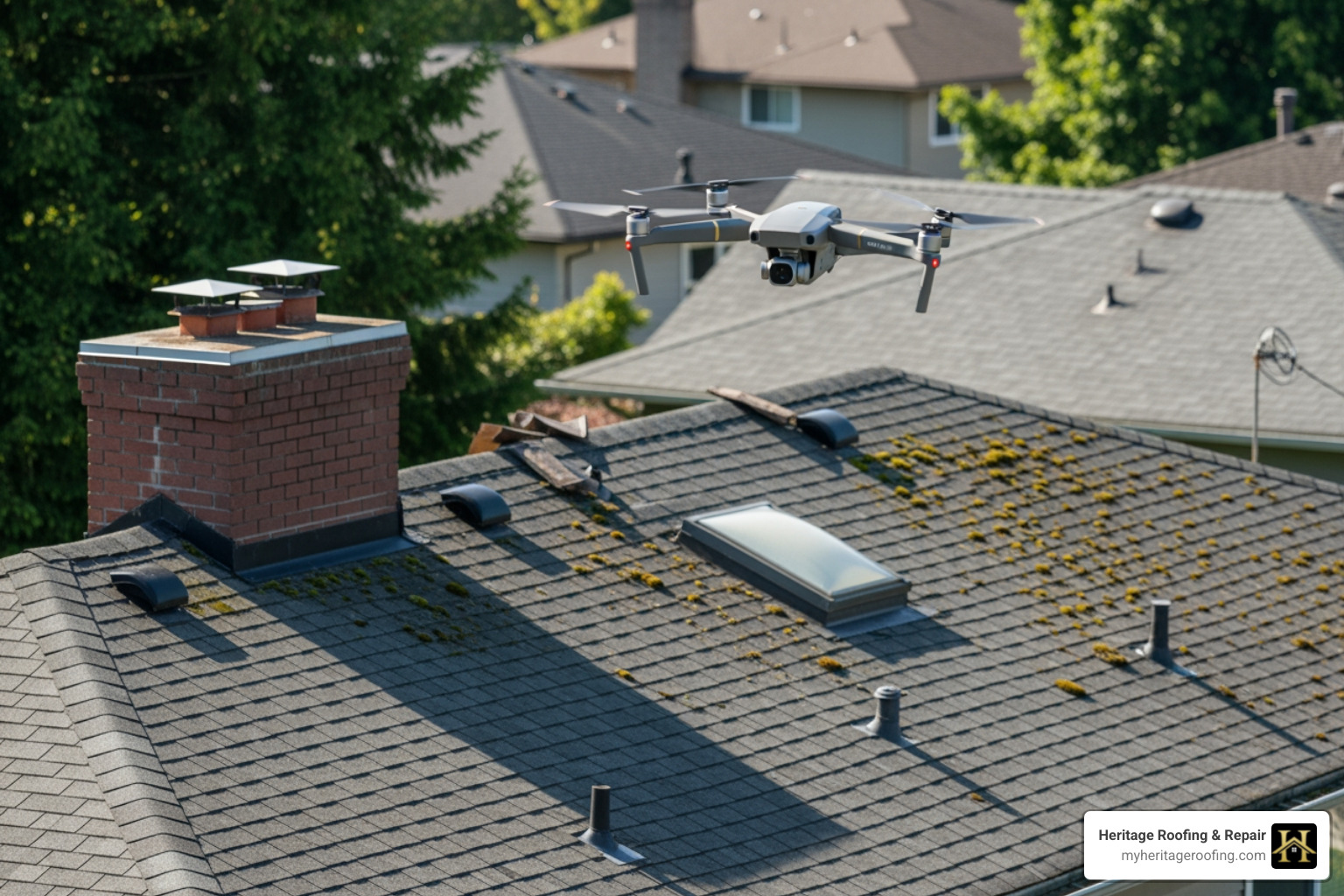
The days of relying only on ladders and clipboards are over. Drones allow for comprehensive roof inspections quickly and safely, especially on steep or large roofs. They capture high-resolution images of every square inch, documenting damage that is hard to reach.
When combined with AI-powered analysis, this technology becomes even more powerful. AI algorithms can detect subtle hail impacts or wind damage that the human eye might miss, providing a consistent, objective assessment. This reduces the subjectivity that can complicate evaluations between roofing contractors and insurance adjusters.
Digital platforms have transformed information management. These systems centralize all claim-related documents, photos, and reports, streamlining communication between the contractor, homeowner, and adjuster. Everyone has access to the same up-to-date information.
This transparency benefits everyone. Drone footage and AI reports provide irrefutable proof of damage, making it harder to dispute legitimate claims. We use technology like EagleView and HOVER reports to provide data-driven insights during adjuster meetings. Presenting precise measurements and 3D models helps us speak the adjuster’s language, often leading to faster approvals.
For more on how technology helps identify specific issues, explore our Hail Damage Roof Guide 2025.
Your Local Partner in Navigating Insurance Claims
Working with roofing contractors and insurance adjusters doesn’t have to be a battle. When you choose a contractor who understands storm damage and the insurance process, you gain a powerful advocate. A professional roofer will guide the inspection, provide irrefutable evidence, and collaborate with the adjuster to ensure your home is fully restored.
For homeowners in Berryville and surrounding areas, a trusted local expert is invaluable. We aren’t a fly-by-night operation; we’re your neighbors. With over 50 years of experience, Heritage Roofing & Repair specializes in helping our community steer insurance claims with integrity. We are deeply rooted in Northwest Arkansas and understand the local weather challenges and building codes.
When you partner with us, you’re working with a team that has successfully managed thousands of claims. We know what adjusters look for and stand behind our work long after the job is done.
Heritage Roofing & Repair
3458 Arkansas State Hwy 221, Berryville, AR 72616
(870) 654-1164
If you’re ready to tackle your roof damage with a team you can trust, explore our Roofing Insurance Claims Ultimate Guide to learn more. We’ll walk you through every step and fight to get you the settlement you deserve.