When Severe Weather Strikes: What You Need to Know About Storm Damage
Local storm damage occurs when severe weather like hail, high winds, or tornadoes compromises your roof’s integrity, creating immediate risks of water intrusion and structural weakening. For over 50 years, Heritage Roofing & Repair has helped homeowners throughout Northwest Arkansas recover from these events, providing expert assessments and quality repairs that protect properties for the long term.
Delaying repairs creates cascading problems. Small leaks lead to serious water damage, mold grows inside walls, and structural components weaken. Even more concerning, insurance claim deadlines can expire, leaving you responsible for the full repair cost. Understanding the right steps to take immediately after a storm can save you thousands and prevent further harm to your home.
Understanding the Impact: Common Types of Local Storm Damage
When severe weather rolls through Northwest Arkansas, it leaves its mark. Understanding what kind of local storm damage you’re dealing with is the first step toward a fast and effective recovery. Some damage is obvious, like missing shingles, while other types are hidden, quietly compromising your roof’s ability to protect your home.
The National Weather Service defines hail 1.00 inch or greater as severe and thunderstorm winds of 58 mph or more as severe. When storms meeting these criteria move through Berryville, Harrison, or Fayetteville, they can transform a solid roof into a vulnerable entry point for water.
The Hidden Dangers of Hail
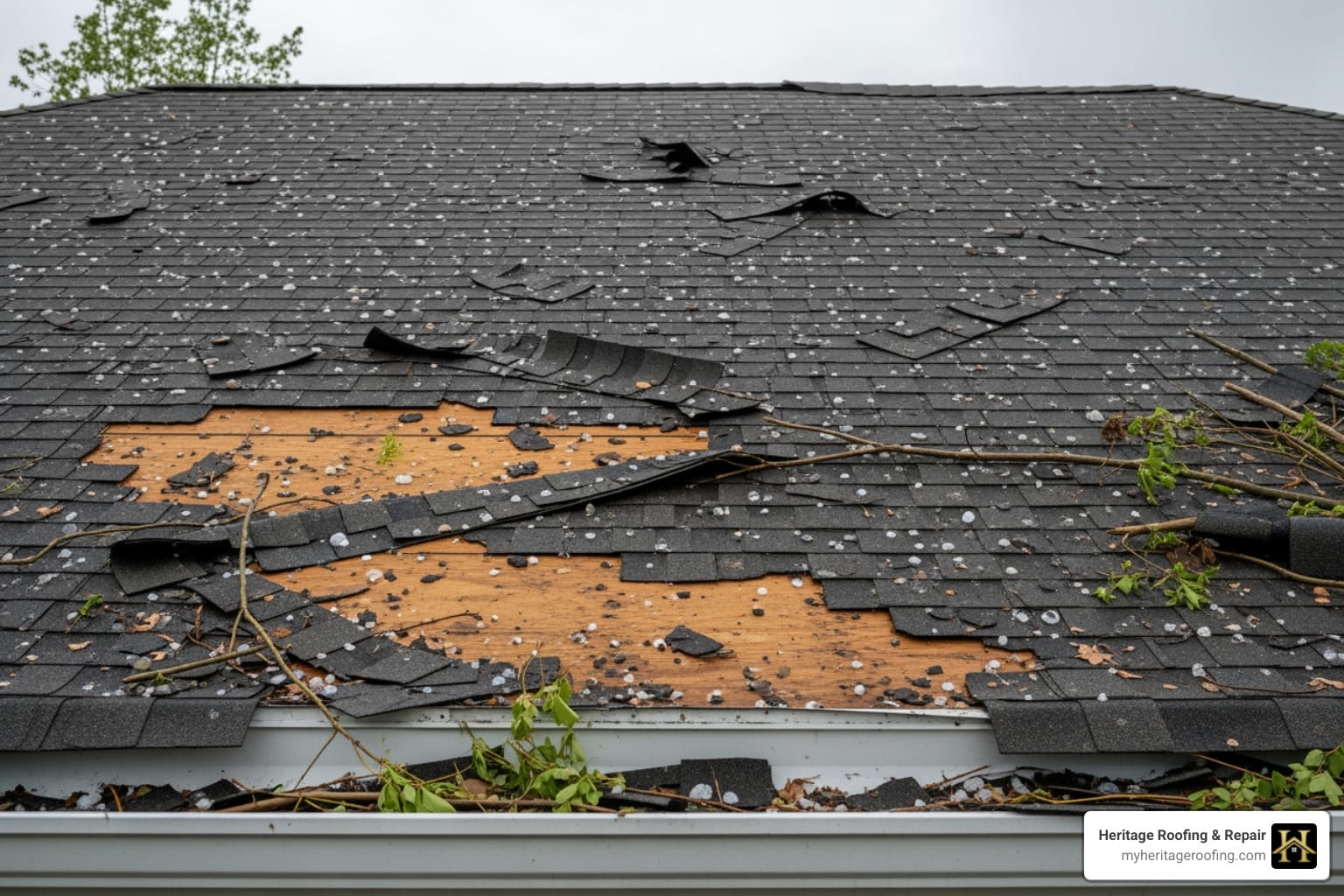
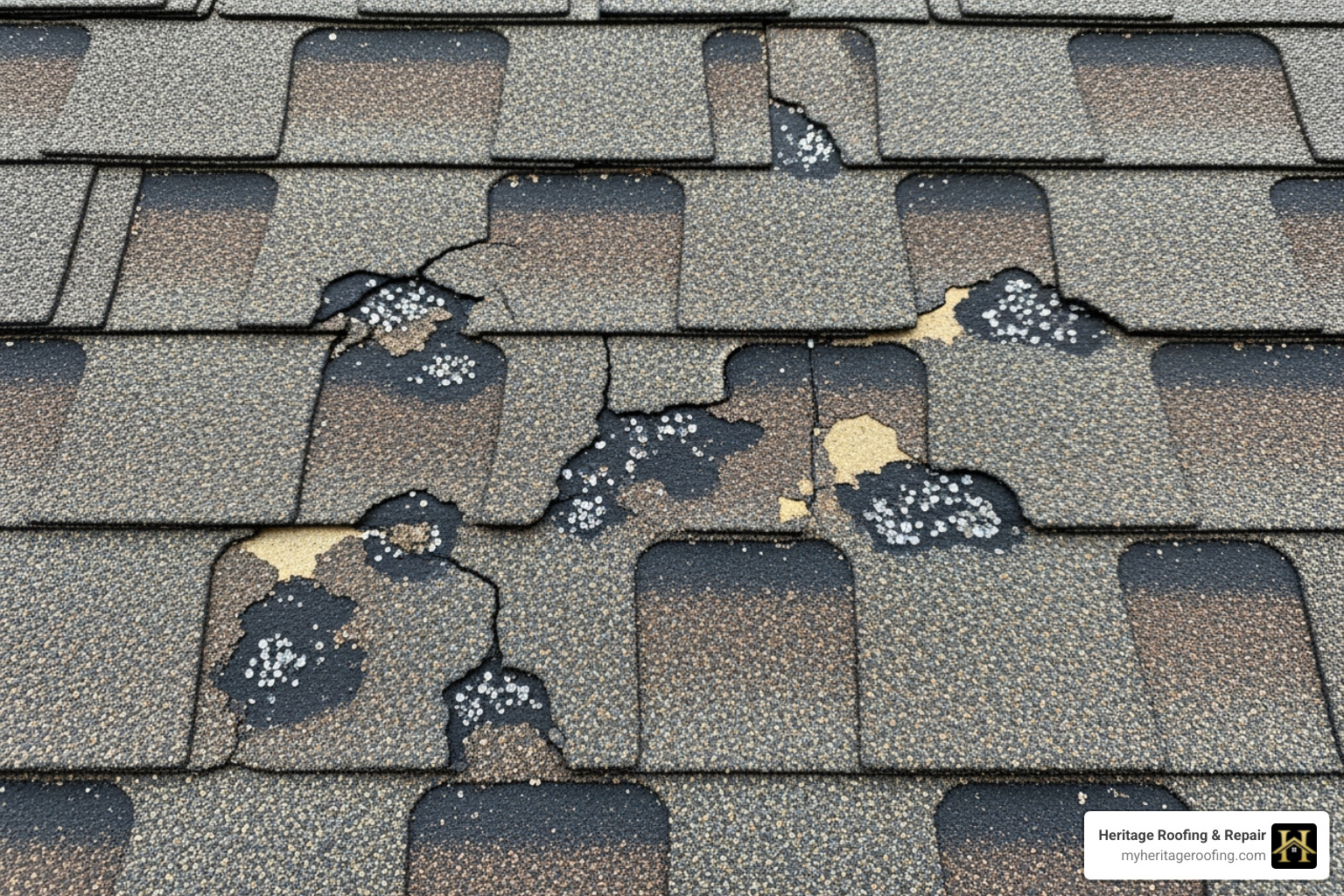
Hail damage is often subtle. From the ground, your roof may look intact, but hailstones cause damage that worsens over time. When hail strikes, it creates dents in shingles, compromising their protective layers. More importantly, it knocks off the protective granules that shield shingles from UV rays and water. You’ll often find these granules in your gutters—a clear sign your roof’s defenses are weakened.
Larger hailstones can cause punctures straight through shingles and damage the metal flashing around chimneys and vents, breaking the waterproof seal. All these issues lead to water seepage, which can soak attic insulation, promote mold growth, and eventually cause ceiling stains. What starts as invisible hail damage can become a costly interior repair project.
The Destructive Force of High Winds
Unlike hail, wind damage is usually obvious. Winds exceeding 58 mph can generate enough force to test every component of your roofing system. The most common signs are lifted or missing shingles, which leave the underlying roof deck exposed to rain and immediate water intrusion.
High winds also turn debris into dangerous projectiles. Fallen trees and large branches can cause catastrophic structural damage, while smaller objects can puncture or crack shingles. When tornadoes are involved, the damage intensifies. The Improved Fujita Scale classifies tornadoes from EF-0 (65-85 mph winds) to EF-5 (over 200 mph), and even a weak tornado can strip a roof entirely. You can see official accounts of this type of destruction in reports from the Storm Prediction Center. If you suspect your roof has sustained damage from high winds, learning more about wind damage to your roof can help you identify the key warning signs.
Your First 24 Hours: A Step-by-Step Action Plan
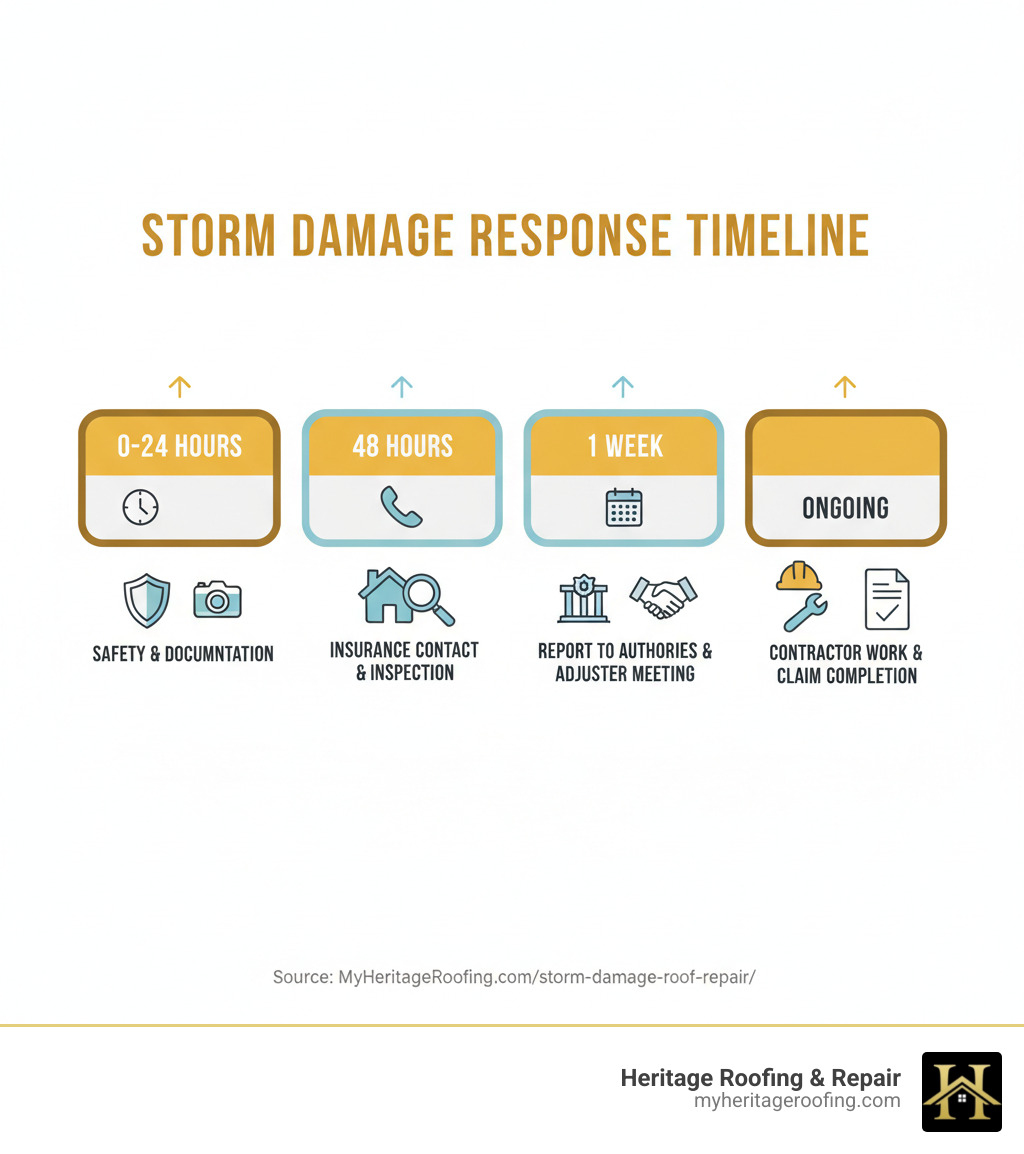
The moments immediately following a storm are critical. Your priority is safety, followed by a methodical approach to assessing and documenting any local storm damage. Taking these steps in the first 24 hours can significantly impact your recovery and insurance claim.
- Prioritize Safety: Before anything else, check for downed power lines, gas leaks, or structural instability. If you see sagging ceilings or smell gas, evacuate immediately and call emergency services.
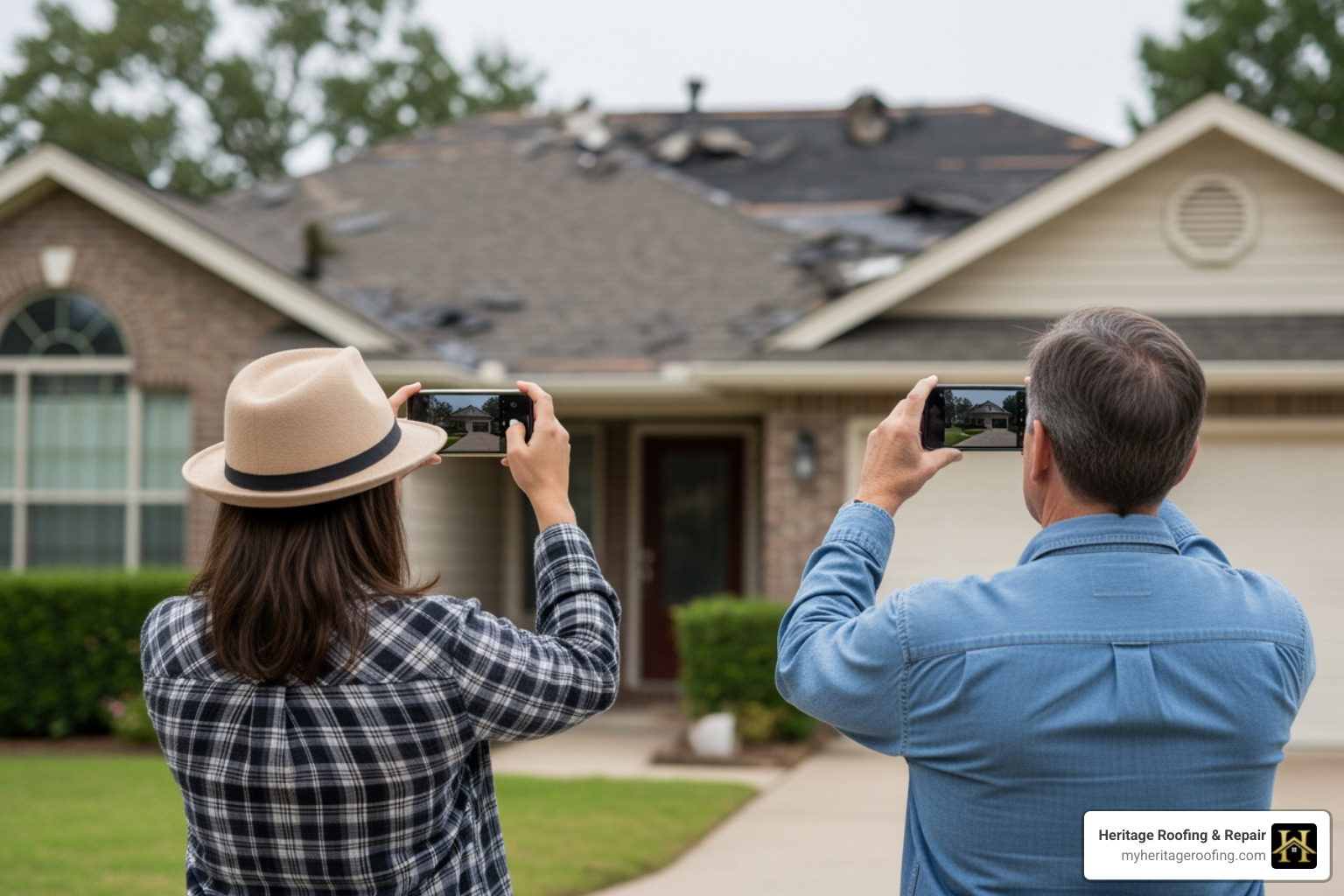
- Document Everything: Once it’s safe, thoroughly document all damage. This evidence is crucial for your insurance claim. Use your phone to take photos and videos of everything, inside and out.
- Make Temporary Fixes (Safely): If your roof has obvious holes, covering them with a tarp can prevent further water damage. However, do not climb on a wet or compromised roof. If you cannot safely cover the area, wait for professionals.
- Notify Your Insurer: Contact your insurance company as soon as possible to get the claims process started. Prompt notification is often required by your policy. If you’re unsure about filing, our guide can help you decide if you should file an insurance claim for your roof.
How to Document Damage for Your Claim
Thorough documentation is your best tool for a smooth insurance claim. Start with clear photographs of all damage, taking both wide shots for context and close-ups of specific issues like dented shingles or interior water stains. A video walkthrough where you narrate what you see can also be very powerful.
Keep written notes with the date and time of the storm and a log of all damaged areas. Ensure your photos and videos are time-stamped to connect the damage directly to the storm event. Finally, keep all receipts for temporary repair materials like tarps, as these are often reimbursable.
Reporting Damage to Authorities
Reporting severe local storm damage helps the entire community. The National Weather Service (NWS) uses public reports to verify storm impacts and improve future warnings. You can Submit a Storm Report online, providing your location, the time of the event, and a description of the damage. This data is compiled by the Storm Prediction Center (SPC) and helps meteorologists and local emergency management agencies in Berryville, Fayetteville, and Harrison better protect our communities.
Navigating Roof Repair and Insurance Claims
After the initial shock of local storm damage subsides, the practical steps of roof repair and insurance claims begin. This phase can feel overwhelming, but with the right guidance, you can steer it confidently.
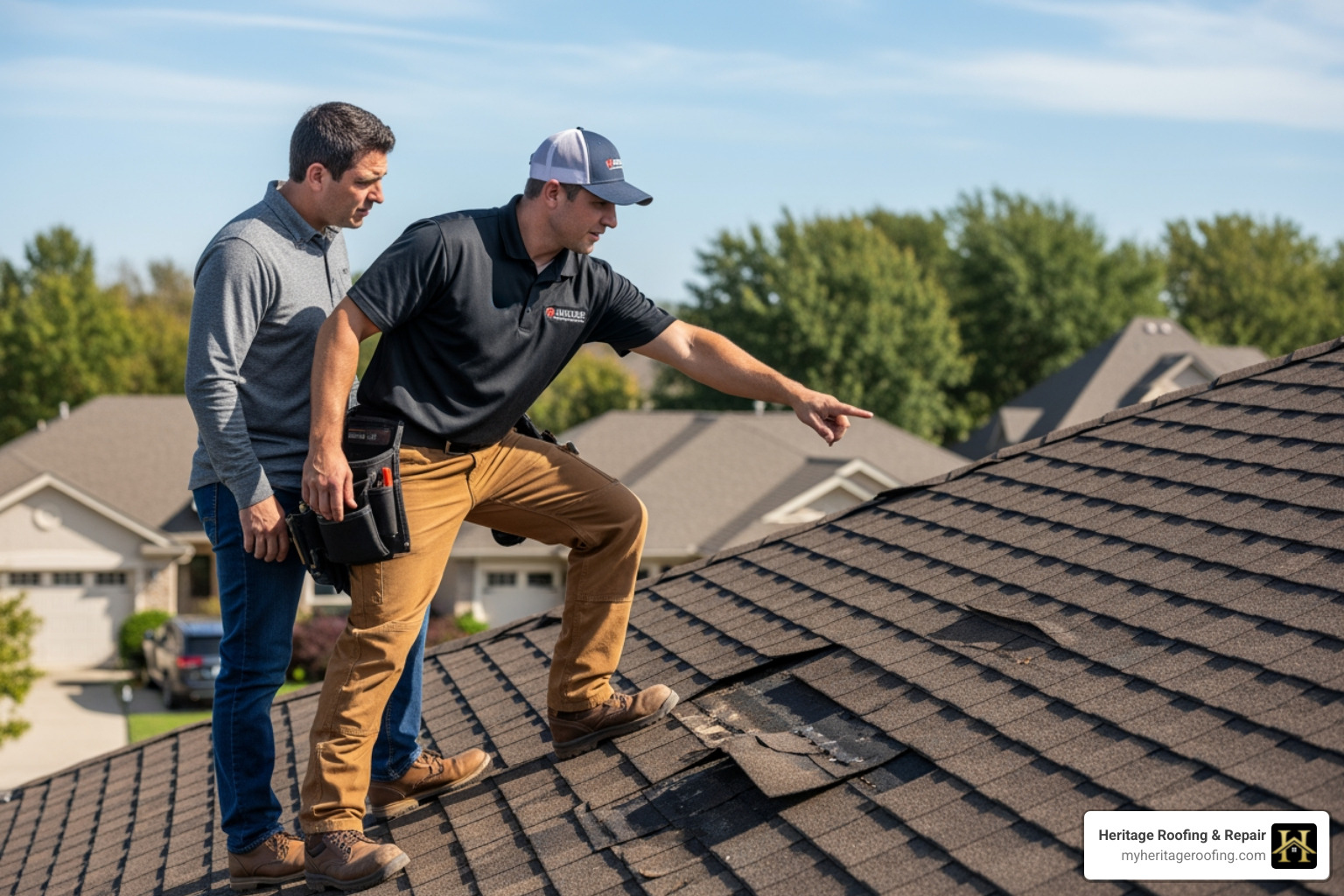
Your insurance adjuster will inspect your property to verify the damage and determine coverage. Your documentation will be invaluable during this visit. The claim process involves filing, inspection, receiving an estimate, and finally, repair and payment. A key decision is whether to repair or replace the roof. Factors like the extent of damage, your roof’s age, and local building codes will influence this choice. A full replacement often provides better long-term protection than patchwork repairs, ensuring a consistent and warrantied roofing system. Our comprehensive Roof Insurance Guide can help you weigh these options.
Finding a Trusted Local Storm Damage Repair Expert
Choosing the right contractor is the most important decision in your recovery. You need an expert who can protect your home and help you manage a complex insurance claim. Look for these key qualities:
- Local Experience: A contractor familiar with Northwest Arkansas weather knows what to look for and understands local building codes.
- Storm Damage Specialization: Seek companies that specialize in hail, wind, and tornado damage. They have the expertise to spot hidden issues and use the most effective repair techniques.
- Insurance Claim Assistance: The best roofers partner with you through the insurance process, providing detailed reports and meeting with adjusters to ensure all damage is documented.
- Quality Craftsmanship: Check reviews and verify that your contractor is licensed and insured. Your goal is a lasting repair, not just the cheapest bid.
At Heritage Roofing & Repair, we provide professional storm damage roof repair that restores not just your roof, but your peace of mind.
Your Local Resource in Berryville, AR
For homeowners in Northwest Arkansas seeking professional assessment and repair, here are the details for a trusted local expert:
Heritage Roofing & Repair
3458 Arkansas State Hwy 221, Berryville, AR 72616
(870) 654-1164
Frequently Asked Questions about Local Storm Damage
After helping homeowners with local storm damage for over 50 years, we’ve heard just about every question. Here are answers to the most common concerns we hear in Northwest Arkansas.
How long do I have to file an insurance claim for storm damage?
Typically, you have one year to file a claim, but this varies by policy. It is critical to report the damage to your insurer as soon as possible. Acting fast prevents you from missing deadlines and shows your insurer you are taking the situation seriously. A professional roofer can provide the documentation needed to support your insurance roof claim and streamline the process.
Can I repair the storm damage myself?
No, permanent roof repairs should be handled by a professional. While a temporary tarp is a good first step, DIY repairs are dangerous and can void your roof’s warranty. An improper fix might also fail to address underlying issues, leading to more extensive damage later. A certified roofer has the training, safety equipment, and experience to perform a correct and lasting storm damage roof repair, ensuring your home is properly protected.
Secure Your Home After the Storm
When the storm passes, the real work of recovery begins. Protecting your home from the effects of local storm damage requires quick, decisive action, but you don’t have to handle it alone. The path forward involves a professional assessment, thorough documentation for your insurance claim, and a partnership with a contractor you can trust.
Acting fast is essential. Small leaks can quickly escalate into major water damage and mold growth, turning a simple repair into a costly, complex project. This is why it’s critical to stay within your insurance company’s filing deadlines.
With over 50 years of experience, Heritage Roofing & Repair has guided countless families in Northwest Arkansas through the aftermath of severe weather. We understand the unique challenges our local climate presents, from sudden hailstorms in Berryville to high winds in Fayetteville and Harrison. Our approach is built on quality craftsmanship, transparent communication, and a commitment to restoring your peace of mind. We work directly with insurance adjusters to ensure you get the coverage you deserve, and we stand behind every repair. If your property has been affected, trust the experienced roofers in Harrison, AR and the surrounding region to secure your home.