Why Your Roof Claim Was Rejected: Understanding Insurance Denials
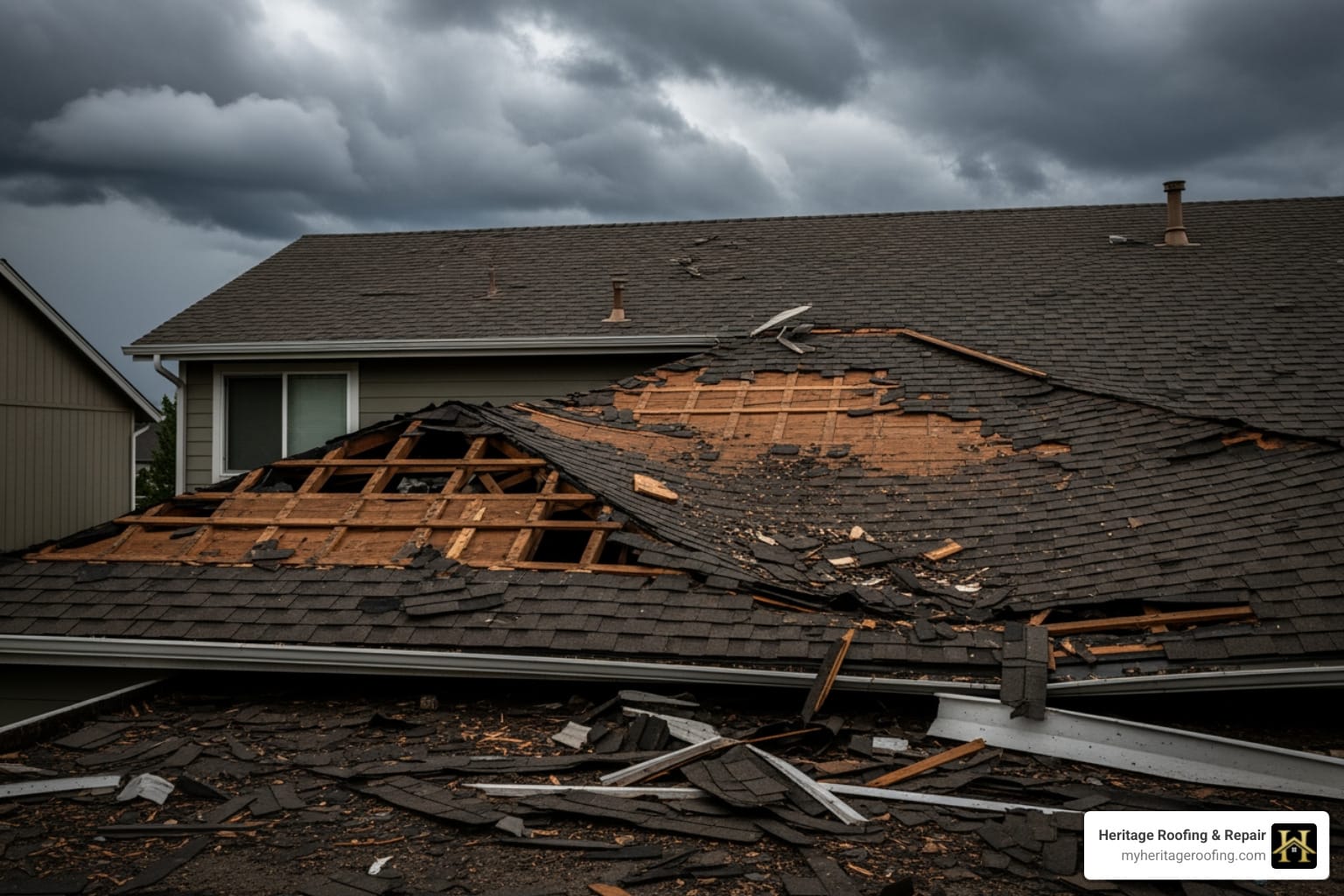
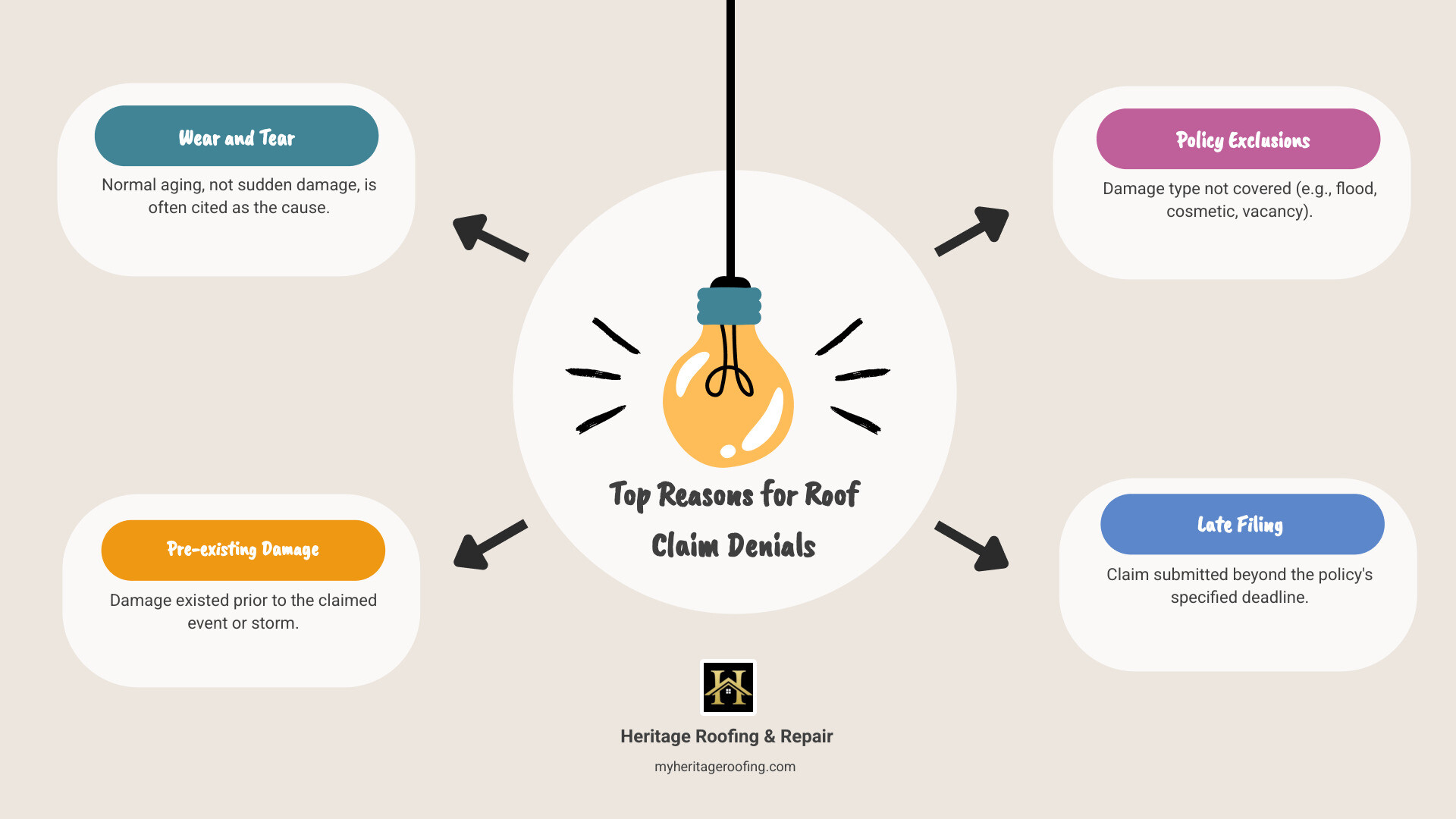
Why do insurance companies deny roof claims? Insurance companies deny roof claims for several key reasons, including normal wear and tear, pre-existing damage, policy exclusions, late filing, and insufficient documentation. After severe weather hits Northwest Arkansas, many homeowners expect their insurance to cover roof damage, but the reality is often a denial, delay, or underpayment. If you’re facing a rejected claim, it’s crucial to understand that a denial is not the final word. With expert support from a team providing dependable residential roofing services, you can build a strong case to challenge an unfair decision.
Your insurance company operates as a for-profit business. With roof-related claims reaching $31 billion industry-wide in 2024—a nearly 30% increase since 2022—insurers scrutinize every claim for valid reasons to limit payouts. They may cite “wear and tear” instead of storm damage or claim your documentation is insufficient. Understanding why claims get denied is your first line of defense.
I’m Rex Wisdom, owner of Heritage Roofing & Repair in Berryville, Arkansas. For over 50 years, my family has helped homeowners across Northwest Arkansas steer the complexities of insurance claims. We’ve seen how a well-documented case and a trusted local contractor can turn a denial into a full settlement. This guide will walk you through the top reasons for denials and the steps to overturn a rejection.
Simple why do insurance companies deny roof claims word guide:
- How to File Roof Replacement Insurance Claim with Adjuster
- Should I File an Insurance Claim for My Roof?
Understanding the Most Common Denial Reasons
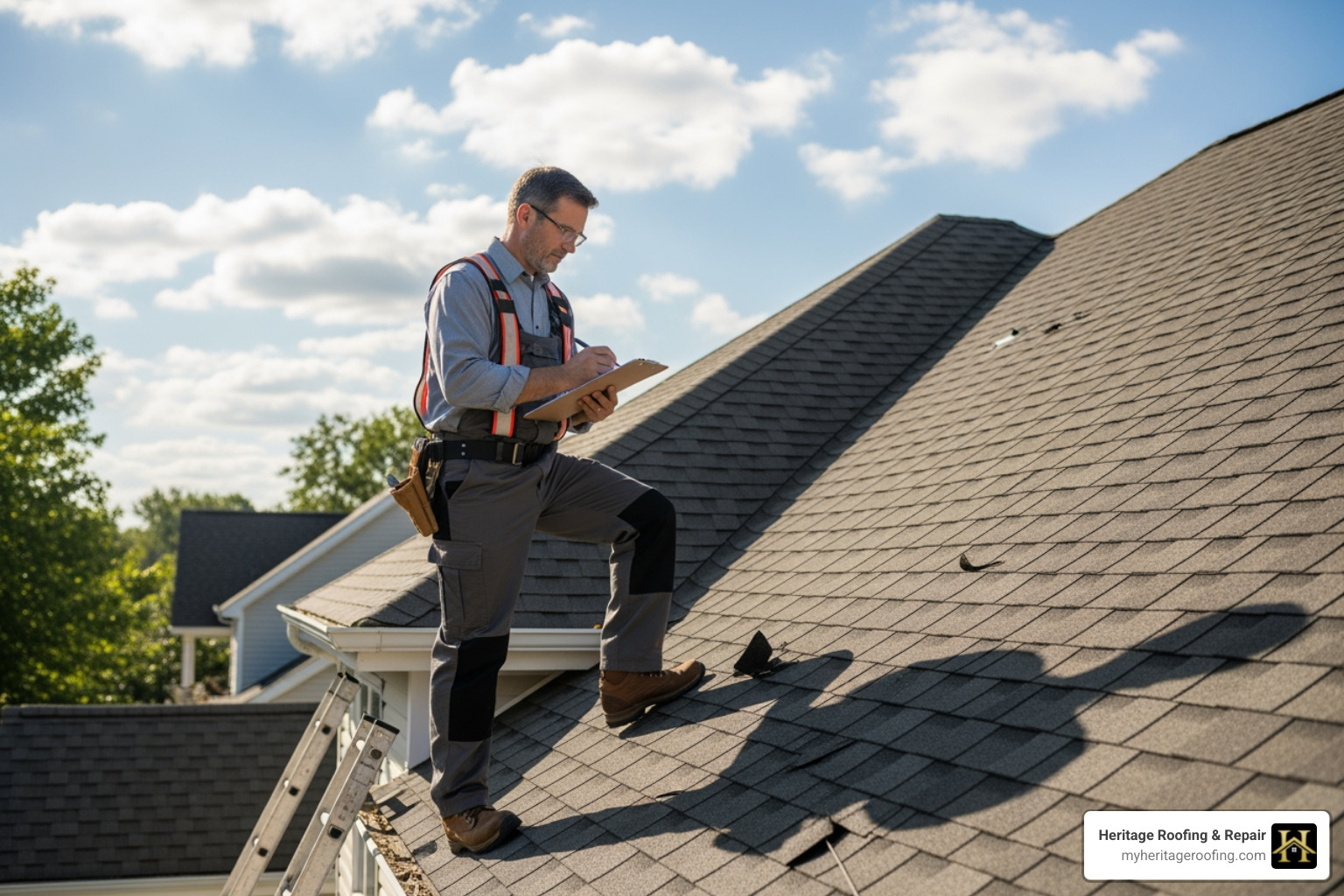
When homeowners ask why do insurance companies deny roof claims, the answer is often rooted in business logic: insurers seek legitimate policy reasons to limit payouts. After decades of helping families in Berryville, Fayetteville, and Harrison, we’ve seen the same denial reasons repeatedly. Here are the most common ones.
1. Wear and Tear: When Roof Age Works Against You
Insurance policies are designed to cover sudden, accidental events—not gradual deterioration. An asphalt shingle roof has a lifespan of about 20-25 years. If damage occurs on an aging roof, adjusters often attribute it to normal wear and tear. Research shows that 29% of U.S. asphalt shingle roofs have less than four years of remaining life, making them highly susceptible to damage that insurers may not cover. An adjuster seeing significant granule loss, curling, or brittle shingles will argue the storm merely exposed pre-existing aging, leading to a denial.
2. Policy Exclusions and the Fine Print
Your insurance policy is a contract filled with specific exclusions—types of damage that are not covered. These are a direct answer to why do insurance companies deny roof claims.
- Flood Damage: Standard policies exclude flood damage; separate insurance is required.
- Mold Damage: Covered only if it results from a sudden, covered event. Gradual mold from neglect is a maintenance issue and will be denied.
- Cosmetic-Only Damage: Many policies now exclude coverage for hail dents or discoloration that don’t affect the roof’s function.
- Vacancy Clauses: Coverage can be voided if a home is vacant for an extended period, often 30-60 days.
Understanding your specific roof insurance policy is essential, as many homeowners unknowingly give up coverage to lower premiums.
3. Procedural Pitfalls: Late Filing and Poor Documentation
Even with a valid claim, procedural mistakes can lead to denial.
- Missed Deadlines: Most policies require claims to be filed within a specific timeframe, typically 365 days to two years. Waiting too long gives the insurer grounds for denial.
- Insufficient Documentation: Without clear, dated photos and videos of the damage, repair estimates, and weather reports, you have a weak case.
- Failure to Mitigate: You have a duty to prevent further damage. If you don’t tarp a hole and more water gets in, the insurer can deny coverage for the secondary damage.
4. Partial Damage vs. Full Replacement: The Scope Dispute
Sometimes the dispute is not if there’s damage, but how much repair is needed. Insurers often approve repairs for a small section instead of a full replacement, even if it’s impractical. This leads to issues like mismatched shingles, as manufacturers discontinue styles and colors, and existing shingles fade over time. Some policies cover replacement for aesthetic consistency, but many do not. Furthermore, if the repair cost is less than your deductible, the insurer pays nothing, effectively denying your claim. Our article on Should I File an Insurance Claim for My Roof? can help you weigh this decision.
5. Poor Maintenance or Improper Installation
Your policy requires you to take reasonable care of your property. If you neglect basic upkeep—like cleaning gutters or repairing minor issues—an insurer can argue that subsequent damage resulted from your failure to maintain the roof, not a covered storm. Similarly, if your roof was installed improperly or fails to meet current building codes, coverage may be denied or limited, as the failure is not due to a covered peril.
Decoding Your Policy: Key Terms That Make or Break Your Claim

Your insurance policy’s language determines your payout, and misunderstanding it is a key reason why do insurance companies deny roof claims. The two most critical terms are Actual Cash Value (ACV) and Replacement Cost Value (RCV).
Actual Cash Value (ACV) vs. Replacement Cost Value (RCV)
Actual Cash Value (ACV) pays for the replacement cost of your roof minus depreciation. The older your roof, the less you receive. For a 10-year-old roof with a 20-year lifespan, an ACV policy might only pay 50% of the replacement cost, leaving you to cover the rest plus your deductible.
Replacement Cost Value (RCV) pays the full cost to replace your roof with new materials of similar quality, without deducting for depreciation. You only pay your deductible. This is often called “new for old” coverage and is what most homeowners need for true protection. The difference between an ACV and RCV payout can be thousands of dollars.
Understanding your roof insurance policy coverage type is crucial before a disaster.
| Feature | Actual Cash Value (ACV) | Replacement Cost Value (RCV) |
|---|---|---|
| Payout Basis | Replacement cost minus depreciation | Full replacement cost (new for old) |
| Out-of-Pocket | Higher (depreciation + deductible) | Lower (only deductible) |
| Roof Age Impact | Significant reduction for older roofs | No reduction for roof age |
| Common Use | Older roofs or lower-premium policies | Comprehensive coverage |
Deductibles and Coverage Limits: What You Need to Know
Your deductible is what you pay before insurance kicks in. A flat-rate deductible is a fixed amount (e.g., $2,500). However, many policies in storm-prone areas use percentage deductibles for wind and hail, calculated as a percentage of your home’s total insured value.
A 1% deductible on a $300,000 home is $3,000. If a roof repair costs $2,800, you receive nothing because the cost is within your deductible. This is an effective denial. High deductibles often mean minor to moderate damage isn’t worth a claim, as the payout may be small while still risking premium increases.
Maximum payout limits are another feature to watch. Your policy caps how much the insurer will pay for your structure. If a replacement exceeds this limit, you cover the difference. Understanding these terms helps you avoid financial shocks during a stressful time.
Proactive Steps: Documentation and Maintenance to Strengthen Your Claim
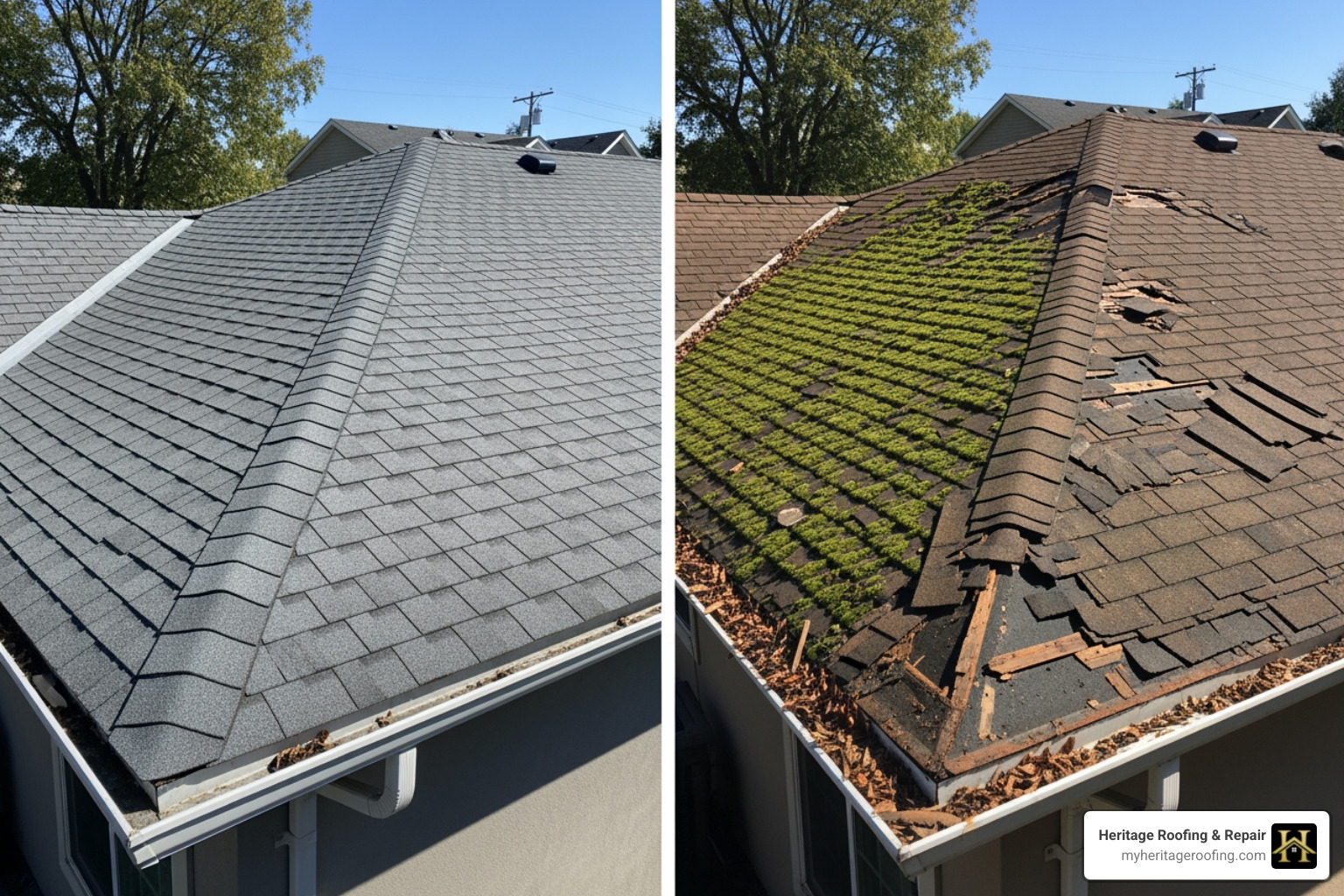
Thorough evidence is your best defense against a denial. The more you document, the stronger your case.
How to Document Roof Damage for a Strong Claim
- Photos and Videos: Take clear, date-stamped photos and videos of all damage from multiple angles. Capture close-ups of missing shingles, hail dents, and punctures. If you have interior leaks, record them actively dripping to show the severity.
- Written Log: Keep a detailed timeline of the event, your observations, and every person you contact.
- Professional Estimate: Get a written estimate from a reputable roofer that outlines the scope of damage, materials, and labor costs.
- Weather Reports: Download official reports from the National Weather Service to prove a covered weather event occurred.
Proactive Steps to Prevent Future Claim Denials
The best way to ensure a smooth claims process is to prepare before a storm.
- Schedule Regular Inspections: Annual or post-storm inspections create a documented history of your roof’s condition, proving you’ve been a responsible homeowner.
- Keep a Maintenance Log: Maintain a file with all inspection reports, repair invoices, and receipts. Store it digitally in the cloud.
- Understand Your Policy: Review your coverage, exclusions, and deductibles before you need to file a claim.
- Use Quality Materials: Installing code-compliant materials improves resilience and demonstrates proper maintenance.
Every claim—even a denied one—appears on your CLUE report for seven years and can affect your future insurability. Knowing how to check your property’s claim history provides insight into what insurers see.
Fighting Back: What to Do When Your Roof Claim is Denied or Underpaid
An insurance denial is often the start of a negotiation, not the end of the road. With the right strategy, homeowners in Northwest Arkansas can successfully overturn denials or negotiate higher settlements. Here are the steps to fight back effectively.
Step 1: Review the Denial and Gather Evidence
First, request a formal denial letter in writing. The insurer must cite the specific policy language used to reject your claim. Cross-reference this with your policy document. Then, organize all your evidence—photos, videos, contractor estimates, weather reports, and maintenance records—into a single file for your appeal. Document every communication with your insurer, noting the date, time, and person you spoke with.
Step 2: Get an Independent Roof Inspection
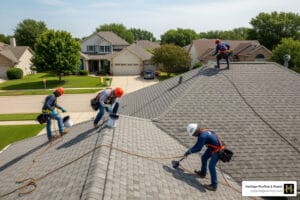
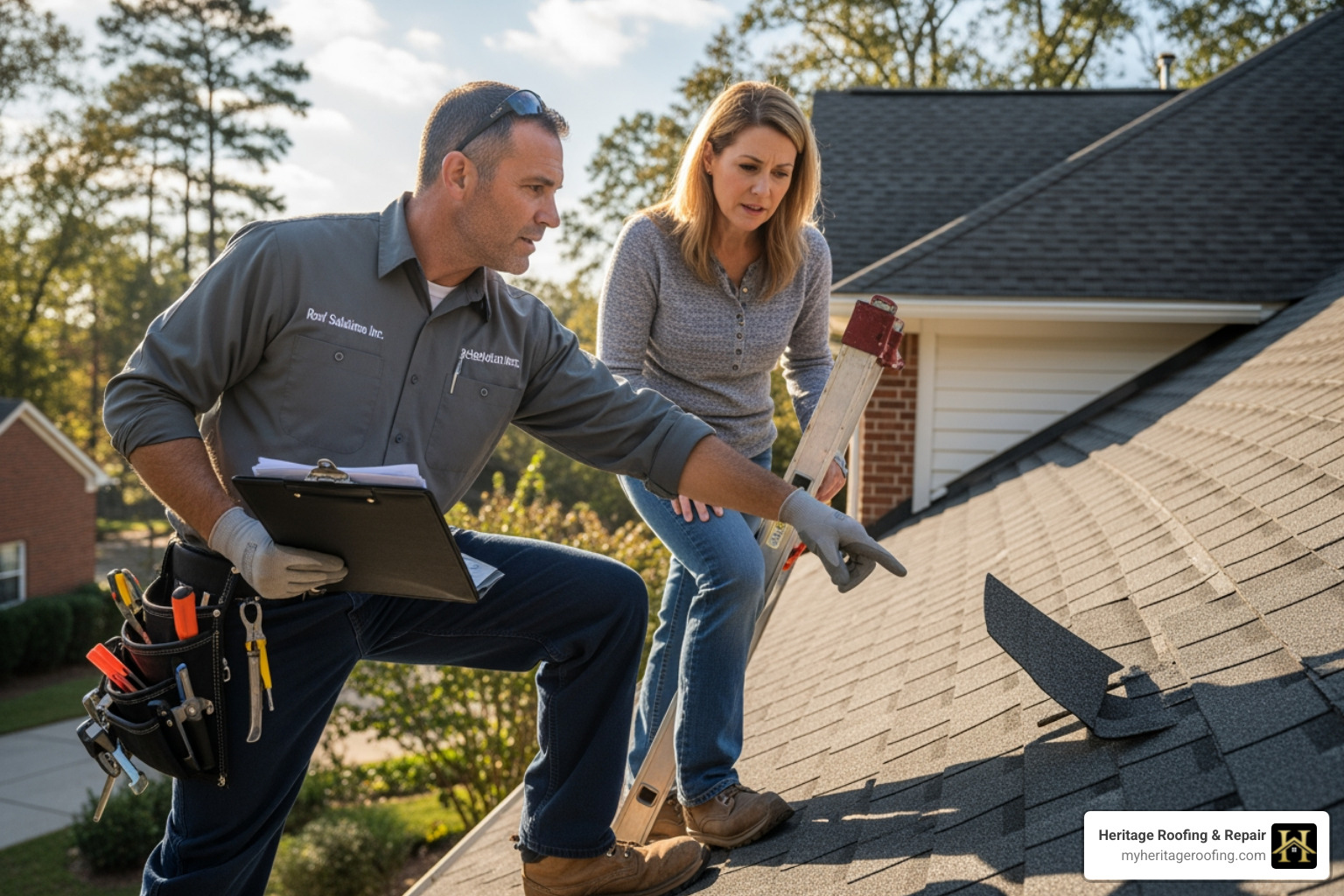
This step is critical. An insurance adjuster works for the insurer; you need an unbiased assessment. Hire a trusted, local roofing contractor for an independent inspection. A detailed report from an experienced roofer can uncover damage the adjuster missed or downplayed, providing powerful counter-evidence. At Heritage Roofing & Repair, we provide these expert residential roofing services to strengthen your claim. When the insurer agrees to a re-inspection, ask your contractor to be present to advocate on your behalf.
Step 3: Navigating the Formal Appeal Process
With your evidence organized, write a clear, evidence-based appeal letter. Reference your claim number and the denial letter. Professionally and firmly state your case, citing policy language that supports your claim and attaching all your documentation, including the independent inspection report. You can also request a different adjuster for the re-assessment. Follow up consistently to show you are serious.
Step 4: When to Hire a Public Adjuster or Attorney
For complex or high-value claims (over $10,000), a public adjuster can be a valuable ally. They work for you, not the insurer, to negotiate a fair settlement, typically for a percentage of the final amount. If you suspect your insurer is acting in bad faith—using unreasonable delays or refusing to investigate properly—it may be time to consult an attorney specializing in property insurance. You can also file a complaint with the Arkansas Insurance Department (AID) to apply regulatory pressure.
The bottom line is that insurers often deny claims because they bet you won’t fight back. With documentation and professional support, you can challenge an unfair denial.
Your Local Partner for Roof Insurance Claims in Northwest Arkansas
A denied roof claim is not the final answer. The key to overturning a denial is understanding why do insurance companies deny roof claims, knowing your policy, and taking strategic, evidence-based action. Document everything, get an independent expert opinion, and be persistent. Insurance companies often count on homeowners giving up after the first “no.”
For homeowners across Northwest Arkansas—from Berryville to Fayetteville and Harrison—partnering with a trusted local roofing contractor is the most effective step you can take. At Heritage Roofing & Repair, we have over 50 years of experience helping our neighbors steer the frustrating world of insurance claims. We know how to document storm damage in a way that gets results from adjusters.
When you work with us, you get an advocate who will provide detailed inspection reports, stand with you during adjuster visits, and ensure you receive the fair settlement you deserve. Don’t let an insurance denial rob you of the protection you’ve paid for. Reach out to us today for a free, comprehensive roof inspection to build the strongest possible case for your claim.
Heritage Roofing & Repair
3458 Arkansas State Hwy 221, Berryville, AR 72616
Click to call: (870) 654-1164