New Roof Installation in Arkansas: Costs, Timeline, and a Proven 5-Step Process
A new roof installation safeguards your home against Arkansas’s hail, heat, and heavy rain. Asphalt shingle roofs typically last 15–30 years, which means every homeowner will face a replacement. Partnering with a trusted Arkansas roofing contractor ensures correct materials, code compliance, and warranty coverage from day one.
Quick Answer: What is New Roof Installation?
A professional new roof installation involves a full system replacement to ensure long-term protection. It follows a clear process:
- Inspection: Evaluating the current roof to confirm a replacement is needed.
- Material Selection: Choosing materials like asphalt, metal, or tile.
- Tear-Off: Removing old materials to expose and repair the roof deck.
- Installation: Installing new underlayment, flashing, and roofing material.
- Final Inspection: Ensuring quality and compliance with building codes.
I’m Rex Wisdom, owner of Heritage Roofing & Repair. For over 50 years, our family has guided Arkansas homeowners through this process, specializing in residential and commercial projects and helping clients with storm damage insurance claims. This guide breaks down everything you need to know.
Is It Time for a New Roof? 7 Data-Backed Signs & The First Big Decision
Your roof endures scorching sun, hailstorms, and torrential rain. Catching warning signs early prevents costly water damage and structural issues. The Insurance Institute for Business & Home Safety reports that roof age is one of the strongest predictors of wind-related damage during storms.
Here are seven key indicators that your roof may need replacement:
- Age: An asphalt shingle roof over 15-20 years old is in the replacement zone. Annual inspections are crucial past this point.
- Curling or Buckling Shingles: Shingles that are curling at the edges or buckling in the middle can no longer shed water effectively.
- Missing Granules: Look for “bald spots” on shingles or granules collecting in your gutters. These granules protect the shingle from UV damage.
- Cracked Shingles: Brittle, cracked shingles are prone to breaking off in high winds, creating entry points for water.
- Moss or Algae Growth: Extensive growth traps moisture against the roof, accelerating deterioration and potential rot.
- Ceiling Water Stains: Discoloration on interior ceilings is a definitive sign that water has already breached your roof system.
- A Sagging Roof Deck: Any visible dip in your roofline indicates a serious structural problem that requires immediate attention.
If you see these signs, a professional roof inspection will clarify the extent of the damage and help you decide on the next steps.
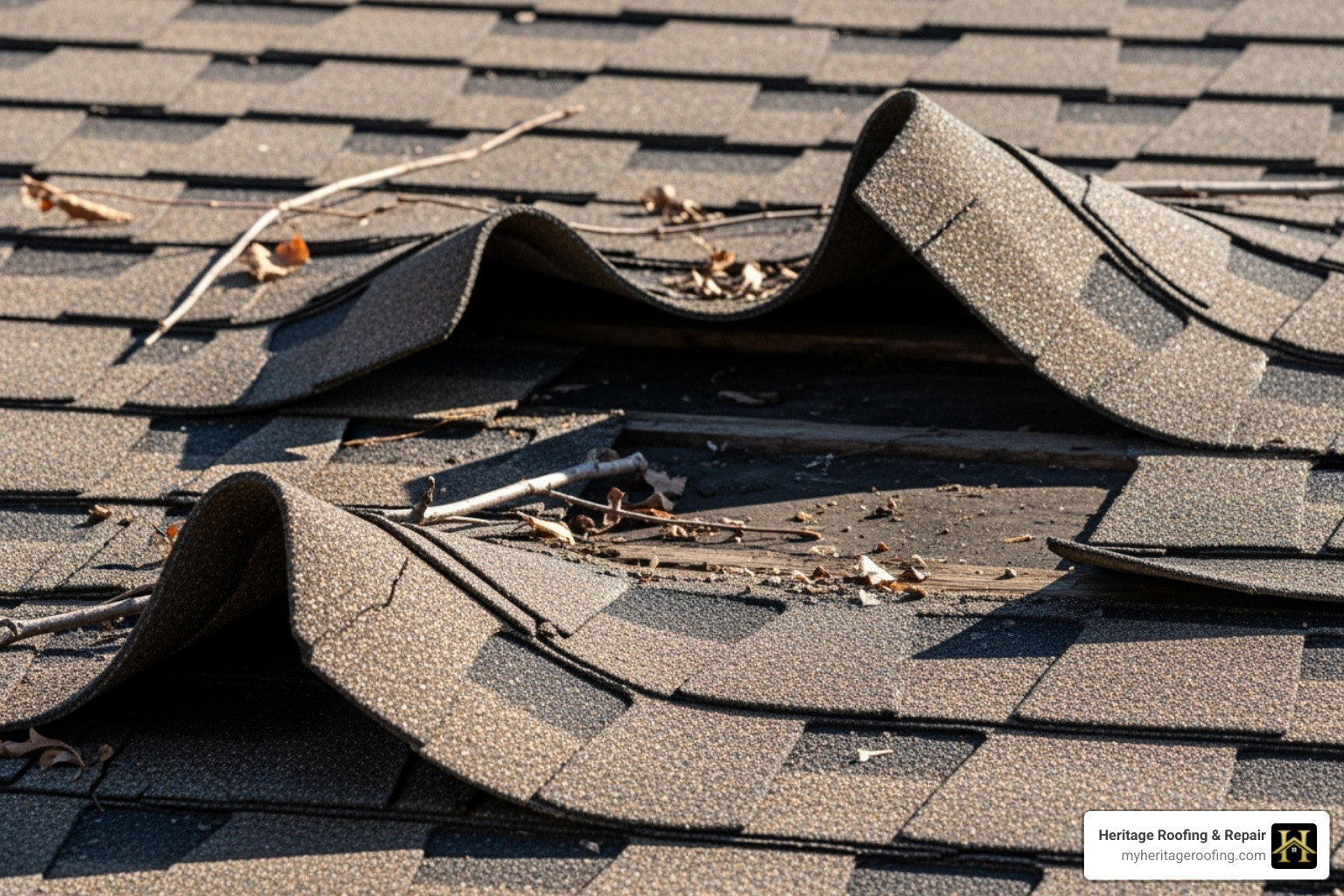
Full Replacement vs. Re-Roofing (Layering)
When it’s time for a new roof installation, you have two main options: a full replacement or a re-roof (layering).
A full tear-off replacement involves stripping all materials down to the roof deck. This is the method we recommend. It allows us to inspect the underlying deck for rot or damage and make necessary repairs, ensuring your new roof has a solid foundation. This approach also allows for the installation of modern ice and water shields and ensures compliance with manufacturer warranties.
Re-roofing means installing new shingles over the existing layer. While it saves 20-30% on upfront costs by avoiding tear-off labor, it comes with significant risks. It adds substantial weight to your roof structure, and building codes in most Arkansas municipalities limit roofs to two layers. More importantly, any hidden issues like soft decking or damaged flashing are simply covered up, which can lead to premature failure of the new shingles and void manufacturer warranties.
At Heritage Roofing & Repair, we believe a full tear-off provides the best long-term value and peace of mind. To discuss which option is right for you, contact us for an honest assessment.
Heritage Roofing & Repair
3458 Arkansas State Hwy 221, Berryville, AR 72616
(870) 654-1164
Roofing Materials Head-to-Head: Costs, Lifespans, and Performance in Arkansas
Choosing the right material for your new roof installation is a balance of durability, aesthetics, budget, and Arkansas’s specific climate challenges. This decision impacts your home’s performance, longevity, and curb appeal.
Asphalt Shingles: The All-American Classic
Asphalt shingles are the most popular residential roofing choice in North America due to their balance of affordability, reliability, and style. They are the most cost-effective option, with a respectable lifespan of 15-30 years (typically 15-25 in Arkansas). Styles range from basic 3-tab shingles to thicker, dimensional architectural shingles that offer improved durability and curb appeal. Their straightforward installation keeps labor costs reasonable.
Metal Roofing: The Durable Defender
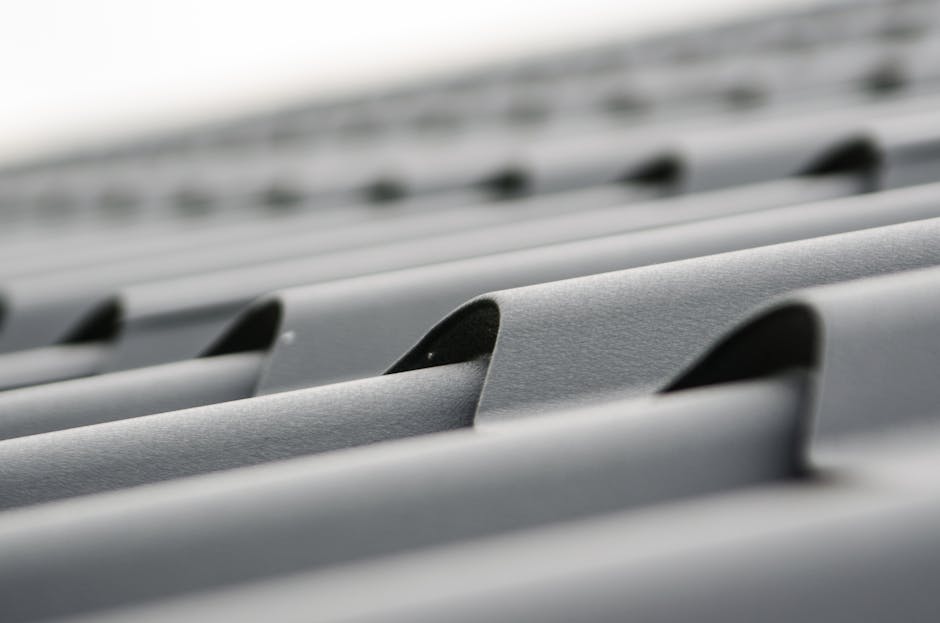
Modern metal roofs are sleek, stylish, and built for extreme longevity, often lasting 40-70+ years. This can be a once-in-a-lifetime investment. Metal can also improve energy performance by reflecting solar heat, which helps reduce cooling demand in hot climates.
Tile & Composite Slate: The Premium Performers
For a distinctive, high-end look, tile and composite slate offer timeless beauty and generational performance. Clay and concrete tiles provide a classic Mediterranean or Spanish aesthetic and can last over 50 years. However, they are extremely heavy and may require structural reinforcement.
Composite slate delivers the appearance of natural slate without the extreme weight or cost. Made from durable polymers, it is impact-resistant, fire-resistant, and a more accessible premium option for many homes.
Here’s how these popular materials stack up:
| Feature | Asphalt Shingles | Metal Roofing | Tile & Composite Slate |
|---|---|---|---|
| Cost | Most affordable ($8,000 – $15,000) | Higher upfront ($15,000 – $30,000+) | Premium ($12,000 – $25,000+ for tile, composite varies) |
| Lifespan | 15-30 years (15-25 in Arkansas) | 40-70+ years | 50-100+ years |
| Pros | Affordable, easy to install, wide color/style range | Durable, energy-efficient, low maintenance, fire-resistant | Beautiful, very long-lasting, fire-resistant, unique aesthetics |
| Cons | Shorter lifespan, susceptible to granule loss | Higher initial cost, can be noisy during rain/hail | Heavy (tile), higher cost, specialized installation, fragile (natural tile/slate) |
How a Professional New Roof Gets Installed: Step-by-Step
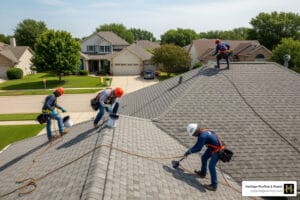
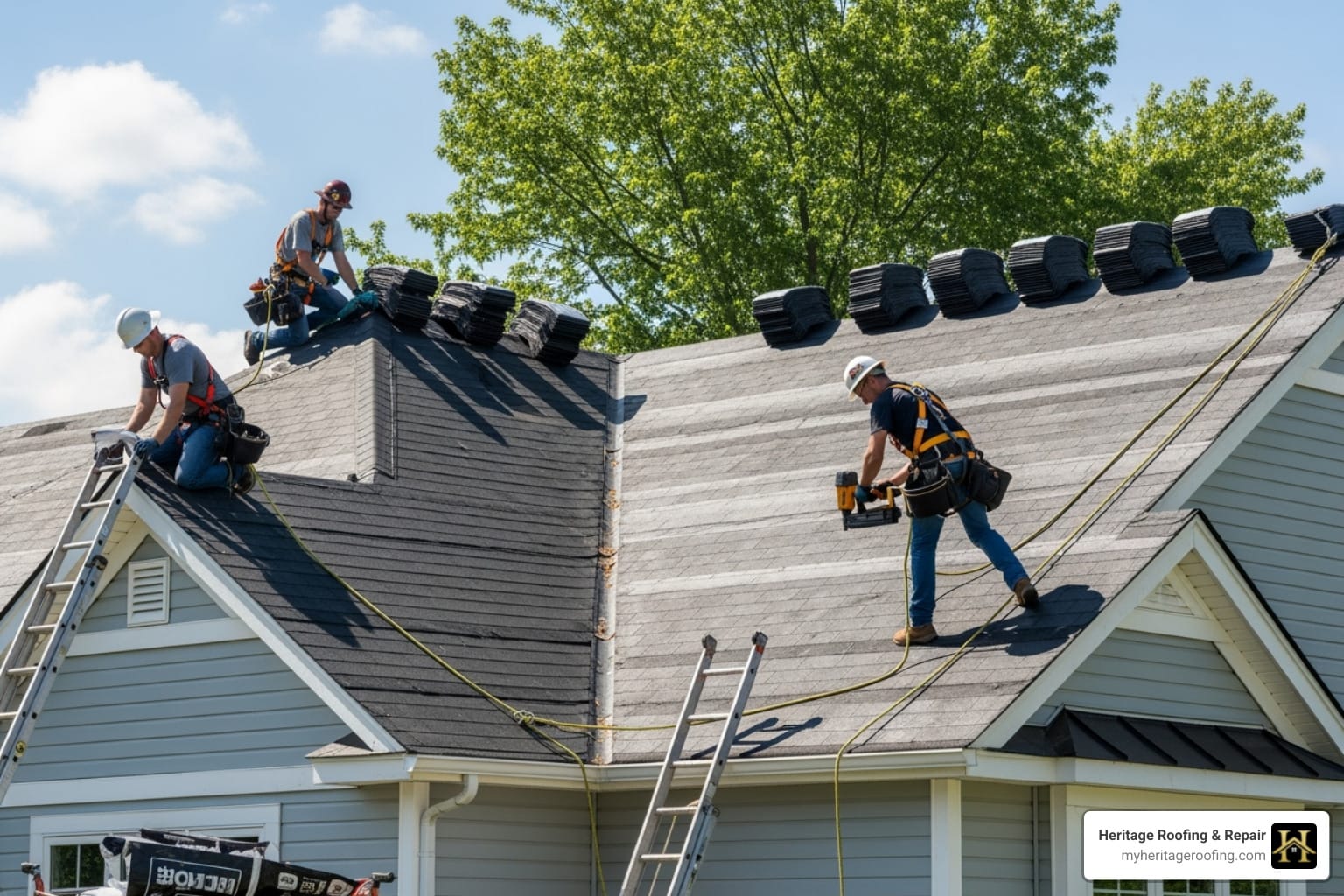
Understanding the steps of a new roof installation helps you know what to expect. A professional roof installation is a systematic process designed for efficiency, safety, and quality. Most residential projects take 1-3 days, depending on the home’s size, complexity, and weather conditions. We prefer to schedule work in the spring or fall for moderate temperatures that ensure optimal material performance.

Step 1: Site Prep, Tear-Off, and Deck Inspection
The process begins with protecting your property. We lay tarps over landscaping and place a dumpster for debris. Our crew then performs the tear-off, removing all old roofing materials down to the structural deck (plywood or OSB). This step is crucial as it allows for a thorough inspection of the deck for water damage, rot, or soft spots. We replace any compromised sections to ensure the new roof has a solid, reliable foundation.
Step 2: Installing the Foundation: Underlayment, Flashing, and Drip Edge
With a clean deck, we install the protective layers. A waterproof underlayment covers the entire deck as a secondary water barrier. In vulnerable areas like valleys, eaves, and around chimneys, we install a self-adhering ice and water shield for superior leak protection. Metal drip edge is installed along all roof edges to direct water into the gutters and away from the fascia. Finally, we install new flashing—custom-formed metal pieces that seal joints where the roof meets a wall, chimney, or vent pipe. Proper sealing of these penetrations is the most critical part of preventing leaks.
Step 3: Laying the Shingles and Ensuring Proper Ventilation
Now the new roof takes shape. We begin with starter shingles at the eaves for a sealed, wind-resistant edge. Each course of shingles is then installed according to strict manufacturer guidelines, with special attention to the nailing pattern to ensure maximum wind resistance and warranty compliance. At the roof’s peaks, we install durable ridge cap shingles. Simultaneously, we ensure the attic has proper ventilation. A balanced system of soffit (intake) and ridge (exhaust) vents allows air to circulate, preventing summer heat buildup and winter moisture accumulation. Target a balanced attic ventilation ratio of 1:150 net free vent area (or 1:300 when a Class I vapor retarder is present) to protect the roof structure and improve energy performance.
Step 4: Final Cleanup and Inspection
The job isn’t finished until your property is pristine. Our crew performs a thorough site cleanup, removing all debris. We then use powerful magnets to conduct a nail sweep of your yard, driveway, and landscaping to collect any stray fasteners. The final step is a walkthrough and inspection with you, the homeowner. We review the finished work, explain your warranty, and ensure you are completely satisfied with your new roof.
New Roof Cost in Arkansas: Price Drivers, Ranges, and ROI
A new roof installation is a strategic investment in your property’s protection and value. While residential roof replacement costs typically range from $8,000 to $30,000 or more, the final price depends on several key factors. Understanding these drivers helps you make an informed decision. National Cost vs. Value studies consistently show that roof replacements recoup roughly 50–65% of their cost at resale, underscoring the project’s strong value proposition.
Key Cost Factors for a new roof installation
- Roof Size: The total square footage of your roof is the primary factor determining material and labor costs.
- Roof Pitch/Slope: Steeper roofs require more safety equipment and time, increasing labor costs.
- Complexity: Roofs with multiple valleys, dormers, skylights, and chimneys require more detailed labor and materials.
- Material Choice: Costs vary significantly between budget-friendly asphalt shingles and premium materials like metal or tile.
- Labor Costs: This reflects the crew’s experience, insurance, and the physical work of a full tear-off and installation.
- Full Tear-Off vs. Overlay: A full tear-off costs more upfront but is a better long-term investment as it allows for deck inspection and repair.
- Permit Fees: Municipal permits are required to ensure your new roof meets local building and safety codes.
DIY vs. Pro Roof Replacement: Safety Stats, Warranties, and True Cost
While the idea of a DIY new roof installation to save money is tempting, it’s a project fraught with risks. Unlike many home improvement tasks, a full roof replacement involves dangerous heights, heavy materials, and critical waterproofing techniques where a single mistake can lead to catastrophic water damage and voided warranties.
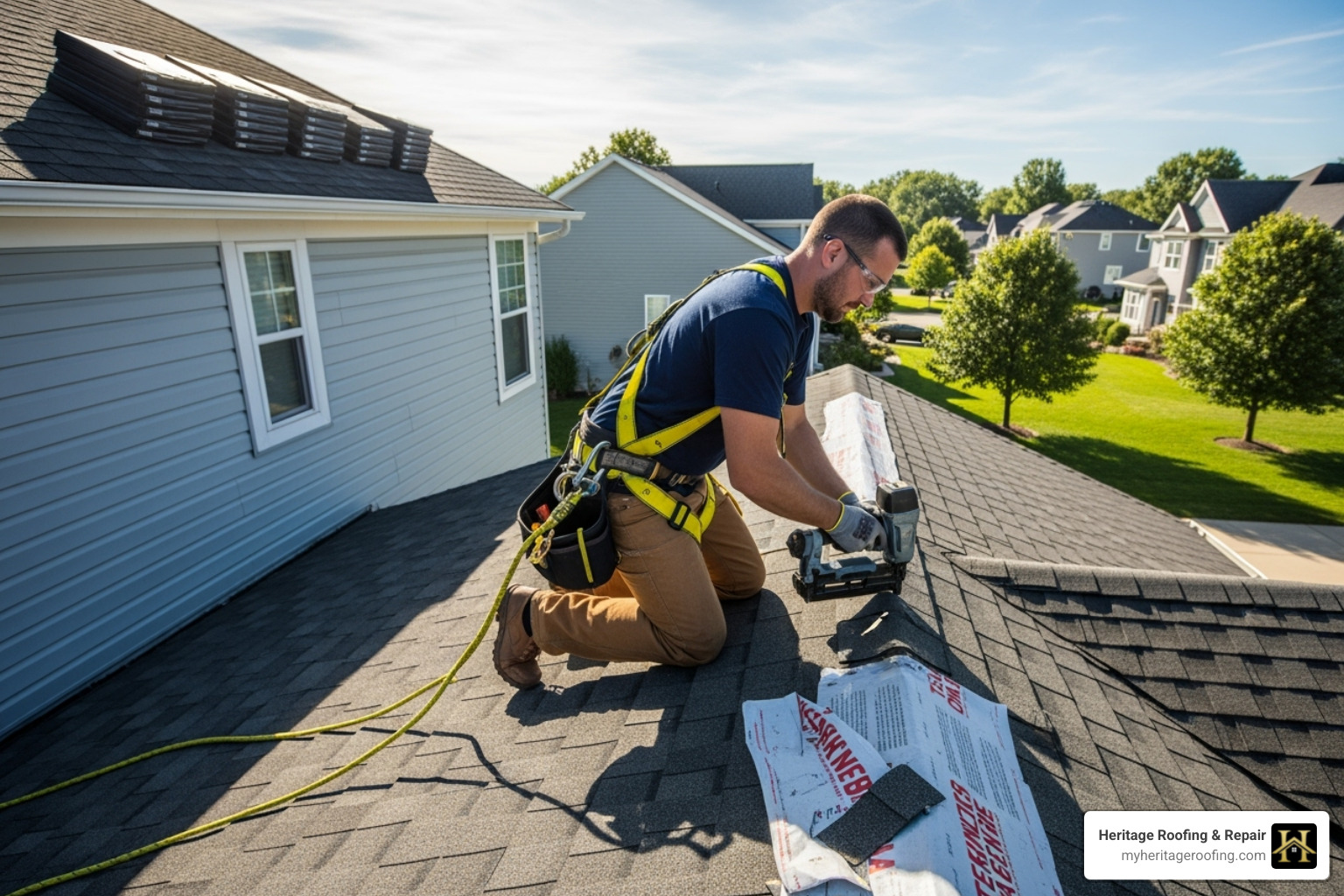
Safety First: The Risks of DIY Roofing
Working at heights is inherently dangerous, and falls from roofs are a leading cause of construction-related fatalities. Professionals use extensive fall protection gear like harnesses and ropes, which require training to use correctly. The physical demands are also immense, involving lifting bundles of shingles weighing 50-80 pounds up a ladder. Furthermore, DIYers face hidden dangers like rotten decking that can give way, and they are personally liable for any injuries or property damage. While some DIY safety tips are available, roofing is best left to trained experts.
The Value of a Pro: Expertise and Warranties
Hiring a professional delivers value far beyond safety. An experienced crew can complete a job in 1-3 days that might take a DIYer several weekends, minimizing the time your home is exposed to the elements. Most importantly, professionals ensure correct installation according to manufacturer specifications—a requirement for a valid warranty. A new roof installation from a certified contractor typically includes two layers of protection: a manufacturer’s warranty against material defects and a workmanship warranty from the installer.
New Roof Installation FAQs: Direct Answers
Homeowners considering a new roof installation often have similar questions. With over 50 years of experience, we’ve compiled clear, straightforward answers to the most common inquiries.
What happens if it rains during the installation?
Professional roofers monitor the weather closely. If unexpected rain occurs, we immediately cover any exposed sections of your roof with large tarps to prevent water from entering your home. We will not begin or continue a tear-off unless there is a clear weather window, ensuring your home stays protected.
Can I stay in my home during the roof replacement?
Yes, you can typically stay in your home. However, be aware that a roof installation is a very noisy process with constant banging and vibrations. For the comfort and safety of small children or pets, and for those who work from home, you may want to consider making arrangements to be away from the house during working hours.
What should I do to prepare my home for a new roof?
Before our crew arrives, we recommend moving vehicles out of the driveway and away from the immediate perimeter of your house. You should also clear patios, decks, and lawn areas of any furniture, grills, toys, or potted plants. Because the work can cause vibrations, it’s also a good idea to remove any fragile or valuable items from your walls and shelves inside.
Get Your New Roof Right the First Time: Next Steps for Arkansas Homeowners
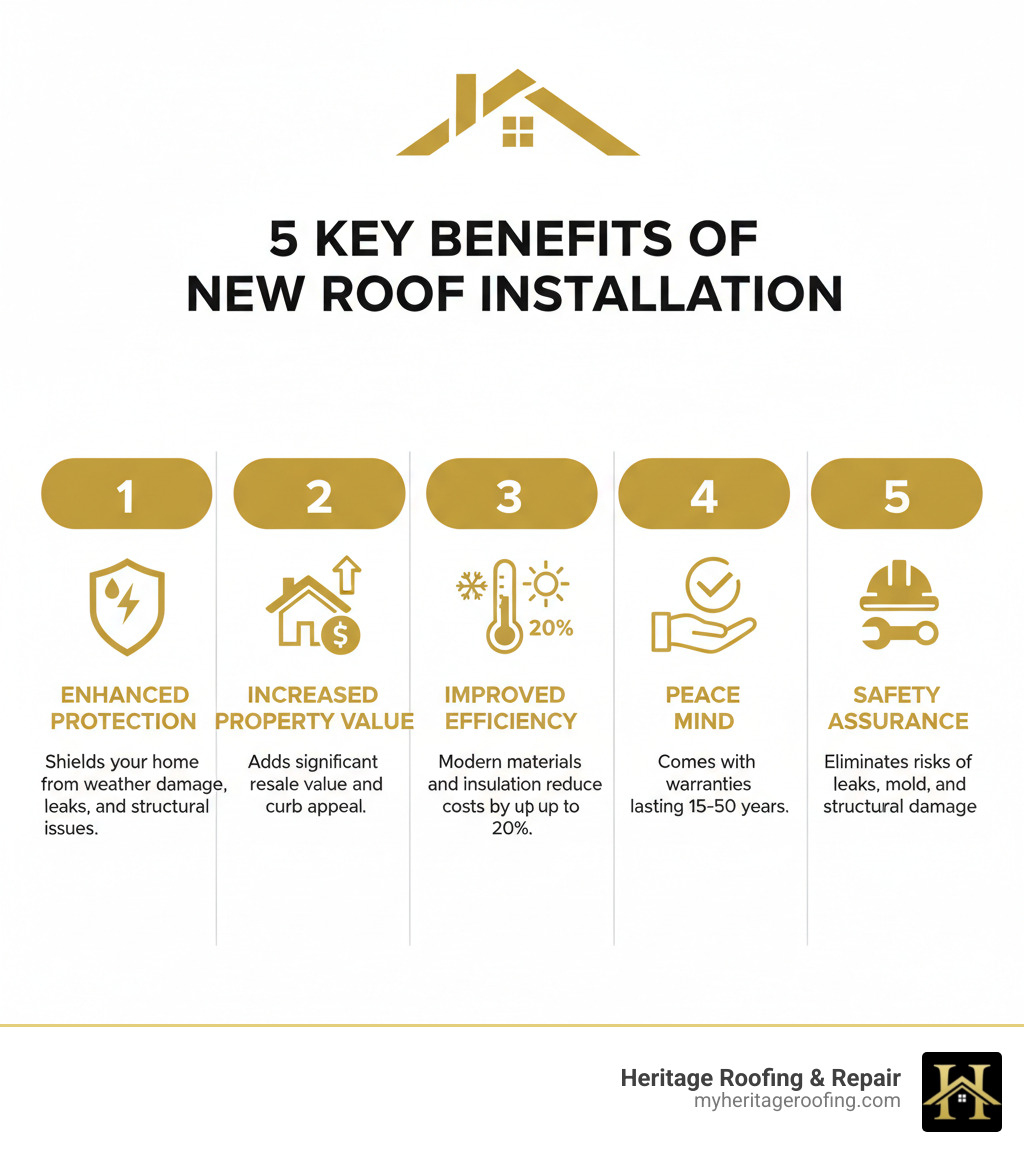
We’ve covered the key aspects of a new roof installation, from identifying warning signs to understanding the process and costs. Your roof is your home’s primary shield against the elements, making professional installation essential for long-term protection and peace of mind. A quality roof is an investment in your property’s safety, value, and efficiency.
As a local, family-owned business with over 50 years of experience in Northwest Arkansas, we stand behind our work. We are your neighbors, and we specialize in helping homeowners steer storm damage repairs and insurance claims, turning a stressful situation into a straightforward solution.
If you’re ready to ensure your home has the best protection, we’re here to provide an honest assessment and a detailed estimate with no obligation.
For expert roofing services in Harrison, AR, and throughout Northwest Arkansas, contact us for a free estimate today. Your home deserves the best, and we’re here to deliver it.